
Developing a Network of Foundational Economy and Innovation Community in Phichit Province
Article Sidebar
Main Article Content
Abstract
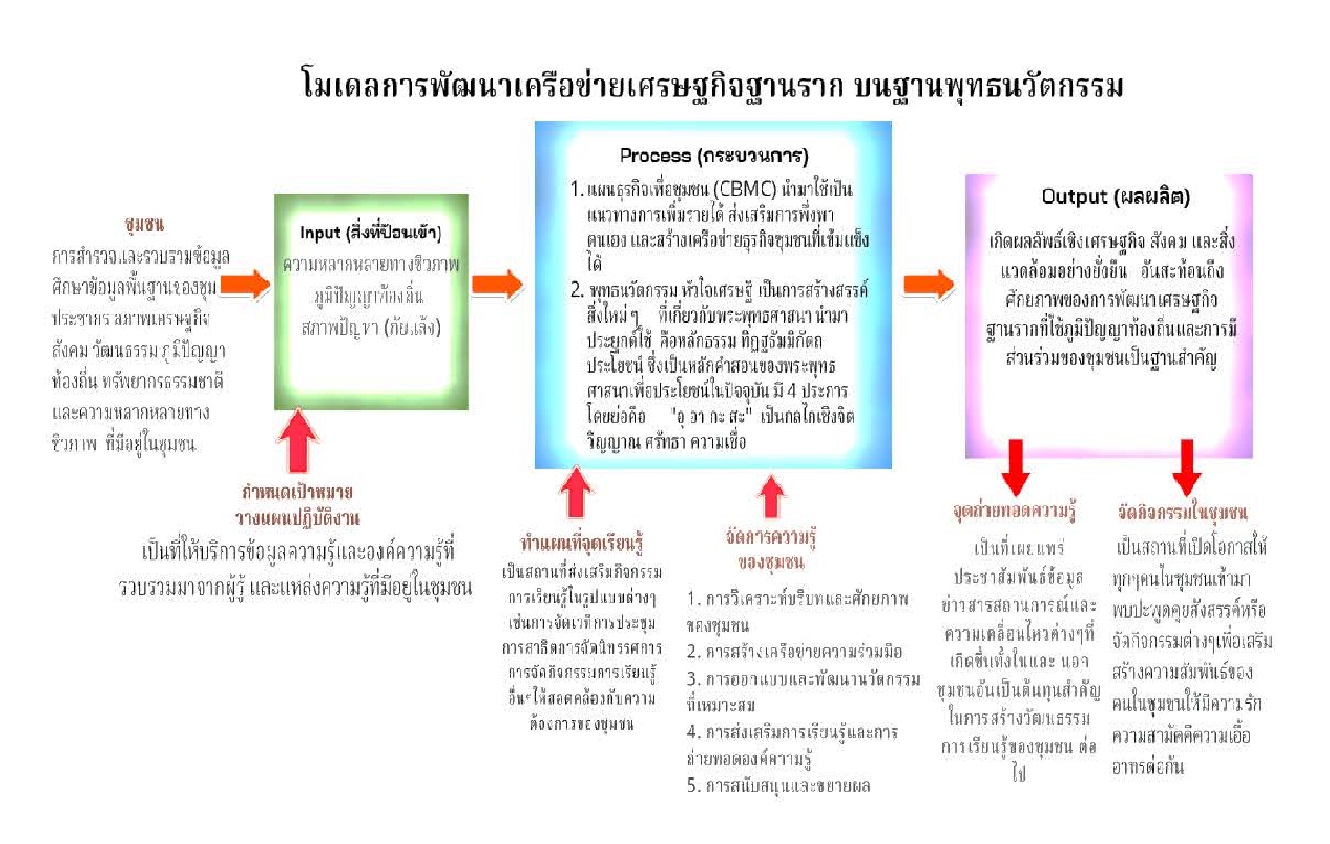
This research aimed to (1) study the current situation and economic and social problems of the community, (2) promote the development of grassroots economic communities using “Community Business Plan (CBMC), and (3) develop an innovative community network to enhance the quality of life based on biodiversity and local wisdom in Phichit Province. The research was qualitative, examining documentary data and collecting field data through in-depth interviews with key informants in relevant occupational groups and communities. The results showed that the community still relies primarily on agriculture and suffers from drought and flooding. However, the implementation of the Community Business Plan (CBMC) can increase income, promote self-reliance, and build a strong community business network. Furthermore, the application of “Buddhist innovation” to community networking resulted in sustainable economic, social, and environmental outcomes, reflecting the potential for grassroots economic development based on local wisdom and community participation. And the development of grassroots economic networks using CBMC and Buddhist innovation can create sustainable economic, social and environmental outcomes for communities in Phichit Province.
Downloads
Article Details

This work is licensed under a Creative Commons Attribution-NonCommercial-NoDerivatives 4.0 International License.
References
บุหงา ชัยสุวรรณ พรพรรณ ประจักษ์เนตร และกิรติ คเชนทวา. (2562). ปัจจัยพยากรณ์ความสำเร็จในการส่งเสริมการพัฒนาเศรษฐกิจฐานรากในชุมชน: กรณีศึกษาจังหวัดชายแดนภาคเหนือภาคตะวันออกเฉียงเหนือและภาคใต้. วารสารวิชาการมนุษยศาสตร์และสังคมศาสตร์ มหาวิทยาลัยบูรพา, 27(53): 87-108.
พระครูพิพัฒน์สุตคุณ และคณะ. (2566). การพัฒนาเศรษฐกิจฐานรากวิถีพุทธเชิงสร้างสรรค์ของชุมชนวัดหาดมูลกระบือ อำเภอเมืองพิจิตร จังหวัดพิจิตร. วารสารวิจยวิชาการ, 6(6): 1-14. https://doi.org/10.14456/jra.2023.125
พระมหาเจนภพ ปภาโส และคณะ. (2566). การวิเคราะห์แนวทางการประยุกต์ใช้หลักทิฏฐธัมมิกัตถเพื่อการพัฒนาคุณภาพชีวิต. วารสารพุทธศาสตร์ศึกษา, 15(2): 45-60.
วรสิทธิ์ เจริญศิลป์และธันยวัฒน์ รัตนสัค (2561) พัฒนาการและเงื่อนไขของการรวมกลุ่มเป็นเครือข่ายชุมชนตำบลสะเอียบ อำเภอสอง จังหวัดแพร่. วารสารมหาวิทยาลัยศิลปากร, 38(4): 22-40.
สำนักงานคณะกรรมการพัฒนาการเศรษฐกิจและสังคมแห่งชาติ สำนักนายกรัฐมนตรี. (2560). แผนพัฒนาเศรษฐกิจและสังคมแห่งชาติ. ฉบับที่ 12. พ.ศ. 2560-2564. [ออนไลน์]. แหล่งที่มา: https://www.nesdc.go.th/wordpress/wp-content/uploads/2025/02/สรุปสาระสำคัญแผนพัฒนาเศรษฐกิจและสังแห่งชาติฉบับที่12.pdf
อนุกูล รัชตวงษ์ . (2567). การมีส่วนร่วมของชุมชนในการอนุรักษ์ผืนป่า กรณีศึกษาป่าชุมชนบ้านเนินสมบัติ ตำบลจระเข้สามพัน อำเภออู่ทอง จังหวัดสุพรรณบุรี. วารสารศรีสุวรรณภูมิปริทรรศน์, 2(1), 55–65. สืบค้นจาก https://so14.tci-thaijo.org/index.php/JSBR/article/view/737
Porter, M.E. (1998). Clustersand competitionnew agendas for Companies, governments, and institutions. Boston, MA: Harvard Business School.
Sachs, J., Schmidt-Traub, G., Kroll, C., Lafortune, G., Fuller, G., & Woelm, F. (2020). The Sustainable Development Goals and COVID-19, Sustainable Development Report 2020. Retrieved July 26, 2021, fromhttps://sdgindex.org/reports/sustainable-developmentreport-2020/
