ประชาธิปไตยกับความไม่มั่นคงทางการเมือง: ศึกษาเปรียบเทียบกรณีประเทศไทยและเนปาล
คำสำคัญ:
ประชาธิปไตย, ความไม่มั่นคงทางการเมือง, สถาบันทางการเมือง, การจัดการความขัดแย้ง, ประเทศไทย, เนปาลบทคัดย่อ
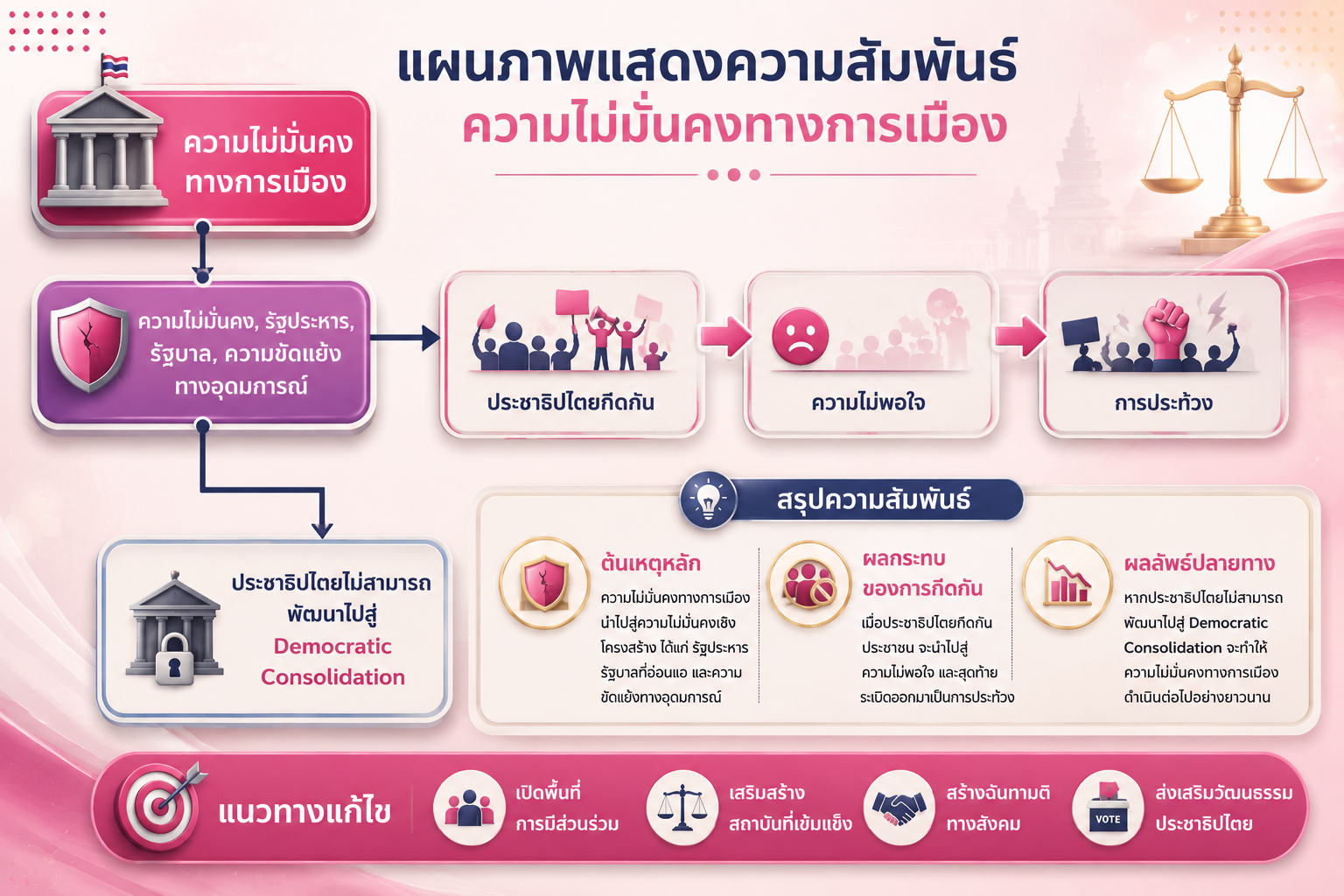
บทความนี้มีวัตถุประสงค์ เพื่อวิเคราะห์ความสัมพันธ์ระหว่างประชาธิปไตยกับความไม่มั่นคงทางการเมือง โดยเปรียบเทียบพัฒนาการทางการเมืองของประเทศไทยและเนปาล ภายใต้กรอบแนวคิดประชาธิปไตย ความสามารถของสถาบันทางการเมือง และการจัดการความขัดแย้งทางการเมือง การศึกษานี้ใช้การวิเคราะห์เชิงเปรียบเทียบ โดยพิจารณาพัฒนาการของระบอบประชาธิปไตย โครงสร้างรัฐธรรมนูญ รูปแบบการแข่งขันทางการเมือง และกลไกการจัดการความขัดแย้งของทั้งสองประเทศ ผลการวิเคราะห์พบว่า ความไม่มั่นคงทางการเมืองมิได้เป็นผลโดยตรงจากการมีประชาธิปไตยหรือการเปิดพื้นที่ทางการเมือง หากแต่มีความสัมพันธ์กับความสามารถของสถาบันทางการเมืองในการรองรับการมีส่วนร่วม การแข่งขัน และความแตกต่างทางการเมือง กรณีประเทศไทยสะท้อนลักษณะของวงจรความไม่มั่นคงทางการเมือง
ซึ่งความขัดแย้งระหว่างกลุ่มทางการเมืองสามารถนำไปสู่วิกฤต การแทรกแซงนอกกระบวนการเลือกตั้ง
การเปลี่ยนแปลงรัฐธรรมนูญ และการกลับเข้าสู่การแข่งขันทางการเมืองในรอบใหม่ ขณะที่กรณีเนปาลสะท้อนเส้นทางที่แตกต่าง โดยความขัดแย้งด้านการเป็นตัวแทนและโครงสร้างอำนาจพัฒนาไปสู่ความขัดแย้งติดอาวุธ ก่อนที่จะถูกนำกลับเข้าสู่กระบวนการทางการเมืองผ่านกระบวนการสันติภาพ การจัดตั้งสาธารณรัฐ และรัฐธรรมนูญ ค.ศ. 2015 บทความเสนอว่า เสถียรภาพของประชาธิปไตยมิได้ขึ้นอยู่กับการมีการเลือกตั้งเพียงอย่างเดียว แต่สัมพันธ์กับความสามารถของสถาบันในการจัดการการแข่งขันและความขัดแย้งภายใต้กติกาที่ได้รับการยอมรับร่วมกัน การเปรียบเทียบทั้งสองกรณีจึงช่วยให้เห็นว่า แม้ประเทศไทยและเนปาลมีเส้นทางการเปลี่ยนผ่านแตกต่างกัน แต่ต่างเผชิญโจทย์สำคัญร่วมกันในการพัฒนาสถาบันประชาธิปไตยให้สามารถรองรับความหลากหลายและสร้างความต่อเนื่องทางการเมืองได้
Downloads
เอกสารอ้างอิง
Dahl, R. A. (1971). Polyarchy: Participation and Opposition. Yale University Press. Huntington, S. P. (1968). Political Order in Changing Societies. Yale University Press.
Lawoti, M. (2012). Ethnic politics and the building of an inclusive state. In S. von Einsiedel, D. M. Malone, & S. Pradhan (Eds.), Nepal in transition: From people’s war to fragile peace (pp. 129 - 152). Cambridge University Press. https://doi.org/10.1017/CBO9781139021869.006
Linz, J. J., & Stepan, A. (1996). Problems of Democratic Transition and Consolidation: Southern Europe, South America, and Post - communist Europe. Johns Hopkins University Press. https://doi.org/10.56021/9780801851575
Malagodi, M. (2012). Constitutional Nationalism and Legal Exclusion: Equality, Identity Politics, and Democracy in Nepal (1990 - 2007). Oxford University Press. https://doi.org/10.1093/acprof:oso/9780198082910.001.0001
Thapa, D. (2012). The making of the Maoist Insurgency. In S. von Einsiedel, D. M. Malone, & S. Pradhan (Eds.), Nepal in Transition: From People’s War to Fragile Peace (pp. 37 - 57). Cambridge University Press. https://doi.org/10.1017/CBO9781139021869.003
Von Einsiedel, S., Malone, D. M., & Pradhan, S. (Eds.). (2012). Nepal in Transition: From People’s War to Fragile Peace. Cambridge University Press. https://doi.org/10.1017/CBO9781139021869
Ginsburg, T. (2009). Constitutional Afterlife: The Continuing Impact of Thailand’s Postpolitical Constitution. International Journal of Constitutional Law, 7(1), 83 - 105. https://doi.org/10.1093/icon/mon031
Kuhonta, E. M. (2008). The Paradox of Thailand’s 1997 “People’s Constitution”: Be Careful What You Wish For. Asian Survey, 48(3), 373 - 392. https://doi.org/10.1525/as.2008.48.3.373
Tonsakulrungruang, K. (2024). Coup and Decay: How Thai - style Democracy Abuses Constitutionalism. In T. G. Daly & D. Samararatne (Eds.), Democratic Consolidation and Constitutional Endurance in Asia and Africa: Comparing Unevenpathways (pp.325 - 344). OxfordUniversity Press. https://doi.org/10.1093/oso/9780192899347.003.0014
Ferrara, F. (2015). The Political Development of Modern Thailand. Cambridge University Press. https://doi.org/10.1017/CBO9781107449367
Seo, K. (2015). Democracy and Military Coups in Thailand: Focusing on Coups in 2006 and 2014. Journal of Korean Association of Thai Studies, 22(1), 269 - 299. https://doi.org/10.22473/kats.2015.22.1.010
Harding, A. J., & Leelapatana, R. (2019). Constitution - making in 21st - Century Thailand: The Continuing Search for a Perfect Constitutional Fit. The Chinese Journal of Comparative Law, 7(2), 266 - 284. https://doi.org/10.1093/cjcl/cxz009
Upreti, B. R. (2006). Armed Conflict and Peace Process in Nepal: The Maoist Insurgency, Past Negotiations and Opportunities for Conflict Transformation. Adroit Publishers.
Thapa, S. B. (2025). The Impact of Political Instability on Democratic Development in Nepal (2022 - 2024). The Academia, 5(1), 187 - 201. https://doi.org/10.3126/ta.v5i1.77184
Government of Nepal. (2015). The Constitution of Nepal. Ministry of Law, Justice and Parliamentary Affairs, Law Books Management Board. https://searchlibrary.ohchr.org/record/20882
United Nations. (2007). Report of the Secretary - General on the Request of Nepal for United Nations Assistance in Support of its Peace Process (S/2007/235). United Nations Security Council.
United Nations. (2006). Comprehensive Peace Agreement between the Government of Nepal and the Communist Party of Nepal (Maoist). United Nations. https://peacemaker.un.org/en/node/9215?utm_source=chatgpt.com
ดาวน์โหลด
เผยแพร่แล้ว
รูปแบบการอ้างอิง
ฉบับ
ประเภทบทความ
สัญญาอนุญาต
ลิขสิทธิ์ (c) 2026 วารสารพุทธนวัตกรรมการศึกษา

อนุญาตภายใต้เงื่อนไข Creative Commons Attribution-NonCommercial-NoDerivatives 4.0 International License.
บทความนี้ได้รับการเผยแพร่ภายใต้สัญญาอนุญาต Creative Commons Attribution-NonCommercial-NoDerivatives 4.0 International (CC BY-NC-ND 4.0) ซึ่งอนุญาตให้ผู้อื่นสามารถแชร์บทความได้โดยให้เครดิตผู้เขียนและห้ามนำไปใช้เพื่อการค้าหรือดัดแปลง หากต้องการใช้งานซ้ำในลักษณะอื่น ๆ หรือการเผยแพร่ซ้ำ จำเป็นต้องได้รับอนุญาตจากวารสาร