
THE BRIDGE OF LOVING-KINDNESS: A SOFT POWER STRATEGY GUIDED BY BUDDHIST PRINCIPLES FOR FOSTERING COOPERATION AND SOLVING TEACHER SHORTAGES IN SMALL SCHOOLS
Keywords:
Components, Soft Power, School Administration, Small Schools, StrategyAbstract
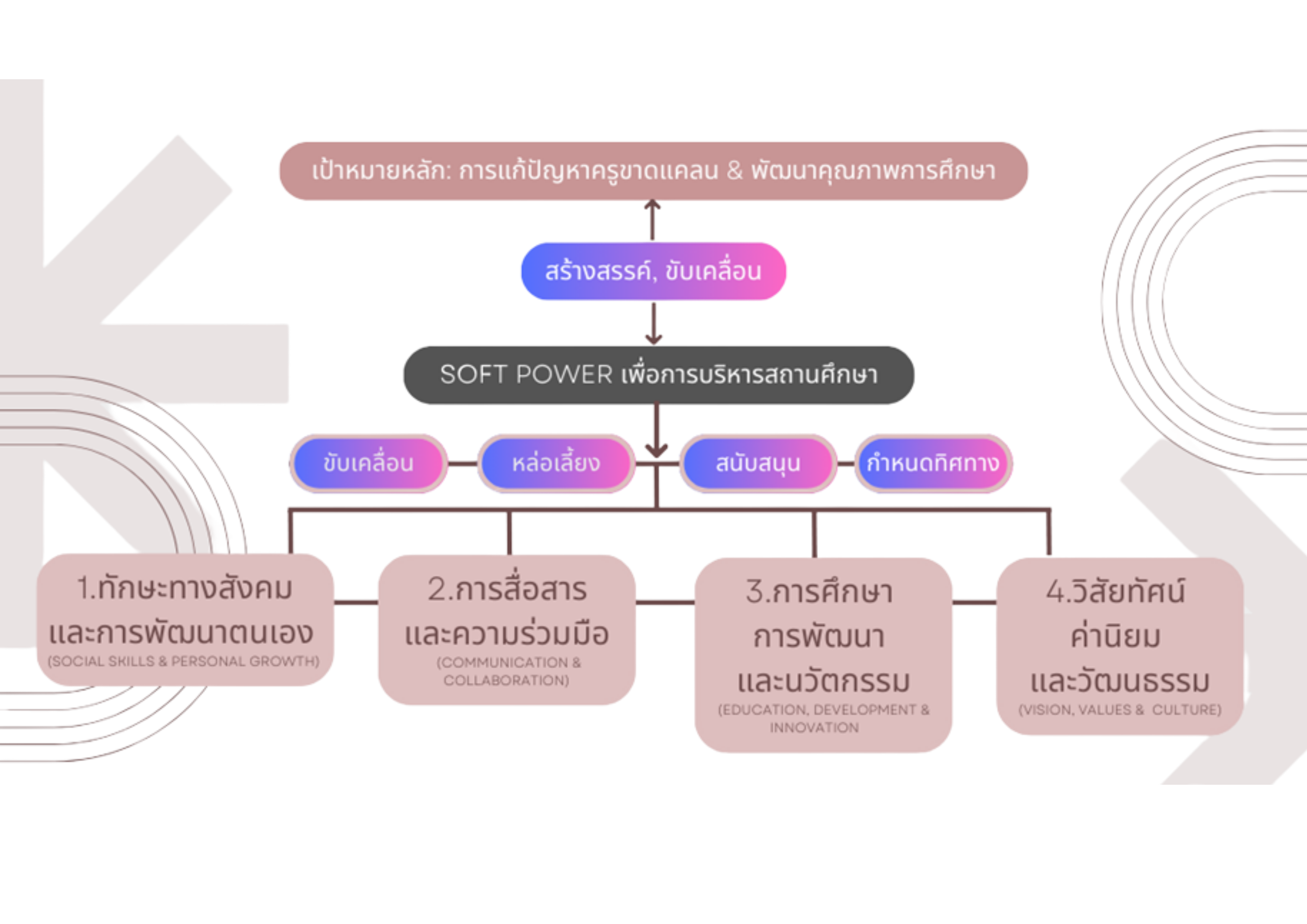
The purpose of this article was to synthesize soft power management strategies based on Buddhist principles to address the teacher shortage problem in small schools in Thailand. This paper integrated Joseph Nye's soft power concept with social capital theory, participatory leadership, and Buddhist principles such as the Four Sanghavatthu and the Four Brahmaviharas. The synthesis identified four soft power components, totaling 17 elements, covering social skills, communication, collaboration, education, innovation, vision, values, and culture. This article presented the 'bridge of cooperation' concept and its application to build strong partnerships between schools and communities, leading to the attraction, retention, and development of teachers and the sustainable enhancement of student learning potential. This strategy would foster trust, transparent communication, and shared values, leading to a sustainable solution to the teacher shortage problem and the enhancement of the quality of education in small schools.
Downloads
References
ประเวศ เวชชะ. (2568). Reboot Thai School - ปฏิวัติการศึกษาไทย. สืบค้นเมื่อ 5 มิถุนายน 2568, จาก https://www.facebook.com/RebootThaiSchool?locale=th_TH
วรกมล วงษ์สถาปนาเลิศ, สุดสวาท จันทร์ดำ, และสุดารัตน์ เทพพิมล. (2567). อำนาจละมุน (Soft Power) กับจุดขายทางวัฒนธรรมไทย. วารสารศิลปการจัดการ, 8(1), 382 - 398.
สุวิทย์ เมษินทรีย์. (2560). การสร้างพลังชุมชนเพื่อการพัฒนาอย่างยั่งยืน. กรุงเทพฯ: สำนักพิมพ์มหาวิทยาลัยธรรมศาสตร์.
สำนักงานคณะกรรมการการศึกษาขั้นพื้นฐาน. (2564). รายงานสภาพปัญหาการจัดการศึกษาในโรงเรียนขนาดเล็ก. กรุงเทพฯ: กระทรวงศึกษาธิการ.
สำนักงานคณะกรรมการการศึกษาขั้นพื้นฐาน. (2564). รายงานผลการประเมินคุณภาพการศึกษาขั้นพื้นฐานระดับชาติ. กรุงเทพฯ: กระทรวงศึกษาธิการ.
สำนักงานคณะกรรมการการศึกษาขั้นพื้นฐาน. (2566). รายงานสถานภาพโรงเรียนขนาดเล็กประเทศไทย. กรุงเทพฯ: กระทรวงศึกษาธิการ.
สำนักงานคณะกรรมการการศึกษาขั้นพื้นฐาน. (2566). นโยบาย Community - Based Education เพื่อการพัฒนาโรงเรียนขนาดเล็ก. กรุงเทพฯ: กระทรวงศึกษาธิการ.
สำนักงานทดสอบทางการศึกษาแห่งชาติ. (2564). สรุปผลการทดสอบทางการศึกษาระดับชาติขั้นพื้นฐาน (O - NET) ชั้นมัธยมศึกษาปีที่ 6 ปีการศึกษา 2563. สถาบันทดสอบทางการศึกษาแห่งชาติ (องค์การมหาชน).
Bass, B. M. (1985). Leadership and Performance Beyond Expectations. Free Press.
Bertalanffy, L. V. (1968). General System Theory: Foundations, Development, Applications. George Braziller.
Burns, J. M. (1978). Leadership. Harper & Row.
Covey, S. R. (1989). The 7 Habits of Highly Effective People. Simon & Schuster.
Hargreaves, A., & Fullan, M. (2014). Professional Capital: Transforming Teaching in Every School. Teachers College Press.
Hofstede, G. (1980). Culture's Consequences: International Differences in Work - Related Values. Sage.
Lewin, K. (1974). Field Theory in Social Science. (Original Work Published 1951). Harper & Row.
McClory, J. (2012). The New Persuaders III: A 2012 Global Ranking of Soft Power. Institute for Government.
Likert, R. (1967). The Human Organization: Its Management and Value. McGraw - Hill.
Nye, J. S. (2004). Soft Power: The Means to Success in World Politics. Public Affairs.
OECD. (2024). Education at a Glance 2024: OECD Indicators. OECD Publishing.
Putnam, R. D. (2000). Bowling Alone: The Collapse and Revival of American Community. Simon & Schuster.
Rappaport, J. (1981). In Praise of Paradox: A Social Policy of Empowerment Over Prevention. American Journal of Community Psychology, 9(1), 1 - 25. https://doi.org/10.1007/BF00896357
Said, E. (1978). Orientalism. Vintage Books.
Schein, E. H. (2004). Organizational Culture and Leadership (3rd ed.). Jossey - Bass.
Senge, P. M. (1990). The Fifth Discipline: The Art & Practice of the Learning Organization. Doubleday.
World Bank. (2022). Thailand Education Sector Review: Priorities for Reform. World Bank Publications.
Yukl, G. (2010). Leadership in Organizations (7th ed.). Prentice Hall.
Downloads
Published
How to Cite
Issue
Section
License
Copyright (c) 2025 Journal of Buddhist Educational Innovation

This work is licensed under a Creative Commons Attribution-NonCommercial-NoDerivatives 4.0 International License.
This article is published under a Creative Commons Attribution-NonCommercial-NoDerivatives 4.0 International License (CC BY-NC-ND 4.0), which allows others to share the article with proper attribution to the authors and prohibits commercial use or modification. For any other reuse or republication, permission from the journal and the authors is required.