
การกำกับดูแลอำนาจอธิปไตยทางดิจิทัล: การวิเคราะห์เปรียบเทียบการกำกับดูแลแบบ Ex-ante และ Ex-post ในสหภาพยุโรป จีน และอินเดีย
Article Sidebar
Main Article Content
บทคัดย่อ
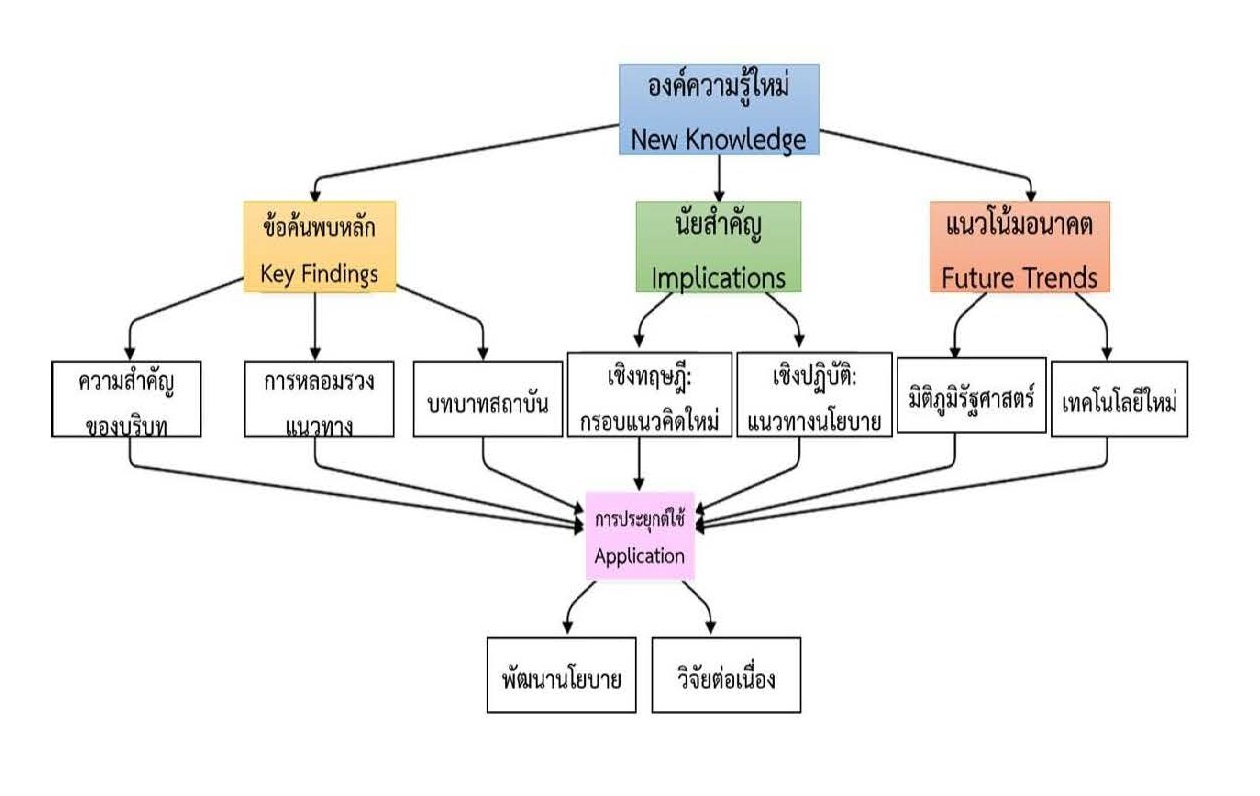
บทความนี้เป็นการศึกษาเปรียบเทียบการกำกับดูแลอำนาจอธิปไตยทางดิจิทัลผ่านกรอบการกำกับดูแลเชิงป้องกัน (Ex-ante) และการกำกับดูแลภายหลัง (Ex-post) โดยมุ่งเน้นกรณีศึกษาของสหภาพยุโรป จีน และอินเดีย ผ่านการวิเคราะห์กรอบการกำกับดูแล กลไกการบังคับใช้ และโครงสร้างสถาบัน การศึกษาพบว่า สหภาพยุโรปใช้การกำกับดูแลเชิงป้องกันด้วยกรอบที่ครอบคลุมอย่างกฎหมายคุ้มครองข้อมูลส่วนบุคคล (General Data Protection Regulation หรือ GDPR) และพระราชบัญญัติตลาดดิจิทัล (Digital Market Act หรือ DMA) จีนใช้แนวทางแบบผสมผสานที่รวมกฎระเบียบเข้มงวดกับการบังคับใช้ที่ยืดหยุ่น ขณะที่อินเดียกำลังเปลี่ยนจากการกำกับดูแลภายหลังไปสู่รูปแบบผสมผสาน ผลการวิจัยชี้ว่าประสิทธิภาพของแนวทางเหล่านี้ได้รับอิทธิพลจากขีดความสามารถของสถาบัน แรงจูงใจทางเศรษฐกิจ และบริบททางการเมือง แนวทางการกำกับดูแลเชิงป้องกันของสหภาพยุโรปสร้างความชัดเจนแต่อาจขัดขวางนวัตกรรมเนื่องจากต้นทุนการปฏิบัติตามสูงรูปแบบผสมผสานของจีนมีความยืดหยุ่นแต่สร้างความไม่แน่นอนในการบังคับใช้กรอบของอินเดียแสดงถึงความท้าทายของประเทศกำลังพัฒนาในการสร้างสมดุลระหว่างการเติบโตทางเศรษฐกิจดิจิทัลกับข้อกังวลด้านอธิปไตยงานวิจัยยังชี้ให้เห็นแนวโน้มการหลอมรวมระหว่างแนวทางการกำกับดูแลเชิงป้องกันและการกำกับดูแลภายหลังการเสริมสร้างขีดความสามารถของสถาบันและความสำคัญของความร่วมมือระหว่างประเทศผลการวิจัยมีส่วนช่วยทั้งในด้านความเข้าใจเชิงทฤษฎีและการพัฒนานโยบายโดยชี้ว่ากรอบอำนาจอธิปไตยทางดิจิทัลที่ประสบความสำเร็จต้องปรับเทียบระหว่างมาตรการเชิงป้องกันและเชิงตอบสนองตามบริบทของแต่ละประเทศ
Downloads
Article Details

อนุญาตภายใต้เงื่อนไข Creative Commons Attribution-NonCommercial-NoDerivatives 4.0 International License.
เอกสารอ้างอิง
Autolitano, S., & Pawlowska, A. (2021). Europe’s quest for digital sovereignty: GAIA-X as a case study. Istituto Affari Internazionali (IAI). https://www.jstor.org/stable/resrep30940
Belli, L. (2024). Building good digital sovereignty through digital public infrastructures and digital commons in India and Brazil. Cyber BRICS. https://doi.org/10.2139/ssrn.4966348
Braun, M., & Hummel, P. (2024). Is digital sovereignty normatively desirable? Information, Communication & Society, 1–14. https://doi.org/10.1080/1369118X.2024.2332624
Broeders, D., Cristiano, F., & Kaminska, M. (2023). In search of digital sovereignty and strategic autonomy: Normative power Europe to the test of its geopolitical ambitions. Journal of Common Market Studies, 61(5), 1261-1280. https://doi.org/10.1111/jcms.13462.
Christakis, T. (2020). European digital sovereignty: Successfully navigating between the Brussels effect and Europe's quest for strategic autonomy. Multidisciplinary Institute on Artificial Intelligence/Grenoble Alpes Data Institute. https://doi.org/10.2139/ssrn.3748098
Donnelly, S., Ríos Camacho, E., & Heidebrecht, S. (2023). Digital sovereignty as control: the regulation of digital finance in the European union. Journal of European Public Policy, 31(8), 2226–2249. https://doi.org/10.1080/13501763.2023.2295520
Floridi, L.(2020). The fight for digital sovereignty: What it is, and why it matters, especially for the EU. Contemporary Social Science, 15(3), 330–345. https://doi.org/10.1007/s13347-020-00423-6
Fratini, S., Hine, E., Novelli, C., Roberts, H., & Floridi, L. (2024). Digital sovereignty: A descriptive analysis and a critical evaluation of existing models. Digital Society, 59. https://doi.org/10.1007/s44206-024-00146-7
Gupta, S., & Sony, R.A.L. (2021). Quest of data colonialism and cyber sovereignty: India's strategic position in cyberspace. Legal Issues in the Digital Age, 2, 68-81. https://doi.org/10.17323/2713-2749.2021.2.68.81
Heidebrecht, S. (2024). From market liberalism to public intervention: Digital sovereignty and changing European union digital single market governance. Journal of Common Market Studies, 62(1), 205-223. https://doi.org/10.1111/jcms.13488
Hoeffler, C., & Mérand, F. (2024). Digital sovereignty, economic ideas, and the struggle over the digital markets act: A political-cultural approach. Journal of European Public Policy, 31(8), 2121-2146. https://doi.org/10.1080/13501763.2023.2294144
Khasanova, L., & Tai, K. (2024). Shades of authoritarian digital sovereignty: Divergences in Russian and Chinese data localisation regimes. Journal of Cyber Policy, 9(1), 70-94. https://doi.org/10.1080/23738871.2024.2413938
Leese, M. (2024). Staying in control of technology: Predictive policing, democracy, and digital sovereignty. Democratization, 31(5), 963-978. https://doi.org/10.1080/13510347.2023.2197217
Lehuedé, S. (2024). An alternative planetary future? Digital sovereignty frameworks and the decolonial option. Big Data & Society, 11(1), 1-13. https://doi.org/10.1177/20539517231221778
Monsees, D., & Lambach, D. (2022). Digital sovereignty, geopolitical imaginaries, and the reproduction of European identity. European Security, 31(3), 377-394. https://doi.org/10.1080/09662839.2022.2101883
Pohle, J. & Thiel, T. (2020). Digital sovereignty. Internet Policy Review, 9(4), 1–19. https://doi.org/10.14763/2020.4.1532
Pohle, J., & Santaniello, M. (2024). From multistakeholderism to digital sovereignty: Toward a new discursive order in internet governance? Policy & Internet, 1-20. https://doi.org/10.1002/poi3.426
Prasad, R. (2022). People as data, data as oil: The digital sovereignty of the Indian state. Information, Communication & Society, 25(6), 801-815. https://doi.org/10.1080/1369118X.2022.2056498.
Sheikh, H. (2022). European digital sovereignty: A layered approach. Digital Society, 1(25). https://doi.org/10.1007/s44206-022-00025-z
Vila Seoane, M. F. (2021). Data securitisation: The challenges of data sovereignty in India. Third World Quarterly, 42(8), 1733-1750. https://doi.org/10.1080/01436597.2021.1915122
