The 4 Requisites Consumption of the Thai Consumerism Groups
Article Sidebar
Main Article Content
Abstract
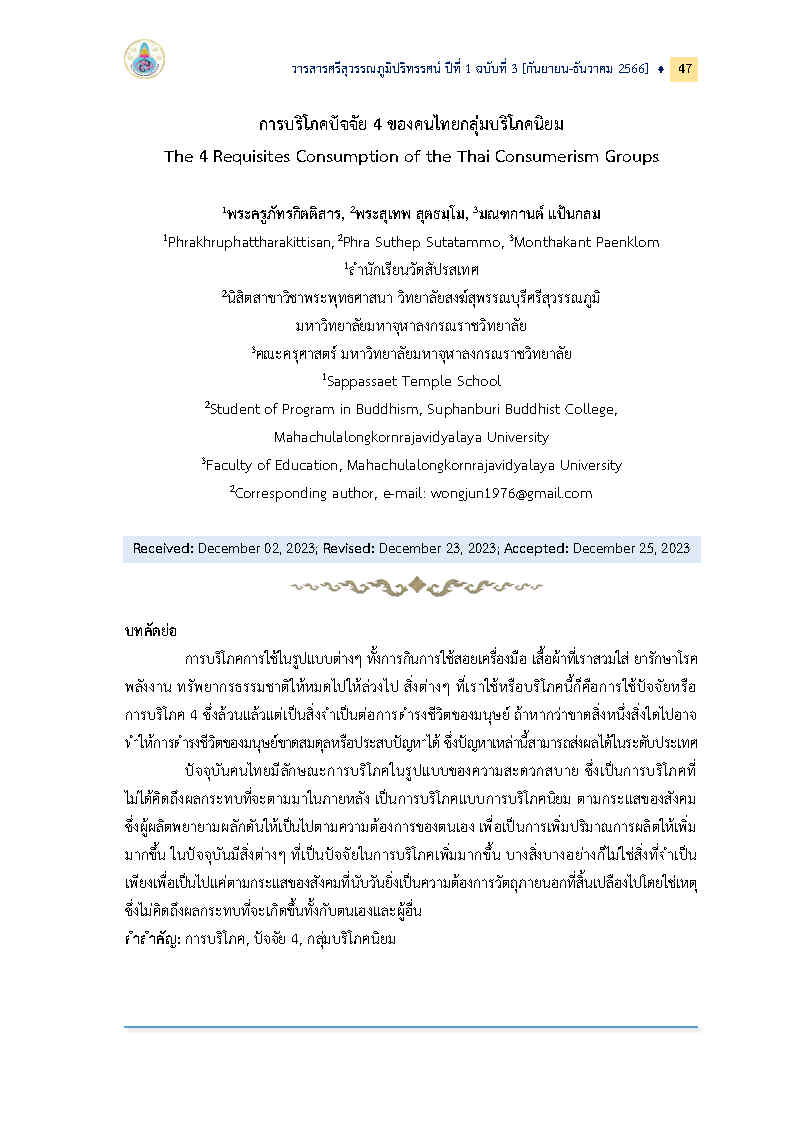
The 4 requisites consumption of the Thai consumerism groups. The consuming and using in various forms, including eating, using tools, clothes, medicines, energy, natural resources until everything is done or run out. All of these things that we use or consume are the 4 requisites which are all necessary for human life. If there is a lack of something it can cause an imbalance for human life and it can be confronted with a problem and these problems can have consequences at the national level.
Nowadays, Thai people have a convenient consumption style which is a consumption regardless of the consequences afterwards and also it is a consumerism, according to the trend of society moreover the manufacturers try to push demands according to their own needs. In order to increase more production. Nowadays, there are more things that are factors in consumption. Some things aren't necessary and just follow the trend of society that is increasingly demanding externally wasteful objects regardless of the impact that will occur both on oneself and others.
Downloads
Article Details

This work is licensed under a Creative Commons Attribution-NonCommercial-NoDerivatives 4.0 International License.
References
ประพีร์พร อักษรศรี. (2540). ปัจจัยที่มีต่อพฤติกรรมการบริโภคตามหลักเศรษฐศาสตร์แนวพุทธ: กรณีศึกษาสถาบันราชภัฏเพชรบุรีวิทยาลงกรณ์. ภาคนิพนธ์พัฒนาสังคมและสิ่งแวดล้อม.สถาบันบัณฑิตพัฒนบริหารศาสตร์.
ปรีชา บุญศรีตัน. พุทธจริยศาสตร์กับการกิน. [ออนไลน์]. แหล่งที่มา: http://www.lanna.mbu.ac.th/panya/no_61/buddhist.asp. [12 มกราคม 2561].
พระเบื้อง ปั้นเหน่งเพชร. (2544). การบริโภคปัจจัย 4 ของพระภิกษุสงฆ์: ข้อพิจารณาทางจริยธรรม. วิทยานิพนธ์พุทธศาสตรมหาบัณฑิต, บัณฑิตวิทยาลัย, มหาวิทยาลัยมหาจุฬาลงกรณราชวิทยาลัย.
พระพรหมคุณาภรณ์ (ป.อ. ปยุตโต). (2543). พุทธธรรมฉบับปรับปรุงและขยายความ. พิมพ์ครั้งที่ 9. กรุงเทพฯ: มหาจุฬาลงกรณราชวิทยาลัย.
พระไพศาล วิสาโล. วิถีพุทธในยุคบริโภคนิยม. [ออนไลน์]. แหล่งที่มา: http://www.skyd.org/html/lifesocial/BudinConsume.html [1 มีนาคม 2561].
พระธรรมปิฎก (ป.อ. ปยุตฺโต). (2545). พจนานุกรมพุทธศาสตร์ ฉบับประมวลธรรม. พิมพ์ครั้งที่ 11. กรุงเทพฯ: สหธรรมิก.
พระราชสีมาภรณ์ (โอภาส นิรุตติเมธี). (2536). พระสงฆ์กับการพัฒนาศาสนาสังคม. กรุงเทพฯ: โรงพิมพ์มหาจุฬาลงกรณราชวิทยาลัย.
พระราชสีมาภรณ์ (โอภาส นิรุตติเมธี). (2557). พระสงฆ์กับงานพัฒนาพระพุทธศาสนาและสังคม. กรุงเทพฯ: การศาสนา.
พระธรรมปิฎก (ป.อ. ปยุตโต). (2545). พจนานุกรมพุทธศาสตร์ ฉบับประมวลธรรม. พิมพ์ครั้งที่ 11. กรุงเทพฯ: สหธรรมิก.
พุทธทาส ภิกขุ. (2539). กามารมณ์กับชีวิต. กรุงเทพฯ: สํานักพิมพ์สุขภาพใจ.
มหาจุฬาลงกรณราชวิทยาลัย. (2539). พระไตรปิฎกภาษาไทย ฉบับมหาจุฬาลงกรณราชวิทยาลัย. กรุงเทพฯ: โรงพิมพ์มหาจุฬาลงกรณราชวิทยาลัย.
ราชบัณฑิตยสถาน. (2546). พจนานุกรมฉบับราชบัณฑิตยสถาน พ.ศ. 2525. กรุงเทพฯ: อักษรเจริญทัศน์.
ศรัณยพงศ์ เที่ยงธรรม, ผศ. การวิจัยและการวางกลยุทธ์ทางธุรกิจ. [ออนไลน์]. แหล่งที่มา: http://www.blueocean-thailand.com/th/team.php. [22 มกราคม 2561].
ศรีศักร วัลลิโภดม. (2544). สังคมวัฒนธรรมปัจจุบันผันแปร. กรุงเทพฯ: ด่านสุทธาการพิมพ์.
สมเด็จพระญาณสังวร สมเด็จพระสังฆราช. (2534). ความสุขหาได้ไม่ยาก. กรุงเทพฯ: โรงพิมพ์ชวน พิมพ์.
