
Developing Digital Leadership based on Brahmavihara IV for School Administrators under Trang Primary Educational Service Area Office 1
Article Sidebar
Main Article Content
Abstract
This research article aims to: 1) study the current state of digital leadership among school administrators; 2) formulate guidelines for developing digital leadership based on the Brahma Vihara 4 principles; and 3) evaluate the developed guidelines. Data were collected from a sample of 204 participants using questionnaires, in-depth interviews with 5 experts to draft the guidelines, and evaluation by 20 experts.
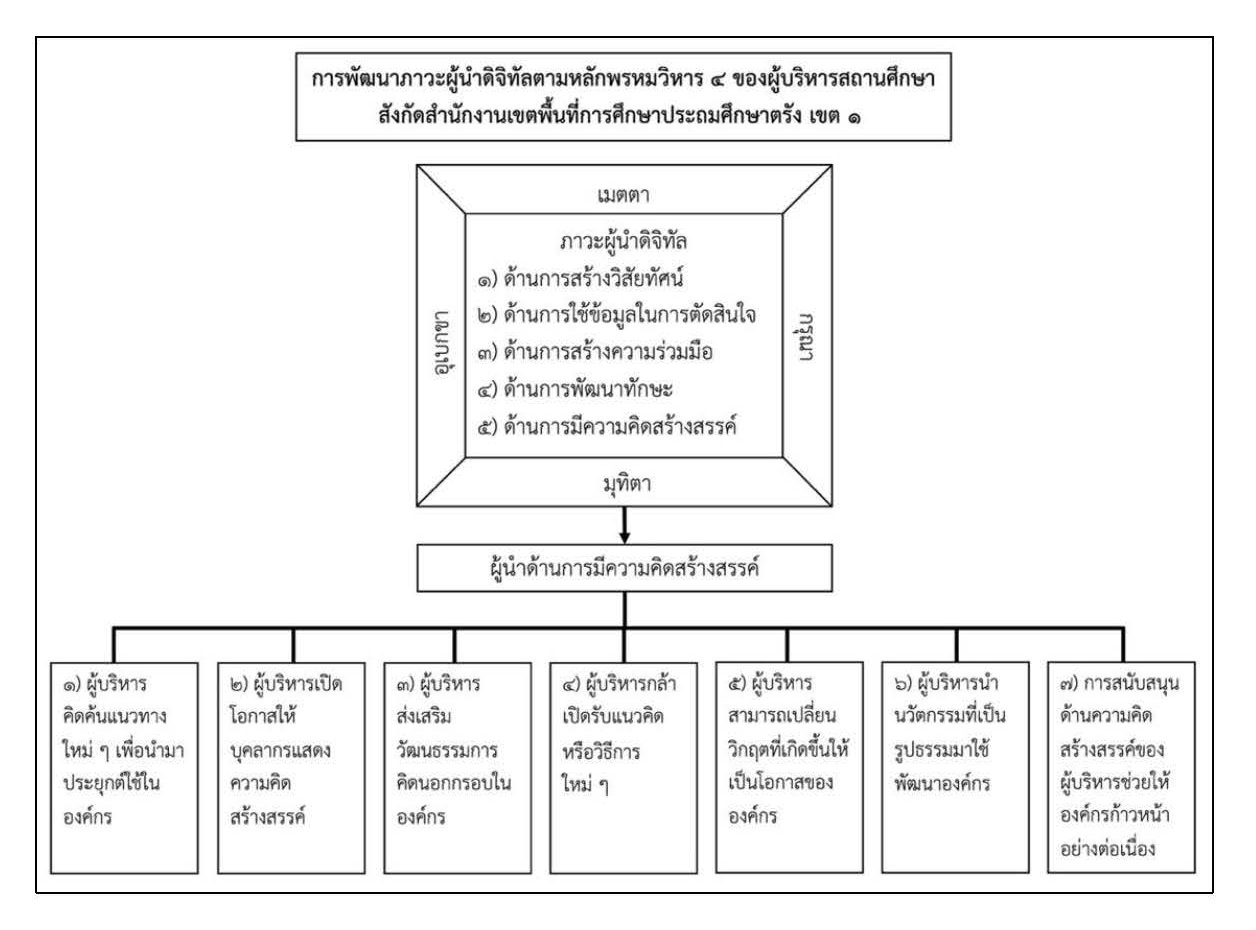
The findings revealed that: The overall state of digital leadership among school administrators was at the highest level. Considering individual aspects, skill development had the highest mean, whereas creativity had the lowest mean. The development guidelines for digital leadership, specifically addressing the creativity aspect, comprised seven components: (1) inventing new approaches, (2) providing opportunities for creative expression, (3) promoting an out-of-the-box thinking culture, (4) embracing new methods, (5) turning crises into opportunities, (6) utilizing innovations for organizational development, and (7) continuously supporting creativity. These components were integrated with the Brahma Vihara 4 principles as follows: Metta (Loving-kindness): Creating a safe space and shared vision (Components 2 and 3). Karuna (Compassion): Reducing inequality and developing digital skills (Components 1 and 5). Mudita (Sympathetic joy): Building collaborative networks and motivation (Components 4 and 7). Upekkha (Equanimity): Managing data and decision-making (Component 6). The evaluation of the guidelines by experts indicated that their appropriateness, feasibility, and utility for practical development were at the highest level (4.99).
Downloads
Article Details

This work is licensed under a Creative Commons Attribution-NonCommercial-NoDerivatives 4.0 International License.
References
กระทรวงเทคโนโลยีสารสนเทศและการสื่อสาร. (2559). แผนพัฒนาดิจิทัลเพื่อเศรษฐกิจและสังคม. กรุงเทพฯ: กระทรวงเทคโนโลยีสารสนเทศและการสื่อสาร.
กลุ่มส่งเสริมการศึกษาทางไกล เทคโนโลยีสารสนเทศและการสื่อสาร. (2567). ประชาสัมพันธ์แพลตฟอร์ม ดิจิทัลเพื่อการเรียนรู้สำหรับโรงเรียนขนาดเล็กและโรงเรียนทั่วไป สำนักงานเขตพื้นที่การศึกษา ประถมศึกษาตรัง เขต 1 EXAM BANK TRANG1 PLATFORM. ตรัง: สำนักงานเขตพื้นที่การศึกษา ประถมศึกษาตรัง เขต 1.
กุหลาบ อารีวงศ์ และคณะ. (2567). รูปแบบภาวะผู้นำดิจิทัลของผู้บริหารสถานศึกษา. วารสารนาคบุตรปริทรรศน์, 16(2): 58-65.
ชนัฐฌา รอดเจริญ. (2566). แนวทางการพัฒนาภาวะผู้นำของผู้บริหาร ในยุคดิจิทัล ตามหลักอริยสัจ 4 ของกลุ่มเครือข่ายส่งเสริมประสิทธิภาพการจัดการการศึกษากลุ่มที่ 5. วิทยานิพนธ์ครุศาสตรมหาบัณฑิต, บัณฑิตวิทยาลัย, มหาวิทยาลัยมหาจุฬาลงกรณราชวิทยาลัย.
ณัฐธิดา ทิศาภาค. (2565). แนวทางการพัฒนาภาวะผู้นำดิจิทัลของผู้บริหารสถานศึกษา สังกัดสำนักงานเขตพื้นที่การศึกษาประถมศึกษาสุพรรณบุรี เขต 1. วิทยานิพนธ์ศึกษาศาสตรมหาบัณฑิต, บัณฑิตวิทยาลัย, มหาวิทยาลัยรังสิต.
พระพรหมคุณาภรณ์ (ป.อ. ปยุตโต). (2564). พจนานุกรมพุทธศาสตร์ ฉบับประมวลธรรม. พิมพ์ครั้งที่ 43. กรุงเทพฯ: นายสนิท ตันวิวัฒน์พานิช.
มลฤดี เพ็งสง่า และมันทนา วังถนอมศักดิ์. (2566). การบริหารสถานศึกษาในยุคดิจิทัล. วารสารวิชาการศึกษาศาสตร์ ศรีนครินทรวิโรฒ, 24(2): 162-175.
มหาจุฬาลงกรณราชวิทยาลัย. (2539). พระไตรปิฎกภาษาไทย ฉบับมหาจุฬาลงกรณราชวิทยาลัย. กรุงเทพฯ: โรงพิมพ์มหาจุฬาลงกรณราชวิทยาลัย.
สุชาวดี เดชทองจันทร์ ลิมปนนาคทอง. (2566). พรหมวิหาร 4: การพัฒนาทรัพยากรมนุษย์เชิงพุทธกับความเป็นพลเมืองดิจิทัล. วารสารสหวิทยาการทางสังคมศาสตร์, 1(2): 1-11.
Krejcie, R.V., & Morgan, D.W. (1970). Determining Sample Size for research activities. Educational and Psychological Measurement, 30, 607-610.
