Personal Administration based on Paramita VI of Schools in the Chulabhorn Educational Network under Nakhon Si Thammarat Primary Educational Service Area Office 3
Article Sidebar
Main Article Content
Abstract
The objectives of this research were: 1) to study the current conditions of personnel administration in schools within the Chulabhorn Educational Network; 2) to examine guidelines for personnel administration based on the Six Perfections (Paramita VI); and 3) to present and evaluate the guidelines for personnel administration based on the Six Perfections (Paramita VI). This study employed a qualitative research methodology. The research was conducted in three stages. The first stage investigated the current conditions through in-depth interviews with 17 key informants. The second stage examined the guidelines through in-depth interviews with 5 key informants consisting of monks and educational personnel. The third stage involved the presentation and evaluation of the proposed guidelines through a focus group discussion with 7 experts. Data were analyzed using inductive analysis.
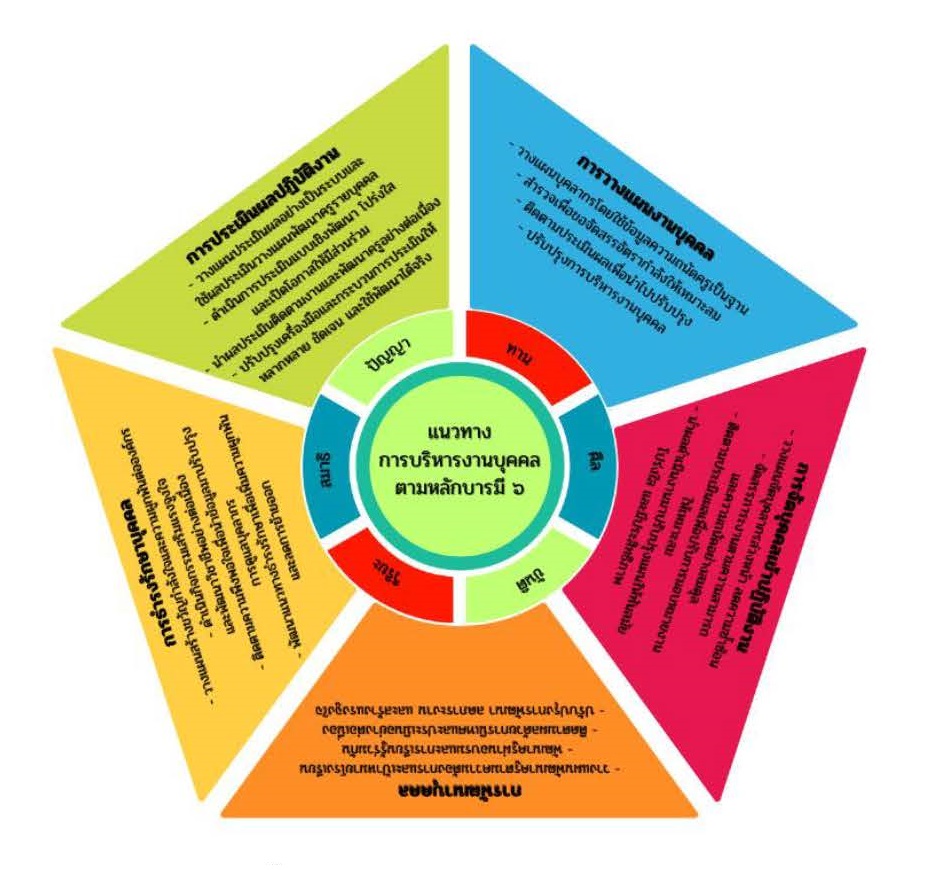
The research findings revealed that: 1) regarding the current conditions of personnel administration in schools within the Chulabhorn Educational Network, there were limitations in administrative processes caused by an insufficient number of teachers, heavy workloads, teacher transfers during the academic year, and constraints in budget and technology. Small-sized schools were required to handle workloads at levels comparable to larger schools while possessing significantly fewer resources, which affected the overall effectiveness of personnel administration. 2) The guidelines indicated that the integration of the Six Perfections into personnel administration covered all major processes, including planning, staffing, personnel development, retention, and performance evaluation. Generosity was applied to support personnel, morality was used to ensure fairness, patience was employed to accept individual differences, diligence encouraged continuous development, concentration supported careful decision-making, and wisdom emphasized the use of empirical data. As a result, personnel administration became more systematic, transparent, human-centered, and supportive of sustainable educational quality development. 3) The presentation and evaluation of the guidelines revealed that all experts agreed that the proposed guidelines were appropriate, feasible, and beneficial for application in personnel administration within educational institutions.
Downloads
Article Details

This work is licensed under a Creative Commons Attribution-NonCommercial-NoDerivatives 4.0 International License.
References
กลุ่มส่งเสริมการศึกษาทางไกล เทคโนโลยีสารสนเทศและการสื่อสาร (DL-ICT). (2560). เอกสารข้อมูลสารสนเทศทางการศึกษา พ.ศ. 2566. นครศรีธรรมราช: สำนักงานเขตพื้นที่การศึกษาประถมศึกษานครศรีธรรมราช เขต 3.
ชวัลวิทย์ อรุณปราการ. (2565). การใช้บารมี 10 ในการพัฒนาตนเองและสังคม. วารสารนวัตกรรมการจัดการศึกษาและการวิจัย, 4(1): 49-56.
นวพัชญ์ ฉีดจันทร์. (2564). การบริหารงานบุคคลกับแรงจูงใจในการปฏิบัติงานของครูในโรงเรียน สังกัดสำนักงานเขตพื้นที่การศึกษามัธยมศึกษา เขต 8. วิทยานิพนธ์ศึกษาศาสตรมหาบัณฑิต, บัณฑิตวิทยาลัย, มหาวิทยาลัยศิลปากร.
บุญโรจน์ เสรีวัฒนาวุฒิ. (2566). การพัฒนาสังคมในมิติบารมี 6. วารสารบัณฑิตศาส์น มหาวิทยาลัยมหามกุฏราชวิทยาลัย, 21(1): 391-406.
ปัญญาวัฒน์ สังฆะ. (2566). ความต้องการจำเป็นและแนวทางการบริหารงานบุคคลในสถานศึกษาขนาดเล็ก สังกัดสำนักงานเขตพื้นที่การศึกษาประถมศึกษาขอนแก่น เขต 5. วารสารพุทธปรัชญาวิวัฒน์, 7(1): 488-499.
ประวิณา ทองวิเศษ. (2564). การบริหารงานบุคคลตามหลักบารมี 6 ของผู้บริหารโรงเรียน สังกัดสำนักงานเขตพื้นที่การศึกษามัธยมศึกษา เขต 27. วารสารมหาวิทยาลัยมหามกุฎราชวิทยาลัย วิทยาเขตร้อยเอ็ด, 10(1): 845-857.
พระพรหมคุณาภรณ์ (ป.อ. ปยุตฺโต). (2558). พจนานุกรมพุทธศาสตร์ฉบับประมวลธรรม. พิมพ์ครั้งที่ 13. กรุงเทพฯ: บริษัทเอส.อาร์.พริ้นติ้งแมส โปรดักส์ จำกัด.
พระราชบัญญัติการศึกษาแห่งชาติ พุทธศักราช 2542 และแก้ไขเพิ่มเติม (ฉบับที่ 2). (2542, 19 สิงหาคม). ราชกิจจานุเษกษา. เล่มที่ 116 ตอนที่ 74ก, หน้า 1.
สำนักงานเลขาธิการสภาการศึกษา. (2560). แผนการศึกษาแห่งชาติ พุทธศักราช 2560- 2579. กรุงเทพฯ: สำนักงานเลขาธิการสภาการศึกษา.
เสนาะ ติเยาว์. (2543). การบริหารงานบุคลากร. กรุงเทพฯ: มหาวิทยาลัยธรรมศาสตร์.
Gary Dessler. (2020). Human Resource Management. Pearson Education.
