
Guidelines for Student Care Systems using the Digital Era based on Sanghavatthu IV of the School Network Khao Nangnon under Nakhon Si Thammarat Primary Educational Service Area Office 2
Article Sidebar
Main Article Content
Abstract
This research article aims to study: (1) the current conditions of the implementation of the student support system in the digital era; (2) the guidelines for implementing the student support system in the digital era based on the Four Sangahavatthu Principles; and (3) the presentation and evaluation of the guidelines for implementing the student support system in the digital era based on the Four Sangahavatthu Principles. This study employed a qualitative research methodology. Data were collected using an in-depth interview guide with 15 stakeholders, including 5 key informants, and a focus group discussion with 7 experts. The data were analyzed using inductive analysis.
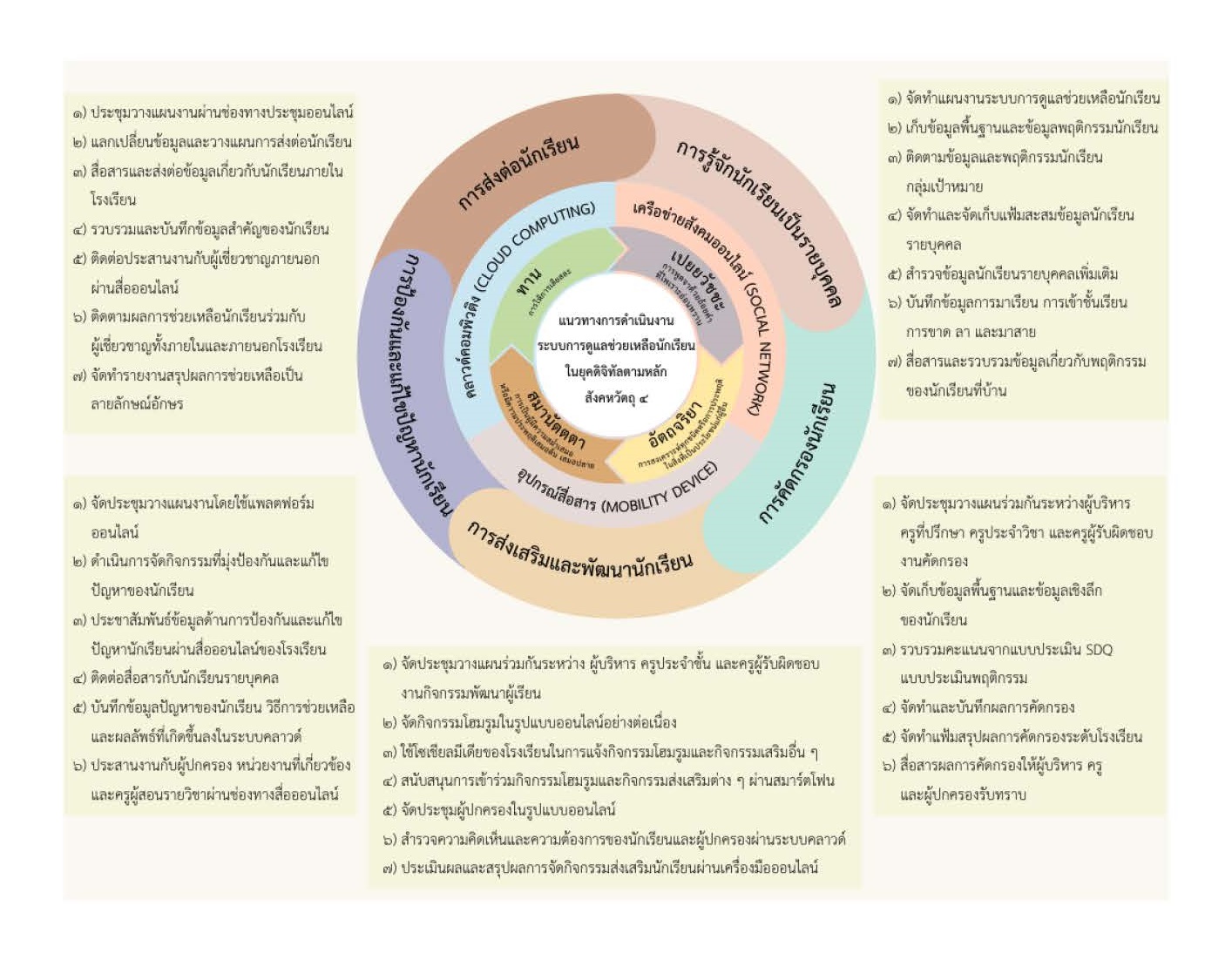
The research results were as follows: (1) Regarding the current conditions of the implementation of the student support system in the digital era in schools under Educational Network Center 4 (Khao Nang Non), it was found that although the schools implemented all five components of the student support system framework, the operations lacked systematic management. Most data were stored in paper-based formats, and the use of digital technology was neither systematic nor effectively integrated. Teachers’ increasing workload affected the continuity of student monitoring. In addition, coordination with parents and external agencies lacked systematic procedures. Consequently, the student support system was not fully aligned with the school context and individual student needs. (2) The guidelines for implementing the student support system in the digital era based on the Four Sangahavatthu Principles consist of five steps: knowing students individually and screening them by utilizing digital technology and cloud computing systems to collect, analyze, and store data for risk classification and appropriate support planning; promoting and developing students through digital platforms to ensure continuous monitoring of their development; preventing and solving problems through online communication and counseling; referring students through online coordination with relevant stakeholders while maintaining a centralized database; and integrating the Four Sangahavatthu Principles kind and polite speech, helpful conduct, and impartial treatment into all operational processes, resulting in systematic, transparent, and contextually appropriate implementation in the digital era. (3) The results of the presentation and evaluation of the proposed guidelines by experts from Educational Network Center 4 (Khao Nang Non) under Nakhon Si Thammarat Primary Educational Service Area Office 2 indicated that the guidelines were appropriate, feasible, and beneficial for practical implementation.
Downloads
Article Details

This work is licensed under a Creative Commons Attribution-NonCommercial-NoDerivatives 4.0 International License.
References
ณัฏฐวิภา คำปันศรี. (2559). สภาพปัจจุบัน สภาพที่พึงประสงค์และแนวทางการพัฒนาการดำเนินงานตามระบบดูแลช่วยเหลือนักเรียนในสถานศึกษาขั้นพื้นฐาน สังกัดสำนักงานเขตพื้นที่การศึกษาประถมศึกษานครราชสีมา เขต 2. วิทยานิพนธ์การศึกษามหาบัณฑิต, บัณฑิตวิทยาลัย, มหาวิทยาลัยมหาสารคาม.
เทียนชัย เจริญสุข. (2566). การจัดการระบบดูแลช่วยเหลือนักเรียนในยุคดิจิทัลตามหลักสังคหวัตถุ 4 ของโรงเรียนสังกัดสำนักงานเขตพื้นที่การศึกษาประถมศึกษาเลย เขต 1. วิทยานิพนธ์ครุศาสตร มหาบัณฑิต, บัณฑิตวิทยาลัย, มหาวิทยาลัยมหาจุฬาลงกรณราชวิทยาลัย.
ปฏิมากร ศิริเตชะ. (2549). ปัจจัยทางสังคม ลักษณะทางชีวสังคมที่เกี่ยวข้องกับพฤติกรรมที่เอื้อต่อสังคมตามหลักธรรมสังคหวัตถุ 4. วิทยานิพนธ์วิทยาศาสตรมหาบัณฑิต, บัณฑิตวิทยาลัย, มหาวิทยาลัย ศรีนครินทรวิโรฒ.
ปรมาภรณ์ สนธิ. (2560). แนวทางการพัฒนาระบบการดูแลช่วยเหลือนักเรียนระดับประถมศึกษาของโรงเรียนขนาดเล็ก สังกัดสำนักงานเขตพื้นที่การศึกษาประถมศึกษาปทุมธานี. วิทยานิพนธ์ศึกษาศาสตรมหาบัณฑิต, คณะครุศาสตร์อุตสาหกรรม, มหาวิทยาลัยเทคโนโลยีราชมงคลธัญบุรี.
แพรพลอย พัฒนะแสง. (2565). การพัฒนาแนวทางการดำเนินงานระบบดูแลช่วยเหลือนักเรียนโดยใช้เทคโนโลยีดิจิทัลในสถานศึกษา สังกัดสำนักงานเขตพื้นที่การศึกษาประถมศึกษานครราชสีมา เขต 3. วิทยานิพนธ์การศึกษามหาบัณฑิต, บัณฑิตวิทยาลัย, มหาวิทยาลัยมหาสารคาม.
มานพ บุญสมพงษ์. (2550). ปัญหาและแนวทางแก้ไขการดำเนินงานระบบดูแลช่วยเหลือนักเรียนในโรงเรียนมัธยมศึกษาสังกัดสำนักงานเขตพื้นที่จังหวัดตราด. วิทยานิพนธ์ศึกษาศาสตรมหาบัณฑิต, บัณฑิตวิทยาลัย, มหาวิทยาลัยบูรพา.
ลัดดาวัลย์ โคตรพิมพ์. (2564). แนวทางการพัฒนาระบบดูแลช่วยเหลือนักเรียน โรงเรียนสังกัดสำนักงานเขตพื้นที่การศึกษามัธยมศึกษา เขต 27. วิทยานิพนธ์การศึกษามหาบัณฑิต, บัณฑิตวิทยาลัย, มหาวิทยาลัยมหาสารคาม.
ศตวรรษ กฤษณา. (2564). การบริหารงานกิจการนักเรียนตามหลักสังคหวัตถุ 4 ในโรงเรียนมัธยมศึกษา อำเภอมหาชนะชัย จังหวัดยโสธร สังกัดสำนักงานเขตพื้นที่การศึกษามัธยมศึกษา เขต 28. วารสารการบริหารการศึกษา มมร.วิทยาเขตร้อยเอ็ด, 1(1): 23–34.
สุมาลี ทองงาม. (2555). การบริหารจัดการระบบดูแลช่วยเหลือนักเรียนระดับชั้นมัธยมศึกษาตอนต้น โรงเรียนวัดโคนอน สำนักงานเขตภาษีเจริญ กรุงเทพมหานคร. วิทยานิพนธ์พุทธศาสตรมหาบัณฑิต, บัณฑิตวิทยาลัย, มหาวิทยาลัยมหาจุฬาลงกรณราชวิทยาลัย.
สำนักงานคณะกรรมการการศึกษาขั้นพื้นฐาน. (2562). คู่มือการคัดเลือกสถานศึกษาและสำนักงานเขตพื้นที่การศึกษาเพื่อรับรางวัลระบบการดูแลช่วยเหลือนักเรียน ประจำปี 2562. กรุงเทพฯ: สำนักงานคณะกรรมการการศึกษาขั้นพื้นฐาน.
สำนักงานคณะกรรมการพัฒนาเศรษฐกิจและสังคมแห่งชาติ. (2560). แผนพัฒนาเศรษฐกิจและสังคมแห่งชาติ ฉบับที่ 12 (พ.ศ. 2560–2564). กรุงเทพฯ: สำนักงานคณะกรรมการพัฒนาเศรษฐกิจและสังคมแห่งชาติ.
