The Zimme Paṇṇāsa Jātaka No. 41-50: Transliteration Translation and Analytical Study
Article Sidebar
Main Article Content
Abstract
This research has the following objectives: 1) To study the Paṇṇāsa Jātaka within Theravāda Buddhism, which constitutes an important foundation for Jātaka literature in the Lanna region, 2) To transliterate, critically edit, and translate the Chiang Mai version of the Paṇṇāsa Jātaka (also known as the Zimme Paṇṇāsa Jātaka), stories 41–50, from Pāli in Roman script into Pāli in Thai script, in order to produce a complete and reliable text that can be used for further analysis in accordance with Pāli linguistic principles and 3) To conduct an analytical study of the Chiang Mai Paṇṇāsa Jātaka, stories 41–50, focusing on issues of content structure, literary composition, linguistic style, distinctive features, and the value of the Paṇṇāsa Jātaka for society, using documentary research methods.
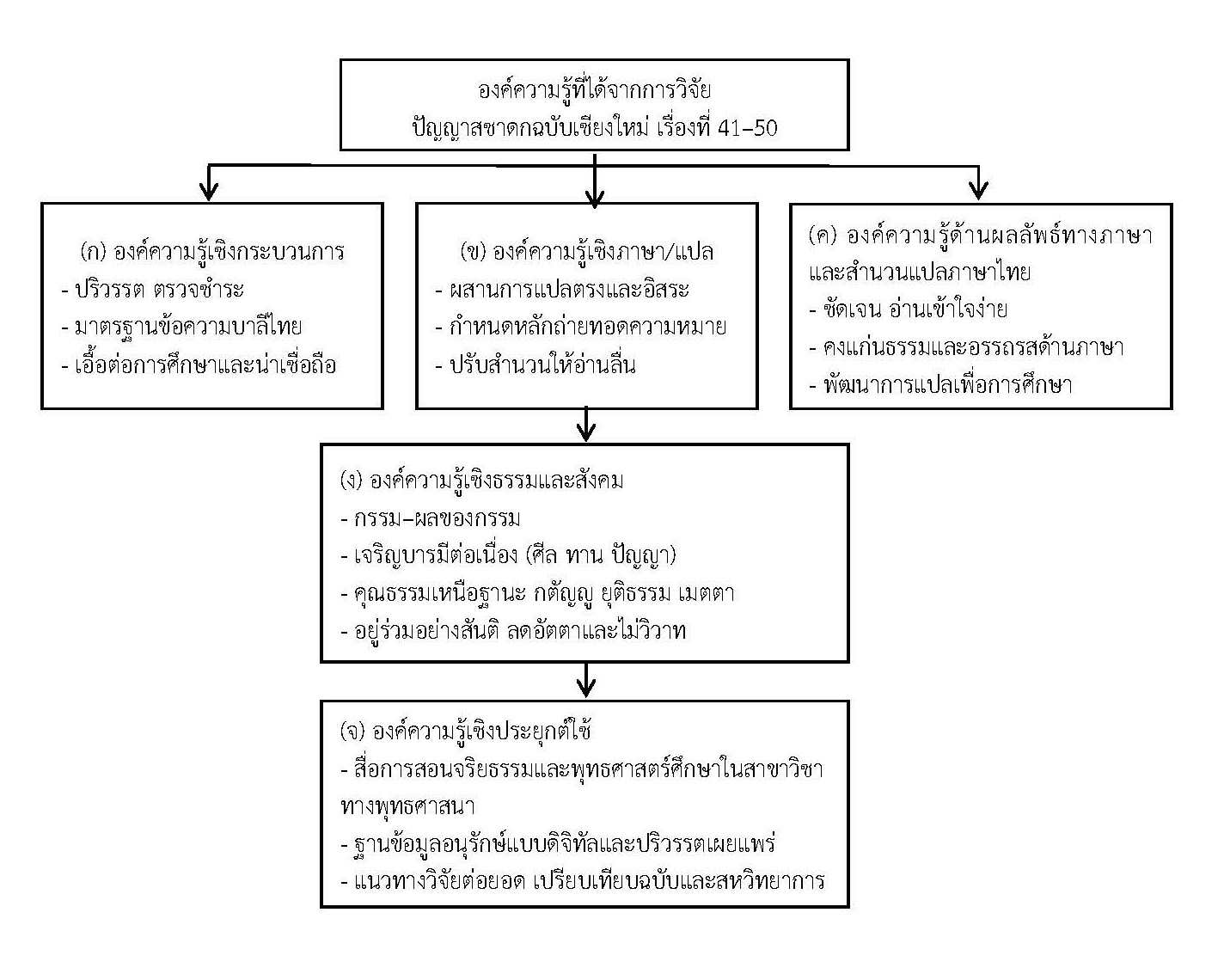
The findings were as follows:- The Chiang Mai version of the Paṇṇāsa Jātaka clearly reflects the development of intellectual and wisdom-based thought within Buddhism. The contents of the ten jātaka stories (nos. 41–50) demonstrate concepts related to the application of wisdom, rational deliberation, and prudent problem-solving, which are consistent with moral principles in Theravāda Buddhism. Moreover, the study reveals that the jātaka narratives are closely connected to the religious and cultural context of Lanna society, as they reflect local values, beliefs, and methods of moral instruction aimed at cultivating wisdom as a guiding principle for life. The translation and analysis further reveal a well-defined literary structure in terms of narrative progression, characterization, and didactic techniques, all of which facilitate a systematic understanding of both the literary and ethical values of the Paṇṇāsa Jātaka. The present analysis focuses on key literary elements, including content structure, plot development, characters, language use and idiom, compositional style, and the underlying values embedded in the narratives. The study aims to clarify the religious, moral, and social ideas reflected in this body of literature. It also demonstrates the influence of the Chiang Mai Paṇṇāsa Jātaka on the development of Thai literature in religious and cultural dimensions. The researcher therefore presents conclusions for each issue as follows.
Downloads
Article Details

This work is licensed under a Creative Commons Attribution-NonCommercial-NoDerivatives 4.0 International License.
References
กรมศิลปากร. (2552). ปัญญาสชาดก: ฉบับหอสมุดแห่งชาติ ภาค 1. พิมพ์ในงานออกเมรุพระราชทานเพลิงศพพระธรรมสิทธาจารย์ (หนู ถาวโรป.ธ.5) อดีตเจ้าอาวาสวัดพระสิงห์วรมหาวิหาร อดีตที่ปรึกษาเจ้าคณะจังหวัดเชียงใหม่ โดยคณะสงฆ์หนเหนือ. พิมพ์ครั้งที่ 3. กรุงเทพฯ: อาทรการพิมพ์.
จิตรเทพ ปิ่นแก้ว, พระมหาดวงรัตน์ ฐิตรตโน และธีรยุทธ วิสุทธิ. (2563). ปัญญาสชาดกฉบับเชียงใหม่ เรื่องที่ 31–40: การปริวรรต การแปล และการศึกษาเปรียบเทียบ. วารสารสังคมศาสตร์และมานุษยวิทยาเชิงพุทธ, 5(3), 369–381.
เทวัญ เอกจันทร์, พระครูสุตพัฒโนดม (วรเมศร์ จารุวณฺโณ) และพระครูธรรมธรกฤษณัฐ สิทฺธิญาโณ. (2563). ปัญญาสชาดกฉบับเชียงใหม่ เรื่องที่ 11–20: การปริวรรต การแปล และการศึกษาเปรียบเทียบ. วารสารสังคมศาสตร์และมานุษยวิทยาเชิงพุทธ, 5(3): 103–117.
นิยะดา เหล่าสุนทร. (2538). ปัญญาสชาดก: ประวัติและความสำคัญที่มีต่อวรรณกรรมร้อยกรองของไทย. กรุงเทพฯ: แม่คำผาง.
ประดิษฐ์ ปัญญาจีน, และ วิโรจน์ อินทนนท์. (2563). ปัญญาสชาดกฉบับเชียงใหม่ เรื่องที่ 21–30: การปริวรรต การแปล และการศึกษาเปรียบเทียบ. วารสารพุทธศาสตร์ศึกษา, 11(2): 478–493.
พระมหาวรเดช อธิปญฺโ (จะปา). (2558). ปัญญาสชาดก ฉบับเชียงใหม่ : ปริวรรต แปล และศึกษาวิเคราะห์. วิทยานิพนธ์พุทธศาสตรดุษฎีบัณฑิต, บัณฑิตวิทยาลัย, มหาวิทยาลัยมหาจุฬาลงกรณราชวิทยาลัย.
พัฒน์ เพ็งผลา. (2530). ชาดกกับวรรณกรรมไทย. กรุงเทพฯ: คณะมนุษยศาสตร์ มหาวิทยาลัยรามคำแหง.
พิชิต อัคนิจ และคณะ. (2541). ปริวรรตและศึกษาเชิงวิเคราะห์ปัญญาสชาดกฉบับล้านนาไทย. เชียงใหม่: คณะมนุษยศาสตร์ มหาวิทยาลัยเชียงใหม่.
มหาจุฬาลงกรณราชวิทยาลัย. (2535). พระไตรปิฎกภาษาไทย ฉบับมหาจุฬาลงกรณราชวิทยาลัย. กรุงเทพฯ: โรงพิมพ์มหาจุฬาลงกรณราชวิทยาลัย.
ลิขิต ลิขิตานนท์. (2526). ยุคทองแห่งวรรณกรรมพุทธศาสนาของลานนาไทยในล้านนาไทย. เชียงใหม่: ทิพย์เนตรการพิมพ์.
สมเด็จพระมหาสมณเจ้า กรมพระยาวชิรญาณวโรรส. (2521). ธรรมวิจารณ์. กรุงเทพฯ: มหามกุฏราชวิทยาลัย.
