
The Concept of Sacred Sites for Animals and Women in Theravada Buddhism as Manifested in Phra Nakhon Si Ayutthaya Province
Article Sidebar
Main Article Content
Abstract
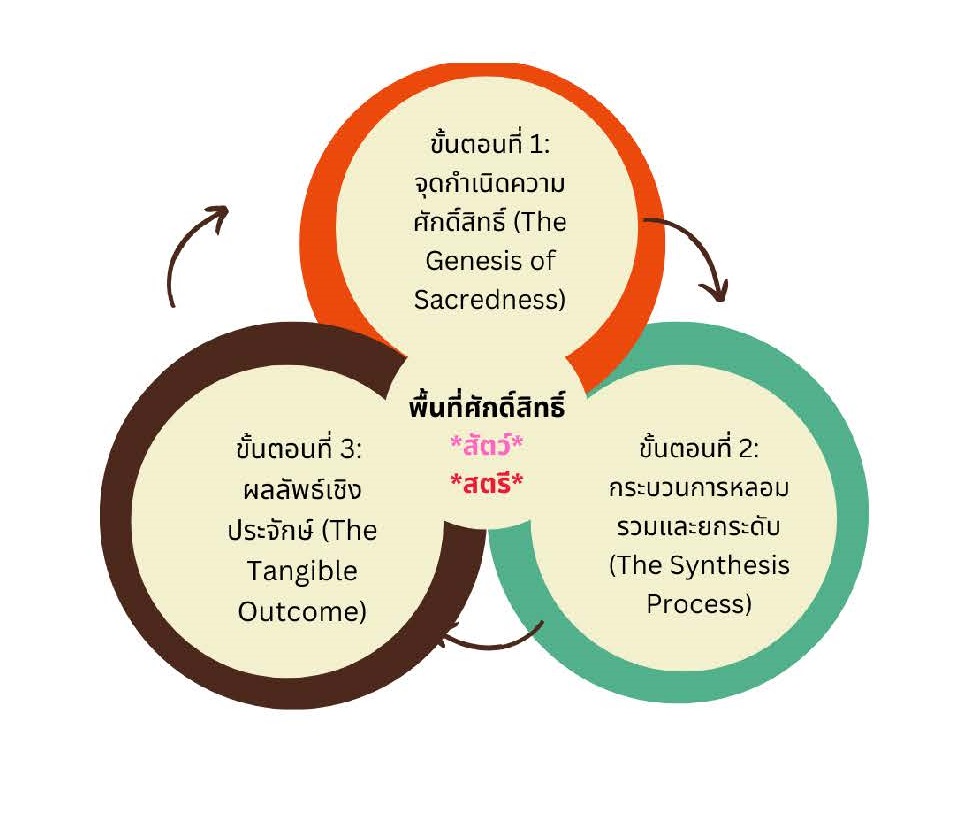
This research aims to: 1) examine the concept of sacred space for animals in Theravada Buddhism; 2) examine the concept of sacred space for women in Theravada Buddhism; and 3) analyze the concepts of sacred space for animals and women in Theravada Buddhism within the context of Phra Nakhon Si Ayutthaya province. This study employs a documentary research methodology, analyzing relevant texts and academic works. The findings are as follows: 1. The sanctity of animals originates from religious narratives that feature animals from Buddhist and Brahmin-Hindu mythology, such as the Garuda, the Naga, or animals appearing as Bodhisattvas in the Jataka tales. These concepts are integrated into religious rituals, such as the Khandha Paritta chant. Concurrently, community narratives establish sanctity through religious architecture, such as the construction of elephant-encircled chedis (stupas), which serves to intertwine local history with sacred sites.2. The sanctity of women is derived from religious narratives concerning legendary heroines, such as Queen Chamadevi, and from beliefs in female deities or mother goddesses who represent creation and fertility, such as Phra Mae Thorani (the Earth Goddess). Within community narratives, sanctity arises from the commemoration of historical events and the heroic deeds of significant figures, such as the valor of Queen Sri Suriyothai, which has led to the erection of monuments for remembrance and veneration.3. The analysis within the context of Phra Nakhon Si Ayutthaya province indicates that the formation of sacred spaces for animals and women is a cultural construction intrinsically linked to the institutions of the nation, religion, and the monarchy. The sacred space for animals is manifested through the belief in the white elephant as an auspicious animal befitting the king's glory and through the legend of the Tapian fish, which is associated with monarchical power. Meanwhile, the sacred space for women is represented by sites such as the Chedi of Queen Sri Suriyothai, the Chao Mae Soi Dok Mak Shrine, and Wat Mae Nang Pluem, all of which reflect the connection between women and the institutions of the monarchy and Buddhism. In conclusion, the sacred spaces for animals and women in Thai society are the result of a synthesis of religious narratives, history, and local folklore with socio-political structures, a process intended to construct meaning and perpetuate the collective memory of the community.
Downloads
Article Details

This work is licensed under a Creative Commons Attribution-NonCommercial-NoDerivatives 4.0 International License.
References
กรมศิลปากร. (2548). รวมบันทึกประวัติศาสตร์อยุธยาของฟาน ฟลีต (วัน วลิต). พิมพ์ครั้งที่ 2. กรุงเทพฯ: กรมศิลปากร.
กรมศิลปากร. (2510). คำให้การชาวกรุงเก่า คำให้การขุนหลวงหาวัดและพระราชพงศาวดารกรุงเก่าฉบับหลวงประเสริฐอักษรนิติ์. พระนคร: โรงพิมพ์คลังวิทยา.
กรมศิลปากร กระทรวงวัฒนธรรม. (2558). เทวสตรี: คติพุทธ พราหมณ์ และความเชื่อในประเทศไทย.กรุงเทพฯ: กรมศิลปากร.
กำพล จำปาพันธ์. (2566). พระเจ้าท้ายสระฉบับพรหม (ไม่) ลิขิต: การเมืองการค้าอยุธยาก่อนเสียกรุง.กรุงเทพฯ: มติชน.
ชาญวิทย์ เกษตรศิริ. (2543). อยุธยา ประวัติศาสตร์และการเมือง. พิมพ์ครั้งที่ 2. กรุงเทพฯ: โรงพิมพ์มหาวิทยาลัยธรรมศาสตร์.
ชาญวิทย์ เกษตรศิริ. (2561). อยุธยา. พิมพ์ครั้งที่ 7. กรุงเทพฯ: มูลนิธิโครงการตำราสังคมศาสตร์และมนุษยศาสตร์.
ชัยภัทร ปทุมทา และคณะ. (2563). สัตว์สัญลักษณ์ทางพระพุทธศาสนา: การสังเคราะห์คติธรรมและความเชื่อสู่การสร้างสรรค์พุทธศิลปกรรมของวัดในจังหวัดพิจิตร. รายงานการวิจัย. มหาวิทยาลัย มหาจุฬาลงกรณราชวิทยาลัย หน่วยวิทยบริการจังหวัดพิจิตร.
ชนิดา พรหมพยัคฆ์, ณัฏฐพงษ์ สกุลเลี่ยว. (2563). วิธีวิทยาในการศึกษาประวัติศาสตร์. กรุงเทพฯ: สำนักพิมพ์สยามปริทัศน์.
โชติมา จตุรวงค์ และคณะ. (2563). การบริหารจัดการมรดกวัฒนธรรมในศาสนสถานและสถานที่ศักดิ์สิทธิ์. รายงานการวิจัย. กรุงเทพฯ: สำนักงานเลขาธิการวุฒิสภา.
ปวัตร์ นวะมะรัตน. (2557). อยุธยาที่ไม่คุ้นเคย. กรุงเทพฯ: มติชน.
พระเทพวัชราจารย์. (2567). ธรรมนีติ. กรุงเทพฯ: โคเวอร์ ครีเอทีฟ.
มหาวิทยาลัยมหาจุฬาลงกรณราชวิทยาลัย. (2539). พระไตรปิฎกภาษาไทย ฉบับมหาจุฬาลงกรณราชวิทยาลัย. กรุงเทพฯ: มหาจุฬาลงกรณราชวิทยาลัย.
ยูคิโอะ ฮายาชิ. (2554). พุทธศาสนาเชิงปฏิบัติของคนไทยอีสาน: ศาสนาในความเป็นภูมิภาค. แปลโดย พินิจ ลาภธนานนนท์. กรุงเทพฯ: สำนักพิมพ์แห่งจุฬาลงกรณ์มหาวิทยาลัย.
รวี สิริอิสสระนันท์. (2557). ตำนานมูลศาสนา. นนทบุรี: ศรีปัญญา.
วินเซ็นต์, แฟรงค์. (2563). ดินแดนแห่งช้างเผือก: มุมมองและทัศนียภาพของเอเซียตะวันออกเฉียงใต้. กรุงเทพฯ: กรมศิลปากร.
วิบูล วิจิตรวาทการ. (2543). สตรีสยามในอดีต. พิมพ์ครั้งที่ 4. กรุงเทพฯ: สร้างสรรค์บุ๊ค.
ศรีศักร วัลลิโภดม. (2560). พุทธศาสนาและความเชื่อในสังคมไทย. พิมพ์ครั้งที่ 2. กรุงเทพฯ: มูลนิธิเล็ก-ประไพ วิริยะพันธุ์.
ศักดิ์ชัย สายสิงห์. (2560). เจดีย์ในประเทศไทย: รูปแบบ พัฒนาการ และพลังศรัทธา. นนทบุรี: เมืองโบราณ.
อัมพิกา ศรีสุธาพรรณ. (2543). ทัศนคติของสตรีต่อโฆษณาที่นำเสนอสตรีในบทบาทต่างๆ. วิทยานิพนธ์ปริญญานิเทศศาสตรมหาบัณฑิต, สาขาวิชาการโฆษณา, ภาควิชาการประชาสัมพันธ์, คณะนิเทศศาสตร์, จุฬาลงกรณ์มหาวิทยาลัย.
Clifford Greertz. (1973). The Interpretation of Cultures. New York: Basic Books.
Charles Guignon. (2006). "History and Historicity". A Companion to Phenomenology and Existentialism. Edited by Hubert L. Dreyfus, Mark A. Wrathall. Oxford: Blackwell Publishing Ltd.
Donald M. Stadtner. (2015). Sacred Site of Burma. Bangkok: River Book.
Susan Pitchford. (2008). Identity Tourism: Imaging and Imagining the Nation. Bingley: Emerald Publishing Ltd.
Frank E. Reynolds. (2002). “Rebirth Traditions and the Lineages of Gotama: A Story in Theravada Buddhology”. Sacred Biography in the Buddhist Traditions of South and Southeast Asia. Delhi: Motilal Banarsidass Publishers.
