
The Development of a Mobile Learning Model Integrated with Flipped Classroom Instruction for the Course ‘Object-Oriented Analysis and Design’ (Course Code: 31910-2003), Higher Vocational Certificate Level, Lampang Vocational College
Article Sidebar
Main Article Content
Abstract
Abstract
This research aimed to (1) study the problems and needs for developing a learning package model integrating mobile learning with flipped classroom instruction in the course “Object-Oriented System Analysis and Design” (Course Code 31910-2003) for the Higher Vocational Certificate level at Lampang Vocational College; (2) design and develop the proposed model; (3) implement the mode and evaluate its effectiveness; and (4) extend its application to educational network institutions. The study employed a mixed-methods approach based on the Research and Development (R&D) process comprising five phases: (1) basic information study, (2) model design and validation, (3) implementation, (4) evaluation, and (5) dissemination. Participants included administrators, teachers, staff, students, experts, and stakeholders from affiliated institutions.
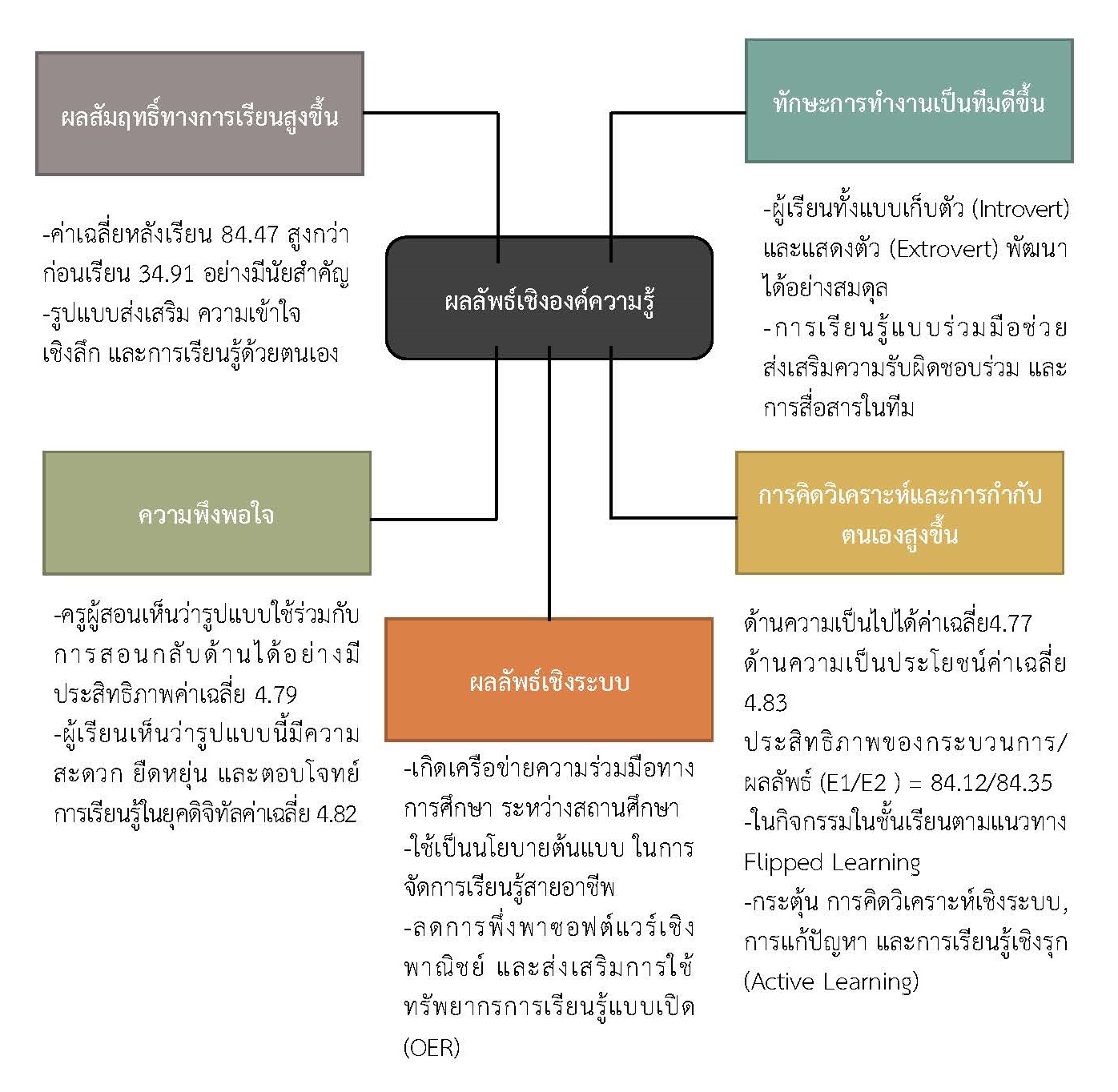
The findings revealed that the overall need for developing the model was at the highest level (X=4.68, S.D.=0.68), Context supporting ubiquitous and flexible access to learning media across time and location The developed model consisted of seven key components and five instructional steps. Experts rated the model’s appropriateness at the highest level (X=4.59, S.D.=0.46). Experimental results from 25 students showed that post-learning achievement scores were significantly higher than pre-learning scores at the .05 level (pre-test =34.91, post-test =84.47), and learners’ satisfaction was also at the highest level (X=4.82, S.D.=0.53. Additionally, evaluation by stakeholders from ten institutions indicated that the model was highly feasible and beneficial (X=4.80). The dissemination phase included training workshops and the distribution of 200 user manuals, which received the highest satisfaction level (X=4.72, S.D.=0.39) In conclusion, the integration of mobile learning with flipped classroom instruction effectively enhanced students’ academic achievement, teamwork skills, and learning satisfaction, demonstrating its potential for application and scalability within the vocational education context.
Downloads
Article Details

This work is licensed under a Creative Commons Attribution-NonCommercial-NoDerivatives 4.0 International License.
References
นพรัตน์ เปี่ยมบุญ. (2567). การพัฒนาบทเรียนออนไลน์ร่วมกับการจัดการเรียนรู้แบบห้องเรียนกลับด้าน วิชาเทคโนโลยี (วิทยาการคำนวณ) เพื่อส่งเสริมทักษะการทำงานเป็นทีมของนักเรียนระดับชั้นมัธยมศึกษาปีที่ 2 โรงเรียนสาธิตมหาวิทยาลัยราชภัฏนครปฐม. วิทยานิพนธ์ปริญญามหาบัณฑิต, มหาวิทยาลัยราชภัฏนครปฐม.
พฤทธิวรรณ ช่วงพิทักษ์. (2564). การพัฒนารูปแบบการเรียนรู้แบบห้องเรียนกลับทางร่วมกับการเรียนรู้เชิงรุกด้วยบทเรียนอีเลิร์นนิ่ง เรื่องการนำเสนอข้อค้นพบด้วยสื่อเทคโนโลยีระดับมัธยมศึกษาตอนปลาย. วิทยานิพนธ์ปริญญามหาบัณฑิต, มหาวิทยาลัยบูรพา.
วิภาดา แก้วคงคา. (2560). การพัฒนารูปแบบโมบายเลิร์นนิงแบบร่วมมือร่วมกับการใช้เหรียญตราดิจิทัลเพื่อเสริมสร้างทักษะการทำงานเป็นทีมของนักเรียนประถมศึกษาปีที่ 6. วิทยานิพนธ์ปริญญามหาบัณฑิต, จุฬาลงกรณ์มหาวิทยาลัย.
วิภาดา แก้วคงคา และจินตวีร์ คล้ายสังข์. (2560). การพัฒนารูปแบบโมบายเลิร์นนิงแบบร่วมมือร่วมกับการใช้เหรียญตราดิจิทัล เพื่อเสริมสร้างทักษะการทำงานเป็นทีมของนักเรียนประถมศึกษาปีที่ 6. วารสารอิเล็กทรอนิกส์ทางการศึกษา, 12(2): 239-254.
สุธรรม นกสี. (2564). การพัฒนาโมบายเลิร์นนิงแบบ Responsive Web Design เรื่องการสร้างบทเรียนคอมพิวเตอร์ช่วยสอนด้วยโปรแกรม Adobe Captivate 9 ร่วมกับการจัดการเรียนรู้แบบห้องเรียนกลับด้านสำหรับนักศึกษาระดับปริญญาตรี มหาวิทยาลัยราชภัฏนครปฐม. วิทยานิพนธ์ ปริญญามหาบัณฑิต, มหาวิทยาลัยราชภัฏนครปฐม.
ธนภร วัฒนนวลสกุล. (2565). การพัฒนารูปแบบการเรียนการสอนคณิตศาสตร์ตามแนวคิดห้องเรียนกลับด้านร่วมกับการเรียนรู้แบบร่วมมือ เพื่อเสริมสร้างความสามารถในการคิดวิเคราะห์ ผลสัมฤทธิ์ทางการเรียน และการกำกับตนเองของนักศึกษาระดับประกาศนียบัตรวิชาชีพชั้นสูง. วิทยานิพนธ์ปริญญามหาบัณฑิต, มหาวิทยาลัยเทคโนโลยีพระจอมเกล้าพระนครเหนือ.
ชลิตา อายุพัฒน์. (2564). การพัฒนาการจัดการเรียนรู้แบบห้องเรียนกลับด้านร่วมกับการใช้เทคโนโลยีคลาวด์ เพื่อส่งเสริมความสามารถในการแก้ปัญหาทางด้านวิทยาการคำนวณ. วิทยานิพนธ์ปริญญามหาบัณฑิต, มหาวิทยาลัยราชภัฏบ้านสมเด็จเจ้าพระยา.
รักถิ่น เหลาหา และคณะ. (2562). การพัฒนารูปแบบการเรียนรู้ห้องเรียนกลับทางโดยใช้ระบบห้องเรียนเสมือนจริงร่วมกับปัญหาเป็นหลักเพื่อพัฒนาความสามารถในการแก้ปัญหาและการคิดอย่างมีวิจารณญาณสำหรับนักศึกษาในระดับอุดมศึกษา. วิทยานิพนธ์ปริญญามหาบัณฑิต, มหาวิทยาลัยราชภัฏมหาสารคาม.
Best, J.W., and Kahn, J.V. (1986). Research in education. 5th ed. Prentice-Hall.
Ivica, B., Marko, S. and Aleksandar, P. (2019). Mobile learning in primary schools in Singapore: Self-directed and collaborative learning. International Journal of Mobile Learning and Organisation, 13(1): 60-75.
Shuk ying Ho. (2021). The relationship between learners’ personality traits and the use of mobile learning. Journal of Educational Technology Research, 4(2): 55–70.
Vilaythieng Sisouvong and Khamsavay Pasanchay. (2024). Mobile Learning: Enhancing Self-Directed Education through Technology, Wireless Networks, and the Internet Anytime, Anywhere. Journal of Education and Learning Reviews. 1(2): 39-49.
