
Public Participation in Temple Development: A Case Study of Wat Phleng Bangplat District, Bangkok
Article Sidebar
Main Article Content
Abstract
This research aims to study 1) the level of public participation in temple development, selecting Wat Phleng, Bangphlat District, Bangkok as a case study, and (2) approaches to promote public participation in temple development in the area. The research was conducted using a mixed-method approach. The study population was residents in Bangphlat Subdistrict, Bangphlat District, Bangkok. Accidental sampling was used to sample 379 people, and 5 key informants were selected. The data collection tools included questionnaires and interviews. The statistics used for data analysis included means, standard deviations, and qualitative data analyzed using content analysis.
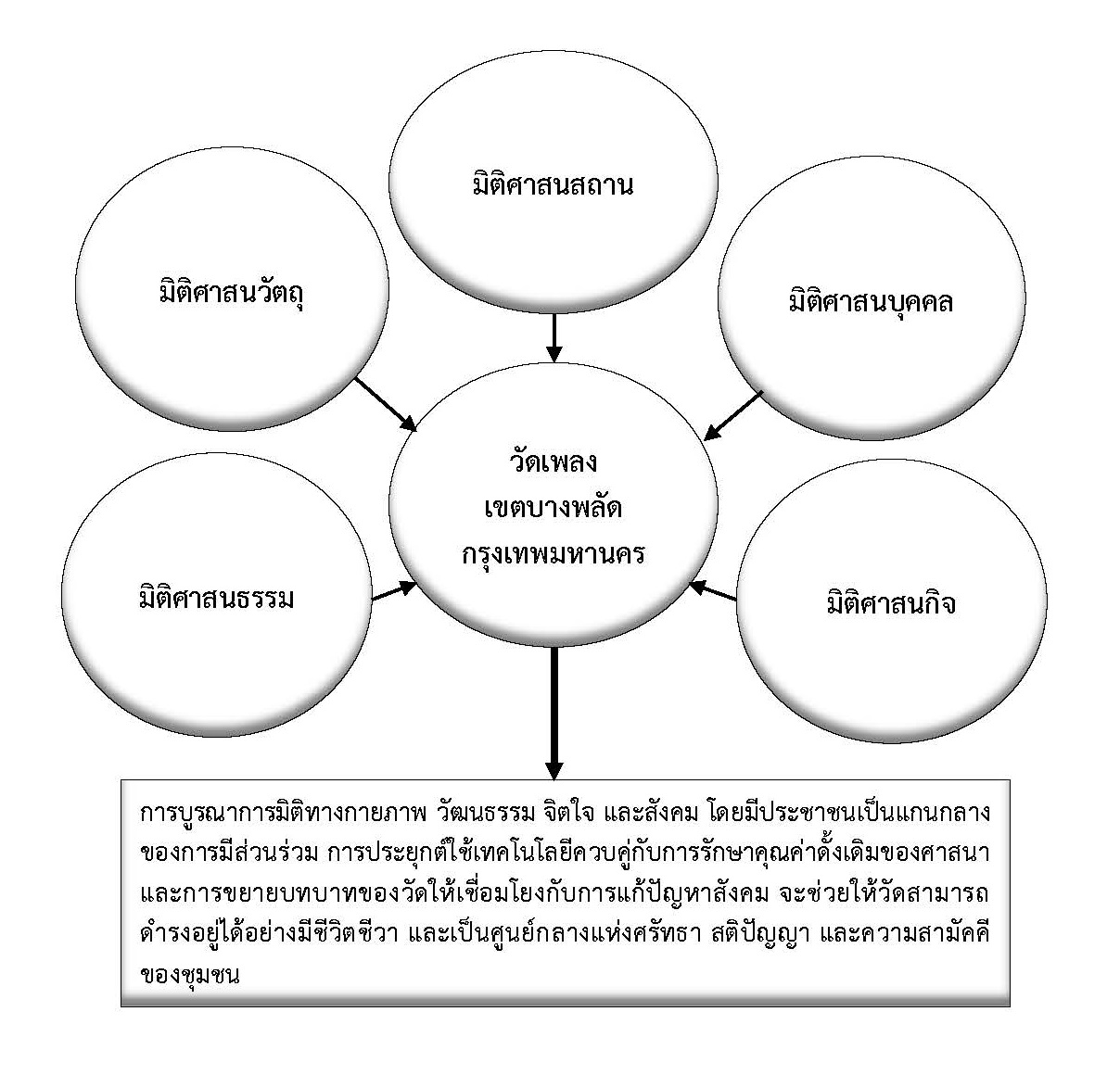
The research findings revealed: 1) the level of public participation in temple development, a case study of Wat Phleng, Bang Phlat District, Bangkok, was generally high; and 2) Promoting public participation in temple development reveals that temples serve as centers of religion, culture, education, and community, serving as both religious ceremonies and forums for collaborative efforts. Important buildings, such as churches, temples, and pagodas, reflect historical and cultural value. The sermon hall and temple grounds are used for traditional activities, public events, and moral learning. Thus, Wat Phleng is a school of life, imparting wisdom and morality. The development and restoration of religious buildings are guided by community participation, including decision-making, resource support, and collaborative efforts with monks, novices, volunteers, and youth. This ensures that temples remain sustainable centers of religion, culture, and social activity.
Downloads
Article Details

This work is licensed under a Creative Commons Attribution-NonCommercial-NoDerivatives 4.0 International License.
References
กัญจิรา วิจิตรวัชรารักษ์ และพระมหาอรุณ ปญฺญารุโณ. (2563). การส่งเสริมเครือข่ายจิตอาสาของพระสงฆ์ เขตภาคกลางตอนล่างในประเทศไทย. วารสารสังคมศาสตร์และมานุษยวิทยาเชิงพุทธ, 6(7): 350-364.
กิตติทัศน์ ผกาทอง. (2560). บทบาทผู้นำสงฆ์กับการพัฒนาชุมชน. วารสาร มจร สังคมศาสตร์ปริทรรศน์, 6(2): 441-452.
บุญโชค บุญมี และธนัสถา โรจนตระกูล. (2564). การพัฒนาชุมชนเข้มแข็งอย่างยั่งยืน: กรณีศึกษาเทศบาลตำบลบ้านกล้วย อำเภอเมืองสุโขทัย จังหวัดสุโขทัย. วารสาร มจร พุทธปัญญาปริทรรศน์, 6(3): 133-141.
เบญจา มังคละพฤกษ์. (2552). พระกับการเมือง: หลวงตามหาบัวกับทักษิณ. กรุงเทพฯ: เคล็ดไทย.
ประเวศ วะสี. (2559). โครงการวัดสร้างสุข คนสร้างชาติพุทธศาสตร์สร้างใจ. 18 มีนาคม 2559. กรุงเทพฯ: สมาคมส่งเสริมเทคโนโลยีไทย-ญี่ปุ่น.
พระธรรมโกศาจารย์ (ประยูร ธมฺมจิตฺโต). (2554). การเผยแผ่เชิงรุก. กรุงเทพฯ: สามลดา.
พระใบฎีกาสุจินดา เตชวโร/วิเศษวงศา, สัญญา เคณาภูมิ และเสาวลักษณ์ โกศลกิตติอัมพร. (2563). บทบาทพระสังฆาธิการต่อการพัฒนาชุมชนในทัศนะของประชาชนเขตตำบลดูกอึ่ง อำเภอหนองฮี จังหวัดร้อยเอ็ด. วารสารวิชาการรัตนบุศย์, 2(2): 60-72.
พระพรหมคุณาภรณ์ (ป.อ. ปยุตฺโต). (2551). พจนานุกรมพุทธศาสน์ ฉบับประมวลศัพท์. พิมพ์ครั้งที่ 11 ช่วงที่ 1. กรุงเทพฯ: บริษัท เอส.อาร์.พริ้นติ้ง แมส โปรดักส์จำกัด.
พระมหาวิเชียร วชิรธมฺโม, สมนึก กุลมณี, อังคาร กาญจนเพชร และพระครูสุตกิจสโมสร. (2564). บทบาทของพระสงฆ์กับการพัฒนาสังคมไทยยุคปัจจุบัน. วารสารมหาจุฬาตานีปริทรรศน์ มหาวิทยาลัยมหาจุฬาลงกรณราชวิทยาลัย, 3(6): 42-49.
ลำเงิน สุริยวงศ์, พุทธรักษ์ ปราบนอก และธนพฤกษ์ ชามะรัตน์. (2565). บทบาทของพระสงฆ์กับการจัดการสิ่งแวดล้อมของชุมชนเมืองขอนแก่น. วารสารวิชาการธรรมทรรศน์, 22(3): 221-233.
สถาบันพระสังฆาธิการ. (2560). เอกสารประกอบการประชุมพระสังฆาธิการ. กรุงเทพฯ: สำนักงานพระพุทธศาสนาแห่งชาติ.
สำนักงานเขตบางพลัด. (2566). ข้อมูลทางกายภาพ. [ออนไลน์]. แหล่งที่มา: https://webportal.bangkok.go.th/bangphlat [17 พฤศจิกายน 2567].
อนุวรรตน์ ศิลาเรืองอำไพ. (2559). โครงการวัดสร้างสุข คนสร้างชาติพุทธศาสตร์สร้างใจ. 18 มีนาคม 2559. กรุงเทพฯ: สมาคมส่งเสริมเทคโนโลยีไทย-ญี่ปุ่น.
Krejcie, R.V. & Morgan, D.W. (1970). Determining Sample Size for Research Activities. Educational and Psychological Measurement, 30(3): 607-610.
