
The Study of Importance of Prang Ku as The Buddhist Tourist Spot
Article Sidebar
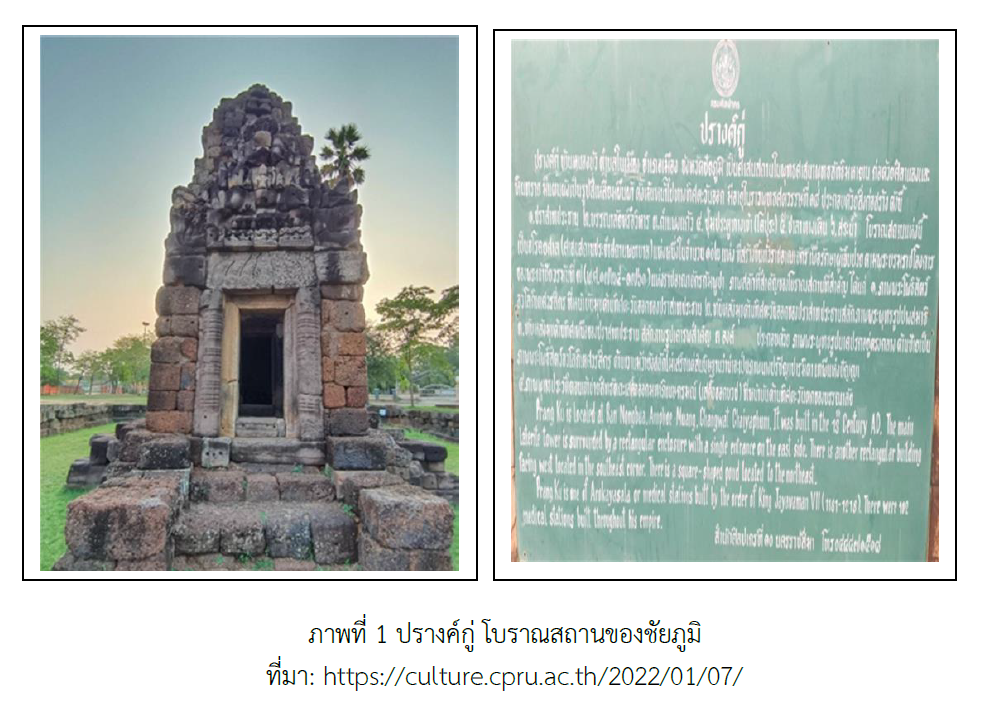
Main Article Content
Abstract
This research article has three objectives 1To study the significance of Prang Ku in Chaiyaphum Province, 2To explore the site in the context of Buddhist tourism, and 3To analyze the importance of Prang Ku within the dimension of Buddhist tourism. This is a qualitative research study. Data was collected from a group of 15 monks and laypeople residing in Mueang Chaiyaphum District, using purposive sampling. Of these, 10 individuals were selected specifically based on research-related criteria, totaling 25 participants in the study. For the document analysis, both primary and secondary sources were reviewed. This included research and theoretical literature relevant to the topic, such as books, journal articles, academic documents, theses, development plans, and databases. These materials were used to support the literature review and analysis of related research.
The results of the research found that: The study of importance of Prang Ku in Chaiyaphum Province helped understand well the historical and artful value of Prang Ku which is an important ancient place in Buddhism and the educational source of an ancient culture in the region The study of the Buddhist tourist spot helps understand the role of prang Ku as the tourist spot in Buddhism, which is an important place both in religion and culture, inspiring the tourists interested in studying Buddhism and history. The critic of importance stressing the role of Prang Ku in propagating and supporting Buddhism including the development of the tourist spot linking to the permanent religious beliefs together with succeeding the education and the study of the history of Prang Ku correctly.
Downloads
Article Details

This work is licensed under a Creative Commons Attribution-NonCommercial-NoDerivatives 4.0 International License.
References
การท่องเที่ยวแห่งประเทศไทย (ททท). “แนะนำสถานที่ท่องเที่ยวในจังหวัดชัยภูมิ”. การท่องเที่ยวแห่งประเทศไทย. [ออนไลน์]. แหล่งที่มา: https://www.tat.or.th/th [13 พฤษภาคม 2567].
กรมศิลปากร กระทรวงวัฒนธรรม. ข้อมูลโบราณสถานที่ขึ้นทะเบียน. [ออนไลน์]. แหล่งที่มา: https://www.finearts.go.th/ [12 พฤษภาคม 2567].
คณะกรรมการฝ่ายประมวลเอกสารและจดหมายเหตุ. (2542). วัฒนธรรม พัฒนาการทางประวัติศาสตร์ เอกลักษณ์และภูมิปัญญาจังหวัดชัยภูมิ. กรุงเทพฯ: โครงการตำราและพัฒนาสื่อ.
เติม วิภาคย์พจนกิจ. (2542). ประวัติศาสตร์อีสาน. พิมพ์ครั้งที่ 3. กรุงเทพฯ: สำนักพิมพ์มหาวิทยาลัย ธรรมศาสตร์
ธวัชชัย สาครินทร์. (2542). นครราชสีมาโคราชของเรา. กรุงเทพฯ: มังกรการพิมพ์ (1994) จำกัด.
ไพฑูรย์ มีกุศล. (2542). สารานุกรมวัฒนธรรมไทยภาคอีสาน. กรุงเทพฯ: มูลนิธิสารานุกรมวัฒนธรรมไทย ธนาคารไทยพาณิชย์.
ศิลปะและวัฒนธรรมจังหวัดชัยภูมิ. ปรางค์กู่. [ออนไลน์]. แหล่งที่มา:https://culture.cpru.ac.th/2022/01/07 [27 มกราคม 2568].
ศรีศักร วัลลิโภดม. (2538). แหล่งอารยธรรมอีสาน. พิมพ์ครั้งที่ 3. กรุงเทพฯ: สำนักพิมพ์มติชน
ศูนย์มานุษยวิทยาสิรินธร (องค์การมหาชน). ปรางค์กู่. [ออนไลน์]. แหล่งที่มา: https://archaeology.sac.or.th/archaeology/275?utm_source=chatgpt.com. [11 มีนาคม 2568].
สุทธิ เหล่าฤทธ์ และคณะ. (2545). ประวัติเมืองชัยภูมิ. กรุงเทพฯ: ด่านสุทธาการพิมพ์.
สำนักงานประชาสัมพันธ์จังหวัดชัยภูมิ. ปรางค์กู่. [ออนไลน์]. แหล่งที่มา: https://chaiyaphum.prd.go.th/th/content/category/detail/id/127/iid/11494?utm_source=chatgpt.com. [13 พฤษภาคม 2567].
