Conflict management in Buddhist organizations toward sustainable unity
Article Sidebar
Main Article Content
Abstract
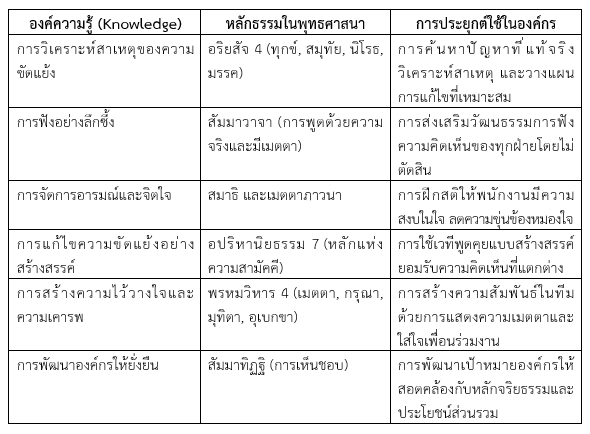
This article aims to study to present guidelines for resolving conflicts in organizations by using Buddhist principles as a tool to create a working environment that is conducive to happiness, unity, and sustainability of the organization. The results of the study found that. Conflict is a phenomenon that can occur in every organization. Whether it is a small or large organization Public or private organization these conflicts may arise from differences in ideas, reasons, or interests. Which if not managed properly it may affect the performance of the organization. Interpersonal relationships and the image of the organization in the long term Buddhism provides principles and teachings that can be applied to resolving conflicts effectively. Emphasis is placed on the mental development of individuals. Creating good understanding and seeking a solution that is fair to all parties Presents ideas for managing conflict in organizations based on Buddhist principles. To create sustainable unity in the organization.
Downloads
Article Details

This work is licensed under a Creative Commons Attribution-NonCommercial-NoDerivatives 4.0 International License.
References
ชลากร เทียนส่องใจ. (2553). การเจรจาไกล่เกลี่ยคนกลางเชิงพุทธ: หลักการและเครื่องมือสำหรับการจัดการความขัดแย้ง. วิทยานิพนธ์พุทธศาสตรดุษฎีบัณฑิต, สาขาวิชาพระพุทธศาสนา, บัณฑิตวิทยาลัย, มหาวิทยาลัยมหาจุฬาลงกรณราชวิทยาลัย.
ประสิทธิ์ กุลบุญญา, ดร. (2557). ความขัดแย้งและการจัดการความขัดแย้งตามหลักพระพุทธศาสนา. วารสารมนุษยศาสตร์และสังคมศาสตร์ มหาวิทยาลัยราชภัฏอุบลราชธานี. ปีที่ 5 ฉบับที่ 1 มกราคม - มิถุนายน 2557.
พระพรหมบัณฑิต (ประยูร ธมฺมจิตฺโต). (2555). พุทธวิธีการบริหาร. กรุงเทพฯ: โรงพิมพ์มหาจุฬาลงกรณราชวิทยาลัย.
มหาจุฬาลงกรณราชวิทยาลัย. (2539). พระไตรปิฎกภาษาไทย ฉบับมหาจุฬาลงกรณราชวิทยาลัย. เล่มที่ 18 (พระสุตตันตปิฎก เล่มที่ 10 สังยุตตนิกาย สฬายตนวรรค ปุณณสูตร ข้อ 112-117). กรุงเทพฯ: โรงพิมพ์มหาจุฬาลงกรณราชวิทยาลัย.
ยืน ชาร์ป (เขียน). ชัยวัฒน์ สถาอานันท์ และคมสันต์ หุตะแพทย์ (แปล). (2529). อำนาจและยุทธวิธีไร้ความรุนแรง. กรุงเทพฯ: มูลนิธิโกมลคีมทอง.
ราชบัณฑิตยสถาน. (2546). พจนานุกรมฉบับราชบัณฑิตยสถาน พ.ศ. 2542. กรุงเทพฯ: นานมีบุ๊คส์พับลิเคชั่นส์.
วันชัย วัฒนศัพท์ และคณะ.(2548). การแก้ปัญหาความขัดแย้งในสถานศึกษา. กรุงเทพฯ: สถาบันพระปกเกล้า.
วันชัย วัฒนศัพท์ และคณะ.(2547). คู่มือเกี่ยวกับความขัดแย้ง หลักการ และเครื่องหมายแก้ปัญหา. กรุงเทพฯ: ศูนย์สันติวิธี และธรรมาภิบาล.
ศรีศักร วัลลิโภดม. (2553). ภูมิวัฒนธรรม. กรุงเทพฯ: โรงพิมพ์มหาจุฬาลงกรณราชวิทยาลัย.
สถาบันพระปกเกล้า. (2545). ยุทธศาสตร์เพื่อการพัฒนาท้องถิ่น. กรุงเทพฯ: โรงพิมพ์สถาบันพระปกเกล้า.
เสริมศักดิ์ วิศาลาภรณ์. (2534). ความขัดแย้ง: การบริหารเพื่อความสร้างสรรค์. พิมพ์ครั้งที่ 1. กรุงเทพฯ: ต้นอ้อ.
อรุณ รักธรรม. (2523). การพัฒนาองค์การเพื่อการเปลี่ยนแปลง. กรุงเทพฯ: ไทยวัฒนาพานิช.
Dale, Ernest. (1973). Management Theory and Practice. New York: McGraw-Hill Book Co.
Fayol, Henry. (1949). General and Industrial Management. London: Sir Issac Pitman & Sons Ltd.
Prebish. C.S. and Keown. D. (2006). Introduction to Buddhism. London: Rougtledge.
Zhou Yu, Chen Shou. (1959). History of the Three Kingdoms. Reprint.
