
ภาวะผู้นำเชิงจริยธรรมและบทเรียนเพื่อความเป็นเลิศในการบริหารการศึกษา: กรณีศึกษาศูนย์การศึกษาพิเศษประจำจังหวัดตราด
คำสำคัญ:
ภาวะผู้นำเชิงจริยธรรม, ความเป็นเลิศในการบริหารการศึกษา, ศูนย์การศึกษาพิเศษ, ทฤษฎีกระบวนระบบบทคัดย่อ
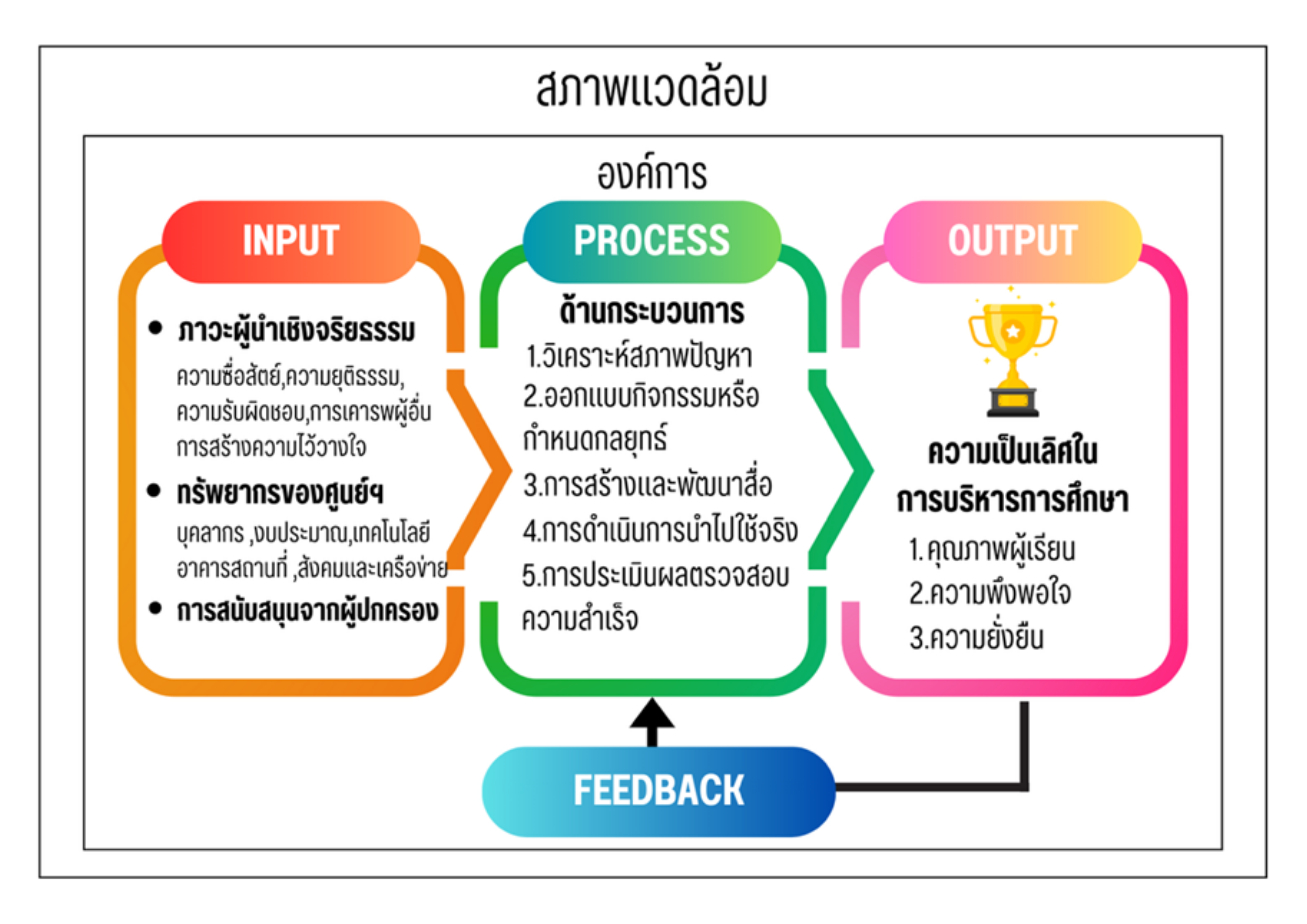
บทความนี้มีวัตถุประสงค์ เพื่อวิเคราะห์ภาวะผู้นำเชิงจริยธรรมและบทเรียนที่ส่งผลต่อความเป็นเลิศในการบริหารจัดการศึกษาของศูนย์การศึกษาพิเศษ ประจำจังหวัดตราด โดยมุ่งเน้นสามประเด็นหลัก คือ 1) การส่งเสริมภาวะผู้นำเชิงจริยธรรมของผู้บริหารให้ยึดหลักซื่อสัตย์ ยุติธรรม และรับผิดชอบในการบริหารจัดการศึกษา 2) การยกระดับคุณภาพและประสิทธิภาพการบริหารจัดการศึกษาให้โปร่งใส เป็นระบบ และตอบสนองความต้องการของผู้เรียนและผู้ปกครอง 3) การพัฒนาแนวทางปฏิบัติที่เป็นแบบอย่าง (Best Practice) ด้านการบริหารเชิงคุณธรรมที่สามารถต่อยอดและสร้างความยั่งยืน จากการวิเคราะห์เอกสาร แนวคิด และงานวิจัยที่เกี่ยวข้อง พบว่าภาวะผู้นำเชิงจริยธรรมเป็นปัจจัยสำคัญที่ส่งผลต่อความเป็นเลิศในการบริหารจัดการศึกษา ผู้บริหารที่ยึดมั่นในคุณธรรม ความโปร่งใส และความรับผิดชอบ สามารถสร้างความไว้วางใจ ความพึงพอใจ และแรงจูงใจแก่ครู บุคลากร และผู้ปกครองได้อย่างมีนัยสำคัญ นอกจากนี้ การประยุกต์ใช้ทฤษฎีกระบวนระบบ (Systems Approach Theory) ในการบริหารจัดการศึกษา ช่วยให้กระบวนการดำเนินงานมีขั้นตอนที่ชัดเจน ตรวจสอบได้ และสามารถพัฒนาคุณภาพอย่างต่อเนื่อง บทเรียนจากศูนย์การศึกษาพิเศษจังหวัดตราดสะท้อนให้เห็นว่า การบูรณาการภาวะผู้นำเชิงจริยธรรมเข้ากับการบริหารอย่างเป็นระบบไม่เพียงยกระดับคุณภาพการศึกษาเท่านั้น แต่ยังสร้างต้นแบบการจัดการที่สามารถเผยแพร่และต่อยอดไปสู่ศูนย์การศึกษาพิเศษอื่น ๆ ได้อย่างยั่งยืน ซึ่งถือเป็นก้าวสำคัญในการขับเคลื่อนคุณภาพการศึกษาของประเทศไทยในศตวรรษที่ 21
Downloads
เอกสารอ้างอิง
กัญญารัตน์ คำแพง, และคณะ. (2565). ประสิทธิผลของสถานศึกษาและปัจจัยเชิงคุณธรรมที่เกี่ยวข้อง. วารสารวิชาการทางการศึกษา, 18(2), 55 - 70.
ภรณี มหานนท์. (2554). ประสิทธิผลของสถานศึกษา. กรุงเทพฯ: สำนักพิมพ์ทางการศึกษา.
ราชกิจจานุเบกษา. (2551). พระราชบัญญัติการจัดการศึกษาสำหรับคนพิการ พ.ศ. 2551. เล่ม 125 ตอนที่ 28 ก. 1 - 12. 5 กุมภาพันธ์ 2551.
ราชกิจจานุเบกษา. (2556). พระราชบัญญัติการจัดการศึกษาสำหรับคนพิการ (ฉบับที่ 2) พ.ศ. 2556. เล่ม 130 ตอนที่ 42 ก. 1 - 3. 17 พฤษภาคม 2556.
มณีรัตน์ จันทรา, เริงวิชญ์ นิลโคตร, และวัยวุฒิ บุญลอย. (2566). ภาวะผู้นำเชิงวิสัยทัศน์ของผู้บริหารสถานศึกษาที่ส่งผลต่อคุณธรรม และความโปร่งใสในการดำเนินงานของสถานศึกษา สังกัดสำนักงานเขตพื้นที่การศึกษาประถมศึกษาจันทบุรี เขต 1. วารสารมหาจุฬานาครทรรศน์, 10(12), 120 - 129.
บรรจง สุรินทร์. (2561). ความพึงพอใจของผู้รับบริการและผู้มีส่วนได้ส่วนเสียต่อการบริหารงานของวิทยาลัยพยาบาลบรมราชชนนี สระบุรี. วารสารวิทยาลัยพยาบาลบรมราชชนนี สระบุรี, 23(2), 45 - 58.
วิจารณ์ พานิช, ศีลวัต ศุษิลวรณ์ และณัฐทิพย์ วิทยาภรณ์. (2566). เพื่อครูและนักเรียนเป็นนักพัฒนาตนเอง. กรุงเทพฯ: บริษัท เอส. อาร์. พริ้นติ้ง แมสโปรดักส์ จำกัด.
วิจารณ์ พานิช. (2563). การศึกษาคุณภาพสูงระดับโลก. กรุงเทพฯ: มูลนิธิสยามกัมมาจล.
วิไลลักษณ์ รู้กิจ, เอกราช โฆษิตพิมานเวช และสัมฤทธิ์ กางเพ็ง. (2567). ภาวะผู้นำเชิงคุณธรรมจริยธรรมของผู้บริหารสถานศึกษาในยุคการเปลี่ยนแปลงของโลก. วารสารการบริหารและคุณธรรม(Journal of Management and Morality), 6(1), 45 - 60.
ศูนย์การศึกษาพิเศษ ประจำจังหวัดตราด. (2568). บทบาทหน้าที่ของศูนย์การศึกษาพิเศษ. สืบค้นเมื่อ 17 กันยายน 2568, จาก https://specialed5.ac.th/?page_id=1160
อนันต์ ฉิมยงค์, เริงวิชญ์ นิลโคตร, และวัยวุฒิ บุญลอย. (2566). ภาวะผู้นำเชิงจิตวิญญาณและอุดมการณ์ของผู้บริหารสถานศึกษาที่ส่งผลต่อประสิทธิผลของสถานศึกษาในยุคเน็กซ์นอร์มัล สังกัดสำนักงานเขตพื้นที่การศึกษามัธยมศึกษาสระแก้ว. วารสารมหาจุฬานาครทรรศน์, 10(7), 53 - 63.
Alainati, S., Almonawer, A., & Al - Hammad, F. (2023). Transformational Leadership and Educational Outcomes: Evidence from Secondary Schools. International Journal of Education Management, 37(4), 589 - 605.
Amir, N., Rahman, A., & Ismail, M. (2023). Ethical Leadership and Sustainable Organizational Performance in Education: A Systematic Review. Malaysian Journal of Educational Leadership, 15(2), 45 - 62.
Anderson, L. (2017). Leadership as Influence: The Role of Transformational and Ethical Leadership in Organizational Success. Journal of Leadership Studies, 11(1), 12 - 27.
Berkovich, I., & Eyal, O. (2021). The Mediating Role of Principals’ Ethical Leadership in the Relationship between Trust and Teachers’ Organizational Citizenship Behavior. Journal of Educational Administration, 59(2), 210 - 227. https://doi.org/10.1108/JEA-09-2019-0150
Brown, M. E., & Treviño, L. K. (2006). Ethical Leadership: A Review and Future Directions. The Leadership Quarterly, 17(6), 595 - 616. https://doi.org/10.1016/j.leaqua.2006.10.004
Capuyan, L., & Tabile, S. (2024). Ethical Leadership in Education: Building Trust and Teacher Engagement. European Journal of Social and Innovative Teaching, 8(1), 77 - 91.
Dick, W., & Carey, L. (2001). The Systematic Design of Instruction (5th ed.). New York, NY: Addison - Wesley Educational Publishers
Göçen, A. (2021). Ethical Leadership and Organizational Commitment in Education. International Online Journal of Educational Leadership, 5(1), 1 - 14. https://doi.org/10.29228/iojel.1
Javornik, J., & Mirazchiyski, P. (2023). Effectiveness in Education: Conceptualization and Measurement. Educational Research Review, 39(3), 2090 - 2100.
Jobir, A. (2025). Transformational Leadership Impact on Inclusive Education and Teacher Performance. Asian Journal of Education and Innovation Technology, 6(1), 34 - 50.
Jomari, G. S. (2025). Educational Effectiveness and Organizational Success. Asian Journal of Education Research, 12(3), 3304 - 3307.
Northouse, P. G. (2019). Leadership: Theory and Practice (8th ed.). Thousand Oaks, CA: Sage Publications.
Treviño, L. K., Hartman, L. P., & Brown, M. (2000). Moral Person and Moral Manager: How Executives Develop a Reputation for Ethical Leadership. California Management Review, 42(4), 128 - 142.
UNESCO. (2020). Education in a Post - COVID World: Nine Ideas for Public Action. Paris, France: UNESCO.
ดาวน์โหลด
เผยแพร่แล้ว
รูปแบบการอ้างอิง
ฉบับ
ประเภทบทความ
สัญญาอนุญาต
ลิขสิทธิ์ (c) 2025 วารสารพุทธนวัตกรรมการศึกษา

อนุญาตภายใต้เงื่อนไข Creative Commons Attribution-NonCommercial-NoDerivatives 4.0 International License.
บทความนี้ได้รับการเผยแพร่ภายใต้สัญญาอนุญาต Creative Commons Attribution-NonCommercial-NoDerivatives 4.0 International (CC BY-NC-ND 4.0) ซึ่งอนุญาตให้ผู้อื่นสามารถแชร์บทความได้โดยให้เครดิตผู้เขียนและห้ามนำไปใช้เพื่อการค้าหรือดัดแปลง หากต้องการใช้งานซ้ำในลักษณะอื่น ๆ หรือการเผยแพร่ซ้ำ จำเป็นต้องได้รับอนุญาตจากวารสาร