
BUDDHIST PHILOSOPHY ON THE DEVELOPMENT OF ORGANIC RICE FARMING : FOSTERING VIRTUE, ETHICS, AND THE PRINCIPLE OF SUFFICIENCY
Keywords:
Buddhist Philosophy, Organic Rice Farming, Morality, Ethics, SufficiencyAbstract
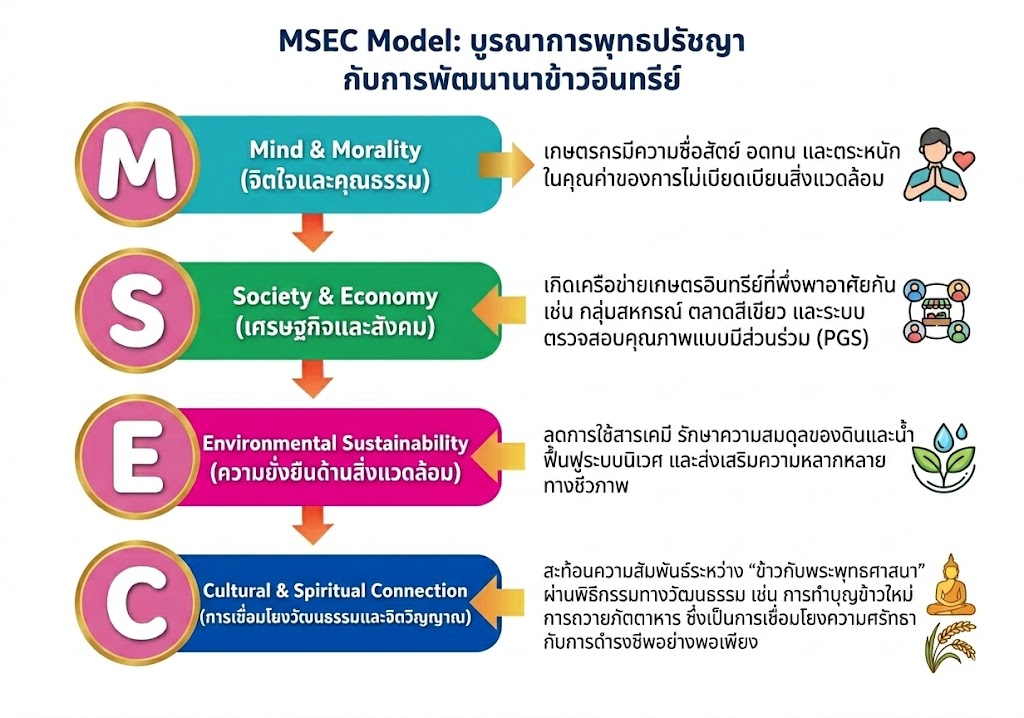
The purpose of this article was to study and analyze the integration of Buddhist philosophy with the development of organic rice farming in Northern Thailand, emphasizing the cultivation of virtue, ethics, and a way of life based on the principle of sufficiency. The study found that key Buddhist philosophical concepts such as the Threefold Training (Sīla, Samādhi, Paññā), the Four Principles of Beneficial Conduct (Diṭṭhadhamma - kattha), and the Noble Eightfold Path were consistent with the core principles of organic agriculture, namely health, ecology, fairness, and care. Practical applications in Northern communities revealed that the participation of temples and community networks, the implementation of the Participatory Guarantee System (PGS), and the establishment of green markets contribute to balanced living and resilience in economic, social, and environmental dimensions. This article suggested that the development of organic rice farming guided by Buddhist philosophy not only enhanceed economic productivity but also fostered morality, ethics, and sustainable quality of life.
Downloads
References
กัญญาณัฐ ปูนา. (2562). ข้อเสนอเชิงนโยบายในการบริหารจัดการการศึกษาเพื่อเสริมสร้างทักษะ อาชีพสำหรับนักเรียนระดับมัธยมศึกษาในโรงเรียนขยายโอกาสทางการศึกษาพื้นที่พิเศษ จังหวัดเชียงราย. วารสารบัณฑิตศึกษา มหาวิทยาลัยราชภัฏเชียงราย, 9(1), 135 - 148.
มหาจุฬาลงกรณราชวิทยาลัย. (2539). พระไตรปิฎกภาษาไทยฉบับมหาจุฬาลงกรณราชวิทยาลัย. กรุงเทพฯ: โรงพิมพ์มหาจุฬาลงกรณราชวิทยาลัย.
พุทธทาสภิกขุ. (2542). พุทธปรัชญาเบื้องต้น. กรุงเทพฯ: ธรรมสภา.
พระธรรมปิฎก (ป.อ. ปยุตฺโต). (2546). พจนานุกรมพุทธศาสน์ ฉบับประมวลศัพท์ (พิมพ์ครั้งที่ 10). กรุงเทพฯ: โรงพิมพ์มหาจุฬาลงกรณราชวิทยาลัย.
สำนักงานคณะกรรมการพัฒนาการเศรษฐกิจและสังคมแห่งชาติ. (2545). แผนพัฒนาเศรษฐกิจและสังคมแห่งชาติ ฉบับที่ 9 (พ.ศ. 2545 - 2549). กรุงเทพฯ: สำนักงานคณะกรรมการพัฒนาการเศรษฐกิจและสังคมแห่งชาติ.
สำนักงานคณะกรรมการพัฒนาการเศรษฐกิจและสังคมแห่งชาติ. (2550). ปรัชญาของเศรษฐกิจพอเพียง. กรุงเทพฯ: 21 เซ็นจูรี.
กรรณิการ์ ขาวเงิน และนันทพล โรจนโกศล. (2561). การพัฒนาคุณภาพมรรคมีองค์ 8 ของบุคคลตามหลักพระพุทธศาสนาเถรวาท. วารสาร มจร พุทธศาสตร์ปริทรรศน์, 2(2), 128 - 133.
พระครูปลัด สิวริศร์ สุทฺธิมโน และคณะ. (2563). การประยุกต์ใช้หลักทิฏฐธัมมิกัตถประโยชน์เพื่อการดำเนินชีวิต ของมนุษย์ในสังคมบริโภคนิยม. วารสารมหาจุฬานาครทรรศน์, 7(4), 149 - 151.
โภคานิตย์ เกศสุดา. (2019). การนำหลักปรัชญาของเศรษฐกิจพอเพียงมาใช้ในการจัดการวิสาหกิจชุมชนเกษตรอินทรีย์ ในจังหวัดชัยภูมิ. วารสารวิชาการและวิจัย มหาวิทยาลัยภาคตะวันออกเฉียงเหนือ, 9(1), 50 - 56.
กัมปนาท วงษ์วัฒนพงษ์. (2559). ผลกระทบของระบบการผลิตเกษตรเชิงพาณิชย์ต่อกลุ่มชาติพันธุ์ม้ง. วารสารเทคโนโลยีภาคใต้, 9(1), 69 - 74.
Downloads
Published
How to Cite
Issue
Section
License
Copyright (c) 2026 Journal of Buddhist Educational Innovation

This work is licensed under a Creative Commons Attribution-NonCommercial-NoDerivatives 4.0 International License.
This article is published under a Creative Commons Attribution-NonCommercial-NoDerivatives 4.0 International License (CC BY-NC-ND 4.0), which allows others to share the article with proper attribution to the authors and prohibits commercial use or modification. For any other reuse or republication, permission from the journal and the authors is required.