MONKS AND MORAL EDUCATION IN THAI SOCIETY
Keywords:
Monks, Education, Thai SocietyAbstract
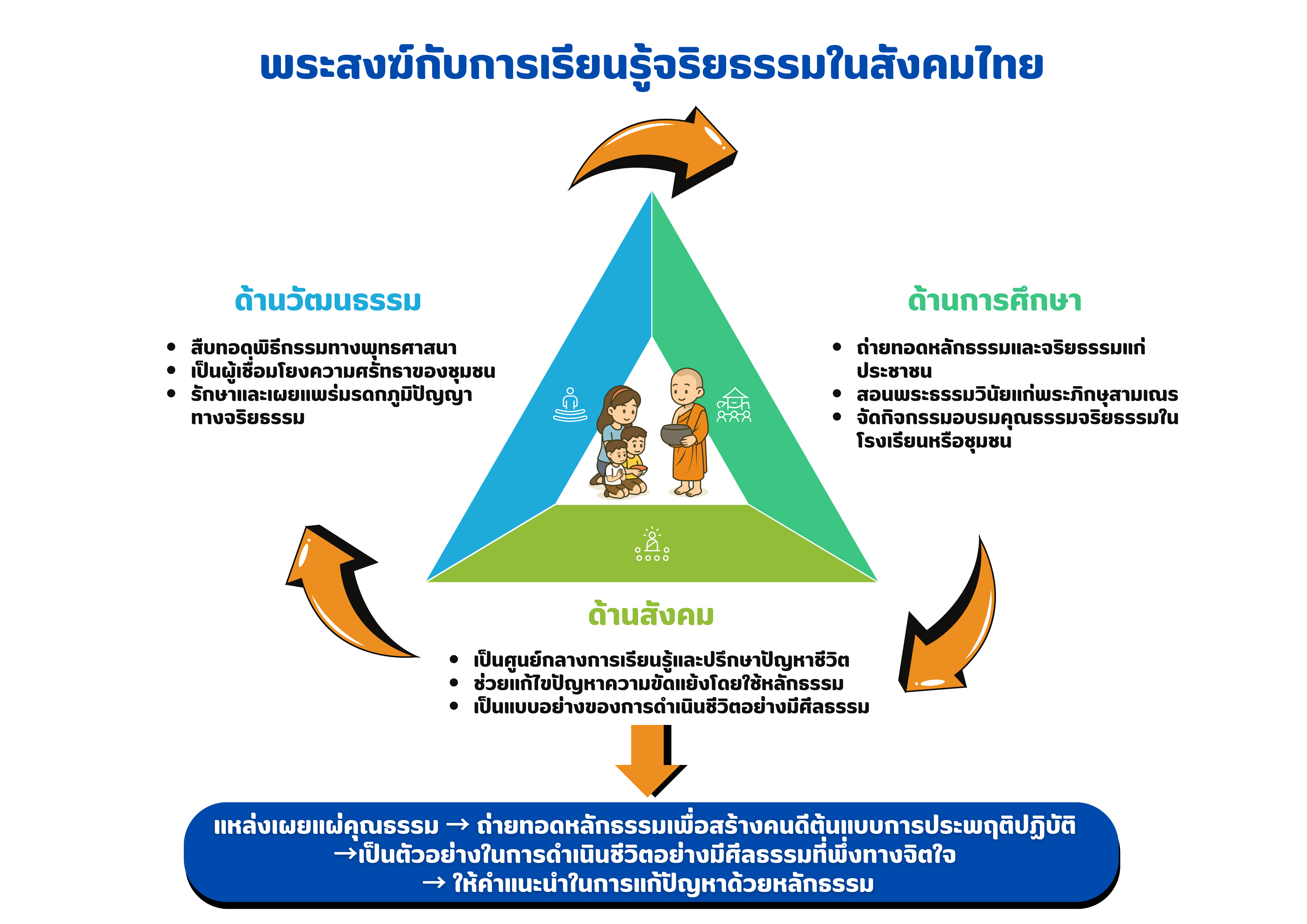
The purpose of this article was to study the role of Buddhist monks as a source of ethical and moral education in Thai society. The discussion emphasized the monastic mission as both transmitters of Buddhist doctrines and exemplar of moral conduct for people across all age groups. Monks were recognized as spiritual leaders who have long exerted significant influence on the values and behaviors of Thai society. Historically, the monastic community functioned as the center of education through religious activities such as preaching, moral instruction, and public service, which collectively reinforced and perpetuated ethical values. This article also addressed the ongoing adaptation of monastic learning to contemporary social contexts, ensuring that moral education becomes more diverse, relevant, and accessible. Furthermore, it highlighted exemplary practices of temples in various regions that have demonstrated strong capacity as centers of ethical learning, including summer novice ordination programs, Sunday Dhamma activities, and community - based Dhamma forums. Such initiatives ultimately contributed to the sustainable development of Thai society by strengthening spiritual resilience and fostering enduring moral values.
Downloads
References
กระทรวงศึกษาธิการ. (2553). หลักสูตรแกนกลางการศึกษาขั้นพื้นฐาน พุทธศักราช 2551 (พิมพ์ครั้งที่ 3). กรุงเทพฯ: โรงพิมพ์ชุมนุมสหกรณ์การเกษตรแห่งประเทศไทยจำกัด.
กระทรวงศึกษาธิการ. (2551). กรอบความคิดเพื่อส่งเสริมและพัฒนาคุณธรรมจริยธรรมที่เน้นความมีระเบียบวินัยและความเป็นประชาธิปไตย. กรุงเทพฯ: โรงพิมพ์คุรุสภาลาดพร้าว.
จิรพันธ์ วิวัชรวงศ์. (2558). หลวงพ่อคูณ พระนักพัฒนาชาวบ้าน. กรุงเทพฯ: มติชน.
พระครูโฆษิตสังฆพิทักษ์. (2561). กลยุทธ์ในการเผยแผ่พระพุทธศาสนาของพระสงฆ์ไทยในสังคมปัจจุบัน.วารสารวิชาการธรรมทรรศน์. 17(3), 212 - 223.
พระธรรมปิฎก (ป.อ. ปยุตฺโต). (2546). พจนานุกรมพุทธศาสน์ ฉบับประมวลศัพท์. กรุงเทพฯ: มหาวิทยาลัยมหาจุฬาลงกรณราชวิทยาลัย.
พระมหาสมชาย ฐานวุฑฺโฒ. (2552). คู่มือชีวิต. กรุงเทพฯ: สหธรรมิก.
พุทธทาสภิกขุ. (2532). คู่มือมนุษย์. กรุงเทพฯ: ธรรมสภา.
พรสวรรค์ พงษ์ดี. (2551). แนวทางการจัดการเรียนรู้เพื่อส่งเสริมคุณธรรม จริยธรรม และค่านิยมที่พึงประสงค์ของผู้บริหาร ครู และผู้ปกครองนักเรียน ในโรงเรียนสังกัดสำนักงานเขตพื้นที่การศึกษานครสวรรค์ เขต 3. (วิทยานิพนธ์ครุศาสตรมหาบัณฑิต สาขาวิชาการบริหารการศึกษา). บัณฑิตวิทยาลัย: มหาวิทยาลัยราชภัฏเทพสตรี.
ภัฏชวัฏร์ สุขเสน (2561). แนวทางการปฏิบัติกรรมฐานของหลวงปู่มั่น ภูริทัตโต. (รายงานการวิจัย). สถาบันวิจัยพุทธศาสตร์: มหาวิทยาลัยมหาจุฬาลงกรณราชวิทยาลัย.
ศูนย์ส่งเสริมและพัฒนาพลังแผ่นดินเชิงคุณธรรม (ศูนย์คุณธรรม). (2552). การสังเคราะห์งานวิจัยเกี่ยวกับคุณธรรมในประเทศและต่างประเทศ. กรุงเทพฯ: พริกหวานกราฟฟิก.
Chanawangsa, S. (2002). The English Version First Published 2002 as an Article Entitled “What a True Buddhist Should Know about the Pali Canon” in Manusya. Journal of Humanities, 8(1), 62 -70.
Downloads
Published
How to Cite
Issue
Section
License
Copyright (c) 2025 Journal of Buddhist Educational Innovation

This work is licensed under a Creative Commons Attribution-NonCommercial-NoDerivatives 4.0 International License.
This article is published under a Creative Commons Attribution-NonCommercial-NoDerivatives 4.0 International License (CC BY-NC-ND 4.0), which allows others to share the article with proper attribution to the authors and prohibits commercial use or modification. For any other reuse or republication, permission from the journal and the authors is required.