THE BUDDHIST PATH TO OVERCOMING OBSTACLES: A CASE STUDY OF THE BUDDHAJAYAMAṄGALA GĀTHĀ (THE PHAHUNG CHANT)
Keywords:
Path to Overcoming Obstacles, Buddhajayamaṅgala Gāthā, Phahung, Buddhist PrinciplesAbstract
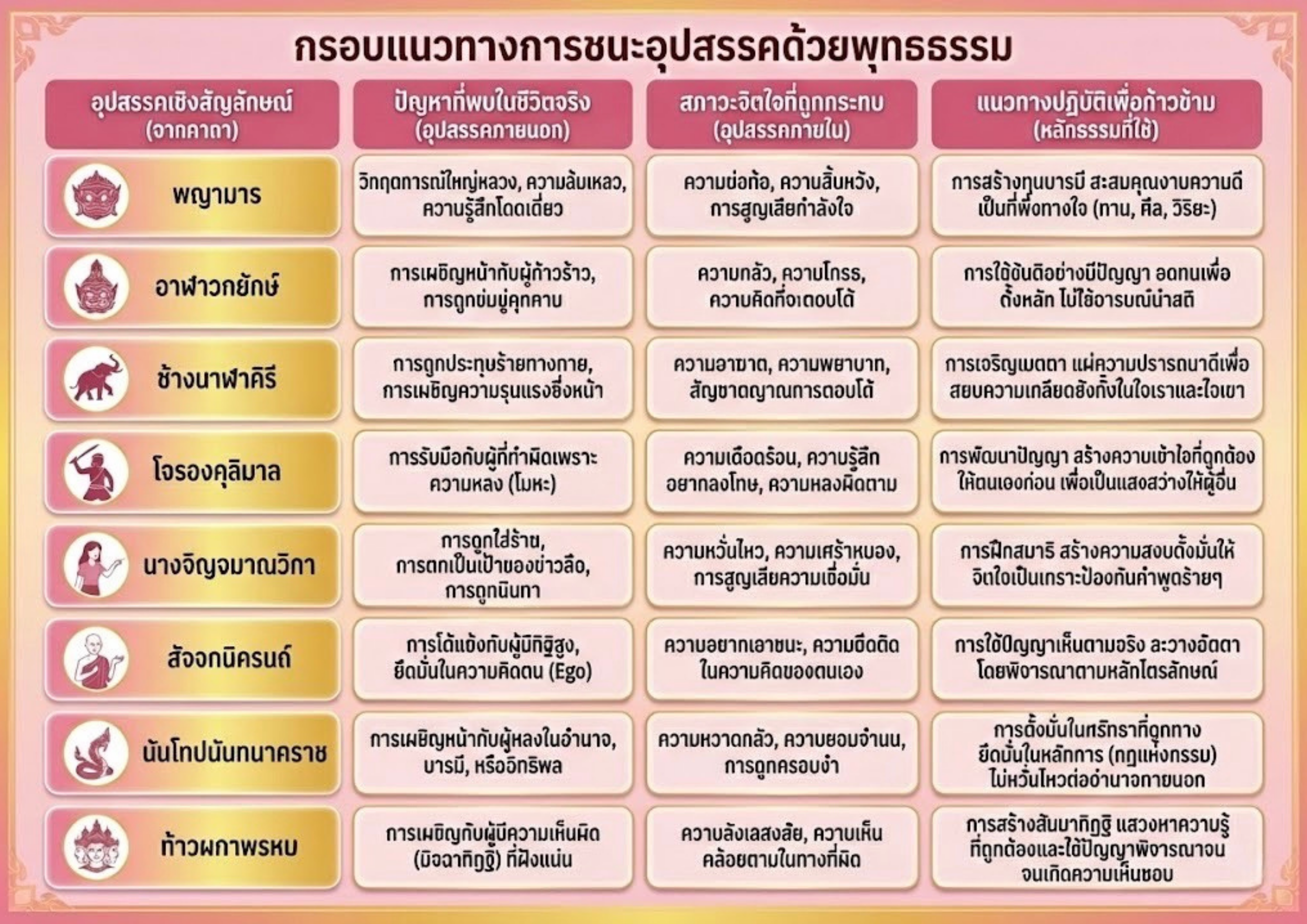
The purpose of this article was to analyze the path to overcoming obstacles according to Buddhist principles through a study of the Buddhajayamaṅgala Gāthā (the Phahung chant), a set of verses compiling the Buddha's eight auspicious victories. The study found that each victory was achieved not through force, but by overcoming challenges with virtues specific to each situation. The analysis revealed that the Buddha employed eight key principles as a path to confront different symbolic obstacles: 1) Perfections (Pāramī) to overcome life's adversities (Māra), 2) Patience (Khanti) to overcome a cruel being (Yakkha), 3) Loving - kindness (Mettā) to subdue physical violence (Elephant), 4) Wisdom (Paññā) to overcome a misguided person (Bandit), 5) Concentration (Samādhi) to overcome slander (Woman), 6) Liberating Wisdom (Vimutti - ñāṇa) to overcome one attached to his own views (Ascetic), 7) Faith accompanied by wisdom (Saddhā) to overcome one infatuated with psychic powers (Nāga), and 8) Right View (Sammā - diṭṭhi) to overcome one with wrong views (Brahmā). These approaches demonstrated that true victory over obstacles begins with cultivating internal virtues, transforming problems into wisdom, and leading to sustainable personal development in accordance with Buddhist principles.
Downloads
References
กาชยมังคลอัฏฐกเทสนา (พาหุง). (2520). สำนวนนาคประทีป. กรุงเทพฯ: โรงพิมพ์เลี่ยงเชียง.
พระธรรมสิงหบุราจารย์ (จรัญ ฐิตธมฺโม). (2550). วิถีกรรม หลวงพ่อจรัญ ฐิตธมฺโม. กรุงเทพฯ: สุภา.
พระธรรมปิฎก (ป.อ. ปยุตฺโต). (2540). หลักทั่วไปของพุทธศาสตร์. กรุงเทพฯ: ธรรมสภา.
พระธรรมปิฎก (ป.อ. ปยุตฺโต). (2560). เล่าเรื่องให้โยมฟังชุดที่ 2 พัฒนาปัญญา. สืบค้นเมื่อ 7 เมษายน 2568, จาก https://www.watnyanaves.net/th/book-content-index/297
พระพรหมคุณาภรณ์ (ป.อ. ปยุตฺโต). (2549). พุทธศาสนาพัฒนาคนและสังคม. กรุงเทพฯ: สหธรรมิก.
พระพรหมคุณาภรณ์ (ป.อ. ปยุตฺโต). (2552). พุทธธรรม ฉบับปรับปรุงและขยายความ. กรุงเทพฯ: มหาจุฬาลงกรณราชวิทยาลัย.
พระพรหมคุณาภรณ์ (ป.อ. ปยุตฺโต). (2561). บารมียิ่งยวดหรือยิ่งใหญ่. สืบค้นเมื่อ 7 เมษายน 2568, จาก https://www.watnyanaves.net/th/book_detail/242
พระปลัด วุฒิพงษ์ กิตฺติวณฺโณ. (2563). เมตตาธรรมในคัมภีร์พระพุทธศาสนาเถรวาท. วารสารธรรมวัตร, 1(2), 46 - 52.
พระยูง ชยานนฺโท (ชวน). (2566). แนวทางการสอนตามหลักปัญญา 3. วารสารสังคมศึกษา ศาสนา และวัฒนธรรม, 4(1), 104 - 115.
พุทธทาสภิกขุ. (2535). คู่มือมนุษย์ (พิมพ์ครั้งที่ 5). กรุงเทพฯ: ธรรมสภา.
วศิน อินทสระ. (2545). พุทธชัยมงคลคาถา. กรุงเทพฯ: โอเอส พริ้นติ้ง เฮ้าส์.
เสฐียรพงษ์ วรรณปก. (2541). พุทธชัยมงคลคาถา (พิมพ์ครั้งที่ 2). กรุงเทพฯ: อมรินทร์.
สมเด็จพระญาณสังวร สมเด็จพระสังฆราช สกลมหาสังฆปริณายก. (2540). เจ็ดตำนานและสิบสองตำนาน. กรุงเทพฯ: มหามกุฏราชวิทยาลัย.
สุวรรณา ฟองสมุทร. (2542). ศิลปวัฒนธรรม คาถาพาหุง: พระพุทธชัยมงคลคาถา. วารสารวิทยุสราญรมย์, 2(5), 18 - 33.
Downloads
Published
How to Cite
Issue
Section
License
Copyright (c) 2025 Journal of Buddhist Educational Innovation

This work is licensed under a Creative Commons Attribution-NonCommercial-NoDerivatives 4.0 International License.
This article is published under a Creative Commons Attribution-NonCommercial-NoDerivatives 4.0 International License (CC BY-NC-ND 4.0), which allows others to share the article with proper attribution to the authors and prohibits commercial use or modification. For any other reuse or republication, permission from the journal and the authors is required.