
A Comparison of Satisfaction with Teaching Materials between Podcasts and Videos and Teaching Documents in Engineering Mechanics
Keywords:
Teaching Materials, Podcast, Video, Teaching Documents, SatisfactionAbstract
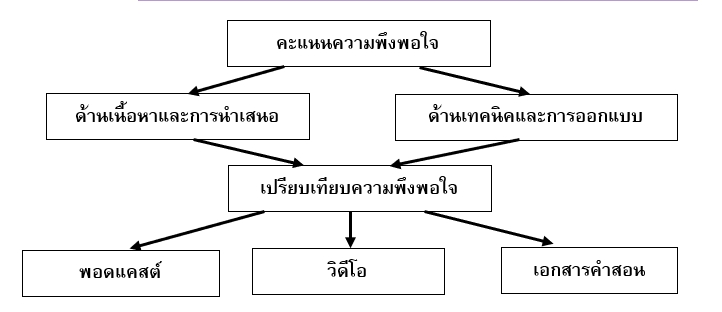
The selection of appropriate instructional media significantly influences learning experiences and student satisfaction in higher education. This study aimed to compare satisfaction with instructional media—podcasts, videos, and lecture notes—in the subject of Engineering Mechanics among first-year undergraduate students (N = 29). Basic data were analyzed using descriptive statistics, while one-way analysis of variance (One-way ANOVA) was employed for the topic of equilibrium of forces. The findings revealed that, in terms of content and presentation, lecture notes were perceived as clear and easy to understand (Mean = 4.55, SD = 0.63), resulting in the highest level of satisfaction. Regarding technical aspects and design, lecture notes were also found to be easily accessible and convenient (Mean = 4.52, SD = 0.69), while their development demonstrated creativity and innovation through new approaches (Mean = 4.58, SD = 0.69), both yielding the highest satisfaction levels. Additionally, podcasts and videos received high satisfaction ratings across both dimensions. Results from the One-way ANOVA indicated statistically significant differences among the three types of instructional media in the following factors: clarity and comprehensibility of content (F = 7.234, p < 0.05), appropriateness for learners’ age (F = 3.246, p < 0.05), suitability of format (F = 3.552, p < 0.05), appropriateness of media design (F = 3.860, p < 0.05), and accessibility and convenience (F = 3.766, p < 0.05). The social and educational implications of this study highlight that empirical evidence from such research can serve as a foundation for designing effective instructional media in academic courses. This, in turn, may assist higher education institutions in setting standards for instructional media that are accessible, clear, and systematic, thereby enhancing the quality of student learning experiences in foundational courses.
Downloads
References
Mayer, R. E. (2021). Multimedia learning (3rd ed.). Cambridge University Press.
Yaacob, A., Amir, A. S. A., Asraf, R. M., Yaakob, M. F. M., & Zain, F. M. (2021). Impact of Youtube and Video Podcast on Listening Comprehension Among Young Learners. Int. J. Interact. Mob. Technol., 15(20), 4.
เจษฎา คำผอง, ศักดิ์ชัย ศรีจันทร์ดำ, สุบรร ผลกะสิ, ศิรินภา จันทรโคตร, ภคพร ยอดศิริ และณธายุ ชวพัฒนโยธา (2568). การเปรียบเทียบผลสัมฤทธิ์ก่อนและหลังเรียนเรื่องพื้นฐานทางกลศาสตร์แรงและโมเมนต์โดยใช้เอกสารคำสอน วิชากลศาสตร์วิศวกรรม. วารสารวิจัยและนวัตกรรมทางการศึกษาอุตสาหกรรม, 1(2), 27–35. https://doi.org/10.14456/jriie.2025.8
Anderson, T. (2019). The theory and practice of online learning. Athabasca University Press.
Kay, R. H. (2012). Exploring the use of video podcasts in education: A comprehensive review of the literature. Computers in Human Behavior, 28(3), 820–831.
Hew, K. F. (2009). Use of audio podcast in K-12 and higher education: A review of research topics and methodologies. Educational Technology Research and Development, 57(3), 333–357.
Santosa, P. I. (2022). Student satisfaction with online learning: A multigroup analysis. Register: Jurnal Ilmiah Teknologi Sistem Informasi, 8(2), 122-132.
เจนจิรา ศรีวิลัย, ชุติมา วัฒนะคีรี และสุดาพร พงษ์พิษณุ. (2566). การพัฒนาสื่อมัลติมีเดียการสื่อสารและการนำเสนอสำหรับนักเรียน ชั้นมัธยมศึกษาปีที่ 2. วารสารการวัดผลการศึกษาสำนักทดสอบทางการศึกษาและจิตวิทยา, 40(107), 109-120.
Kumphong, J., Narongsak, P., Sirisripetch, Y., Wichaiyo, T., Srichandum, S., Tho-In, T., ... & Singhjam, P. (2024). Production of Learning Materials Using 3D of Augmented Reality (AR) Technology to Simulate Pile Foundation Structure. Journal of Graduate MCU KhonKaen Campus, 11(2), 239-248. (in Thai)
ศานิตย์ ศรีคุณ และ ทัศนีย์ บุญเติม. (2558). การตรวจสอบความตรงเชิงทฤษฎีของแบบทดสอบทักษะกระบวนการทางวิทยาศาสตร์. วารสารศึกษาศาสตร์มหาวิทยาลัยขอนแก่น, 38(3), 20-33.
Guillén-Gámez, F. D., Mayorga-Fernández, M. J., & Ramos, M. (2021). Examining the Use Self-Perceived by University Teachers about ICT Resources: Measurement and Comparative Analysis in a One-Way ANOVA Design. Contemporary Educational Technology, 13(1).
Sopha, P., Kumphong, J., Amornpinyo, P., Jantarakot, S., Bubpi, A., & Phonkasi, S. (2024). Production of Learning Materials Using Computer Assisted Instruction Technology : Case Study on the Topic of the Road History. Journal of Graduate MCU KhonKaen Campus, 11(3), 108-119. (in Thai)
Vogt, M., Schaffner, B., Ribar, A., & Chavez, R. (2010) The impact of podcasting on the learning and satisfaction of undergraduate nursing students. Nurse Education in Practice, 10(1), 38-42.
Lijo, R., Castro, J. J., & Quevedo, E. (2024). Comparing educational and dissemination videos in a STEM YouTube channel: A six-year data analysis. Heliyon, 10(1), e24856. https://doi.org/10.1016/j.heliyon.2024.e24856
Downloads
Published
How to Cite
Issue
Section
License
Copyright (c) 2025 Journal of Research and Innovation in Industrial Education

This work is licensed under a Creative Commons Attribution-NonCommercial-NoDerivatives 4.0 International License.
This article is published under a Creative Commons Attribution-NonCommercial-NoDerivatives 4.0 International License (CC BY-NC-ND 4.0), which allows others to share the article with proper attribution to the authors and prohibits commercial use or modification. For any other reuse or republication, permission from the journal and the authors is required.