Digital Learning Ecosystem: Modern Alternatives in Education
Keywords:
Ecosystem , Digital Learning , Modern Alternatives in EducationAbstract
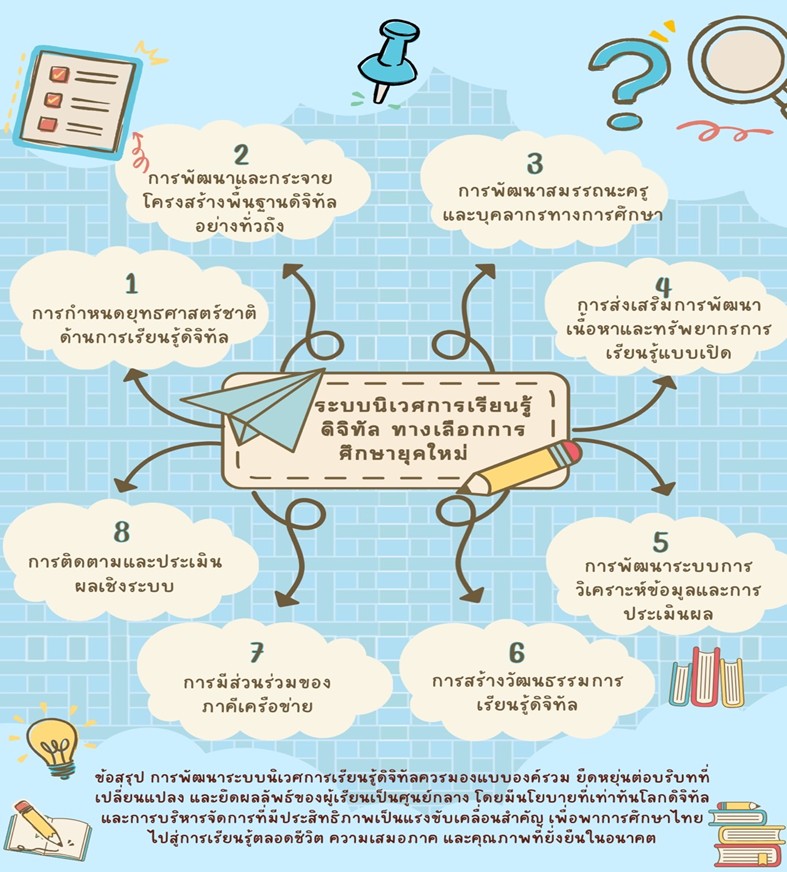
This academic article synthesizes the concept of a “digital learning ecosystem” as a strategic direction for 21st-century educational reform, emphasizing the shift from traditional lecture-based instruction toward an open, integrated system that connects learners, teachers, technologies, content, communities, and policies in a holistic manner. This transformation is driven by learning analytics and artificial intelligence (AI), which enable the design of personalized learning pathways, support evidence-based teaching, and enhance the accuracy and transparency of policy decision-making. Grounded in contemporary theoretical frameworks such as Connectivism and teacher digital competence models like DigCompEdu, the digital learning ecosystem comprises learners as goal-setters and co-creators of knowledge; teachers as facilitators; digital platforms and tools—including learning management systems (LMS), video conferencing, and chatbots; high-quality resources and interactive media, including Open Educational Resources (OER); diverse learning environments across online, onsite, and blended formats; and supportive learning communities and flexible governance mechanisms with continuous quality assurance. MOOCs further serve as a strategic instrument for lifelong learning and human capital development. International evidence, such as Finland’s experience, demonstrates meaningful technology integration, professionalized teaching, and formative assessment, while the Thai context shows advancements in policy and platform infrastructure—such as national LMS systems, Thai MOOC, and cloud-based tools—yet continues to face challenges related to infrastructure inequality and household access to digital devices. The article proposes eight policy recommendations, namely: establishing a national digital learning strategy, investing in infrastructure, strengthening teacher competencies, promoting open educational data systems and nationwide analytics, cultivating a culture of digital learning and cybersecurity, expanding multi-stakeholder collaboration, ensuring equitable access, and implementing systemic monitoring and evaluation. In conclusion, the article advances the concept of a digital learning ecosystem that aligns the vision of Society 5.0 with Education 4.0 to create a seamless, equitable, high-quality, and sustainable learning environment capable of enhancing quality of life and strengthening Thailand’s long-term competitiveness.
References
กระทรวงศึกษาธิการ. (2568). ศธ. X Google for Education ประกาศความร่วมมือพลิกโฉมการเรียนรู้และกำหนดแนวทางการใช้ Generative AI สำหรับสถานศึกษา. https://ops. moe.go.th/moe-googleforeducation/
ธีรัช ดวงจิโน. (2566). MOOC: ระบบนิเวศการเรียนรู้ดิจิทัลเพื่อสนับสนุนการศึกษาตลอดชีวิต. วารสารศึกษาศาสตร์ มหาวิทยาลัยทักษิณ, 24(1), 1-14.
นิวัฒน์ ศรีสวัสดิ์. (2567). ระบบนิเวศการเรียนรู้ดิจิทัล 5.0 เพื่อการเตรียมพร้อมรับการจัดการศึกษาสำหรับพลเมืองยุคใหม่: หนึ่งจุดเชื่อมต่อระหว่างงานการศึกษาดิจิทัลและวิศวกรรมการเรียนรู้. Journal of Digital Education and Learning Engineering, 1(1), 70–84.
วิจิตร สมบัติวงศ์. (2565). แนวทางการจัดการเรียนการสอนแบบผสมผสาน (Hybrid Learning) ของโรงเรียนสังกัดสำนักงานเขตพื้นที่การศึกษามัธยมศึกษากรุงเทพมหานคร เขต 1. (รายงานการศึกษาส่วนบุคคล). สถาบันพัฒนาครู คณาจารย์ และบุคลากรทางการศึกษา.
สำนักงานคณะกรรมการการศึกษาขั้นพื้นฐาน. (2567). Transforming Education in the Digital Era. Ministry of Education. https://13ased.moe.go.th/wp-content/uploads/ 2024/08/E-Book-Transforming-Education-in-the-Digital-Era.pdf
สำนักวิชาการและมาตรฐานการศึกษา. (2566). ถอดบทเรียนการแก้ไขภาวะถดถอยทางการเรียนรู้ (Learning Loss): แนวทาง Hybrid Learning. https://online.anyflip.com/iqdgi/ xbsb/mobile/index.html
Ferguson, R. (2012). The State of Learning Analytics in 2012: A Review and Future Challenges. (Technical Report). Knowledge Media Institute, The Open University, UK. http://kmi.open.ac.uk/publications/pdf/kmi-12-01.pdf
Liu, Y. (2025). Immersive digital storytelling to understand the new learning ecosystem. Smart Learning Environments, 12(39), 1-17. https://doi.org/10.1186/s40561-025-00398-x
Nguyen, L. T., Kanjug, I., Lowatcharin, G., Manakul, T., Poonpon, K., Sarakorn, W., Somabut, A., Srisawasdi, N., Traiyarach, S., & Tuamsuk, K. (2023). Digital learning ecosystem for classroom teaching in Thailand high schools. SAGE Open, 13(1), 21582440231158303.
OECD. (2020). The future of education and skills 2030 OECD learning compass 2030.
https//www.oecd.org/education/2030-project/
OECD. (2022). Finland’s Right to Learn Programme: Achieving equity and quality in education. OECD Education Policy Perspectives, No. 61. https://www.oecd.org /content/dam/oecd/en/publications/reports/2022/09/finland-s-right-to-learn-programme_58de2f6c/65eff23e-en.pdf
Pinto Llorente, A. M. & Izquierdo Álvarez, V. (2024). Digital Learning Ecosystem to enhance formative assessment in second language acquisition in higher education. Sustainability, 16(11), 4687. https://doi.org/10.3390/su16114687
Redecker, C. & Punie, Y. (2017). European framework for the digital competence of educators. Publications Office of the European Union.
Downloads
Published
How to Cite
Issue
Section
License
Copyright (c) 2025 Journal of Interdisciplinary Review

This work is licensed under a Creative Commons Attribution-NonCommercial-NoDerivatives 4.0 International License.
1. เนื้อหาและข้อมูลในบทความที่ลงพิมพ์กับวารสารรัฐประศาสนศาสตร์และสหวิทยาเพื่อสังคม (Journal of Public Administration and Interdisciplinary Studies for Society) ถือเป็นข้อคิดเห็น และความรับผิดชอบของผู้เขียนบทความโดยตรงซึ่งกองบรรณาธิการวารสารไม่จำเป็นต้องเห็นด้วย หรือร่วมรับผิดชอบใด ๆ
2. บทความ ข้อมูล เนื้อหา รูปภาพ ฯลฯ ที่ได้รับการตีพิมพ์ในวารสารรัฐประศาสนศาสตร์และสหวิทยาเพื่อสังคม (Journal of Public Administration and Interdisciplinary Studies for Society) ถือเป็นลิขสิทธิ์ของวารสารรัฐประศาสนศาสตร์และสหวิทยาเพื่อสังคม (Journal of Public Administration and Interdisciplinary Studies for Society) หากบุคคลหรือหน่วยงานใดต้องการนำทั้งหมดหรือส่วนหนึ่ง ส่วนใดไปเผยแพร่ต่อหรือเพื่อการกระทำการใด ๆ จะต้องได้รับอนุญาตเป็นลายลักษณ์อักษรจากวารสารรัฐประศาสนศาสตร์และสหวิทยาเพื่อสังคม (Journal of Public Administration and Interdisciplinary Studies for Society) ก่อนเท่านั้น