
Challenges of Smart School Management in Thailand
Article Sidebar
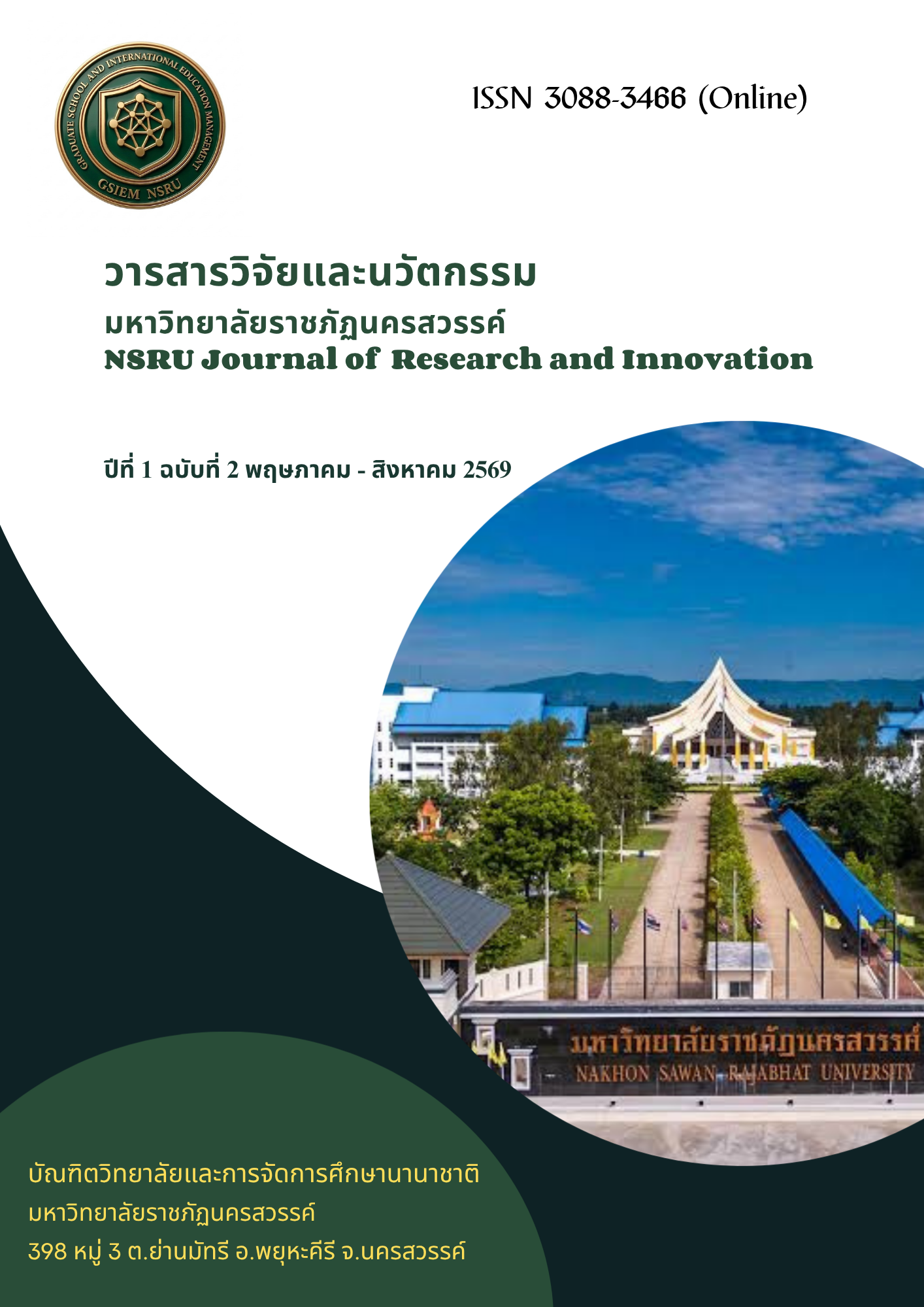
Main Article Content
Abstract
This article aims to examine and analyze the challenges of smart school administration in the context of Thailand. It covers key issues, including technological infrastructure readiness, the digital competencies of school administrators and teachers, budget allocation, and policies related to digital transformation in the Thai education system. The findings indicate the smart school administration in Thailand faces multidimensional challenges. The technological dimension involves disparities in access to infrastructure between urban and rural schools. The budgetary dimension is constrained by limitations on continuous investment in technology, while the policy dimension still lacks clear and specific practical guidelines for smart school administration. This article proposes guidelines for developing smart school administration that are aligned with the Thai context, with an emphasis on digital leadership among school administrators as a key mechanism for driving the smart schools.
Article Details

This work is licensed under a Creative Commons Attribution-NonCommercial-NoDerivatives 4.0 International License.
References
จิณณวัตร ปะโคทัง. (2561). ภาวะผู้นำยุคดิจิทัล สำหรับผู้บริหารสถานศึกษามืออาชีพ. อุบลราชธานี: มหาวิทยาลัย
ราชภัฏอุบลราชธานี.
ดาวรุวรรณ ถวิลการ. (2564). ภาวะผู้นำดิจิทัล Digital Leadership. ขอนแก่น: มหาวิทยาลัยขอนแก่น.
ปุณณิฐฐา มาเชค. (2565). การบริหารองค์กรทางการศึกษาในยุคดิจิทัล. ชลบุรี: มหาวิทยาลัยบูรพา.
พระราชบัญญัติการศึกษาแห่งชาติ พ.ศ. 2542. (2542, 19 สิงหาคม). ราชกิจจานุเบกษา. เล่ม 116 ตอนที่ 74ก. น. 1-41.
พระราชบัญญัติคุ้มครองข้อมูลส่วนบุคคล พ.ศ. 2562. (2562, 27 พฤษภาคม). ราชกิจจานุเบกษา. เล่ม 136 ตอนที่ 69ก. น. 52-95.
สำนักงานเลขาธิการสภาการศึกษา. (2560). แผนการศึกษาแห่งชาติ พ.ศ. 2560-2579. กรุงเทพฯ: ผู้แต่ง.
สุกัญญา แช่มช้อย. (2562). การบริหารสถานศึกษาในยุคดิจิทัล. กรุงเทพฯ: สำนักพิมพ์จุฬาลงกรณ์มหาวิทยาลัย.
Ghavifekr, S., & Rosdy, W. A. W. (2015). Teaching and learning with technology: Effectiveness of ICT integration in schools. International Journal of Research in Education and Science, 1(2), 175-191.
Grenda, D. (2026). Technological knowledge, soft skills and management & leadership skills: Three pillars for the digitally competent manager. Journal of Business Economics, 96(4), 489-512.
Hoel, T., & Mason, J. (2018). Standards for smart education: Towards a development framework. Smart Learning Environments, 5(1), 1-25.
OECD. (2023). Digital Education Outlook 2023. Paris: OECD Publishing.
Spector, J. M. (2014). Conceptualizing the emerging field of smart learning environments. Smart Learning Environments, 1(1), 1-10.
Stocco, L. C. (2024). Soft skills for responsible leadership in the digital age: A framework for future leaders. In Leading and Managing in the Digital Era (pp. 379-393). Cham: Springer.
Uskov, V. L., Bakken, J. P., Howlett, R. J., & Jain, L. C. (Eds.). (2018). Smart Universities: Concepts, Systems, and Technologies. Cham: Springer.
Zhu, Z. T., Yu, M. H., & Riezebos, P. (2016). A research framework of smart education. Smart Learning Environments, 3(1), 1-17.
