Participatory Local Water Management by Water User Organizations around Bung Boraphet, Nakhon Sawan Province, Based on the Principles of Aparihaniya Dhamma
DOI:
https://doi.org/10.14456/jpais.2025.1Keywords:
Local Water Management, Participation , Aparihaniya DhammaAbstract
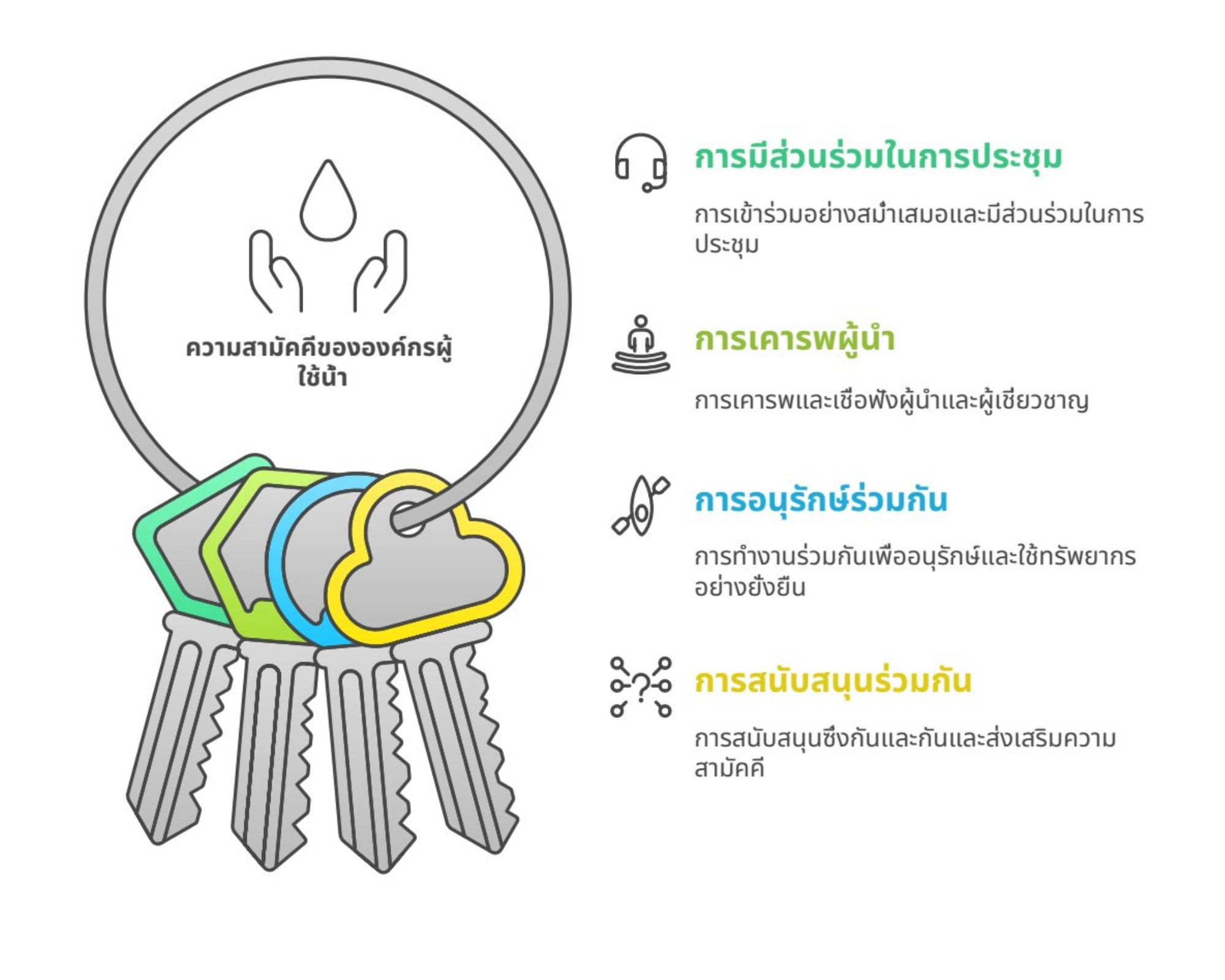
This research article aimed to propose guidelines for participatory local water management by water user organizations around Bueng Boraphet, Nakhon Sawan Province, based on the principle of Aparihaniya Dhamma. A mixed-methods design was employed, consisting of quantitative research with a sample of 362 individuals selected through random sampling from a total of 3,723 registered water users. A questionnaire with a reliability coefficient of 0.981 was administered. The statistical methods applied for data analysis included frequency, percentage, mean, standard deviation, and Pearson’s correlation coefficient. The qualitative component involved in-depth interviews with 20 key informants selected through purposive sampling. Data were collected through interviews and analyzed using descriptive content analysis. The research findings revealed that: (1) in organizational meetings, members of the water user organizations should have increased their participation in expressing opinions so that government agencies could become genuinely aware of the organizations’ needs; (2) during meetings, members should have enhanced their participation by listening to the suggestions or guidelines provided by government agencies until the conclusion of the meetings; (3) members of the water user organizations had common rules and regulations to follow, and no member was expected to violate them; (4) members respected and listened to the advice of experts and relevant agencies, as well as the decisions of the chairperson of the water user organization; (5) members accepted and listened to one another’s opinions; (6) for effective water management, members of the water user organizations and related agencies were required to monitor the annual water volume in order to foster mutual understanding, prevent water shortages, and adapt their lifestyles or apply new innovations; and (7) cooperation between members of the water user organizations and government agencies was evident, in that when floods or droughts occurred- natural disasters that happened annually-members were expected to be aware of and adopt preventive measures.
References
จีรนันท์ ยายะวงษ์ และกัมปนาท วงษ์วัฒนพงษ์. (2564). แนวทางการบริหารจัดการปัญหาภัยแล้งในเขตพื้นที่องค์การบริหารส่วนตำบลโป่งแดง อำเภอเมืองตาก จังหวัดตาก. Journal of Modern Learning Development, 6(2), 86–99.
ณพล อนุตตรังกูร.(2566).ระบบการบริหารจัดการน้ำ ในพื้นที่ชุ่มน้ำบึงบอระเพ็ด. (รายงานการวิจัย). มหาวิทยาลัยมหิดล.
บุผาชาติ จันทร์หอม.(2564). แนวทางการพัฒนาการมีส่วนร่วมของประชาชน ในการจัดการน้ำสู่ยั่งยืน. Journal of Roi Kaensarn Academi, 6(6), 340-356.
พนิดา พุทธรัตน์รักษา และอุ่นเรือน เล็กน้อย. (2564). ผลกระทบและการยอมรับการทำนาแบบ เปียกสลับแห้งเพื่อการรับมือกับการเปลี่ยนแปลงสภาพภูมิอากาศของชาวนาในอำเภอศรีประจันต์ จังหวัดสุพรรณบุรี.วารสารมหาจุฬานาครทรรศน์, 8(1), 134-141.
ภานุวัฒน์ แก้วแหยม. (2563). การมีส่วนร่วมของประชาชนในการจัดทำแผนพัฒนาท้องถิ่น กรณีศึกษา องค์การบริหารส่วนตำบลห้วยหิน อำเภอชัยบาดาล จังหวัดลพบุรี. [วิทยานิพนธ์ปริญญาโทไม่ได้ตีพิมพ์]. มหาวิทยาลัยรามคำแหง.
สำนักงานทรัพยากรน้ำแห่งชาติ.(2566). ยุทธศาสตร์การบริหารจัดการทรัพยากรน้ำ. http://www.onwr.go.th/?page_id=4207
องค์การกองทุนสัตว์ป่าโลกสากล. (2567). สถานการณ์น้ำจืดของโลก และประเทศไทย. https://www.wwf.or.th/what_we_do/wetlands_and_production_landscape/freshwater/
Downloads
Published
How to Cite
Issue
Section
License
Copyright (c) 2025 Journal of Interdisciplinary Review

This work is licensed under a Creative Commons Attribution-NonCommercial-NoDerivatives 4.0 International License.
1. เนื้อหาและข้อมูลในบทความที่ลงพิมพ์กับวารสารรัฐประศาสนศาสตร์และสหวิทยาเพื่อสังคม (Journal of Public Administration and Interdisciplinary Studies for Society) ถือเป็นข้อคิดเห็น และความรับผิดชอบของผู้เขียนบทความโดยตรงซึ่งกองบรรณาธิการวารสารไม่จำเป็นต้องเห็นด้วย หรือร่วมรับผิดชอบใด ๆ
2. บทความ ข้อมูล เนื้อหา รูปภาพ ฯลฯ ที่ได้รับการตีพิมพ์ในวารสารรัฐประศาสนศาสตร์และสหวิทยาเพื่อสังคม (Journal of Public Administration and Interdisciplinary Studies for Society) ถือเป็นลิขสิทธิ์ของวารสารรัฐประศาสนศาสตร์และสหวิทยาเพื่อสังคม (Journal of Public Administration and Interdisciplinary Studies for Society) หากบุคคลหรือหน่วยงานใดต้องการนำทั้งหมดหรือส่วนหนึ่ง ส่วนใดไปเผยแพร่ต่อหรือเพื่อการกระทำการใด ๆ จะต้องได้รับอนุญาตเป็นลายลักษณ์อักษรจากวารสารรัฐประศาสนศาสตร์และสหวิทยาเพื่อสังคม (Journal of Public Administration and Interdisciplinary Studies for Society) ก่อนเท่านั้น