ความเป็นหุ้นส่วนเชิงพื้นที่ในการพัฒนาเศรษฐกิจฐานรากระหว่างมหาวิทยาลัยกับท้องถิ่น
DOI:
https://doi.org/10.14456/jpais.2025.5คำสำคัญ:
ความเป็นหุ้นส่วนเชิงพื้นที่, เศรษฐกิจฐานราก, มหาวิทยาลัย , ท้องถิ่นบทคัดย่อ
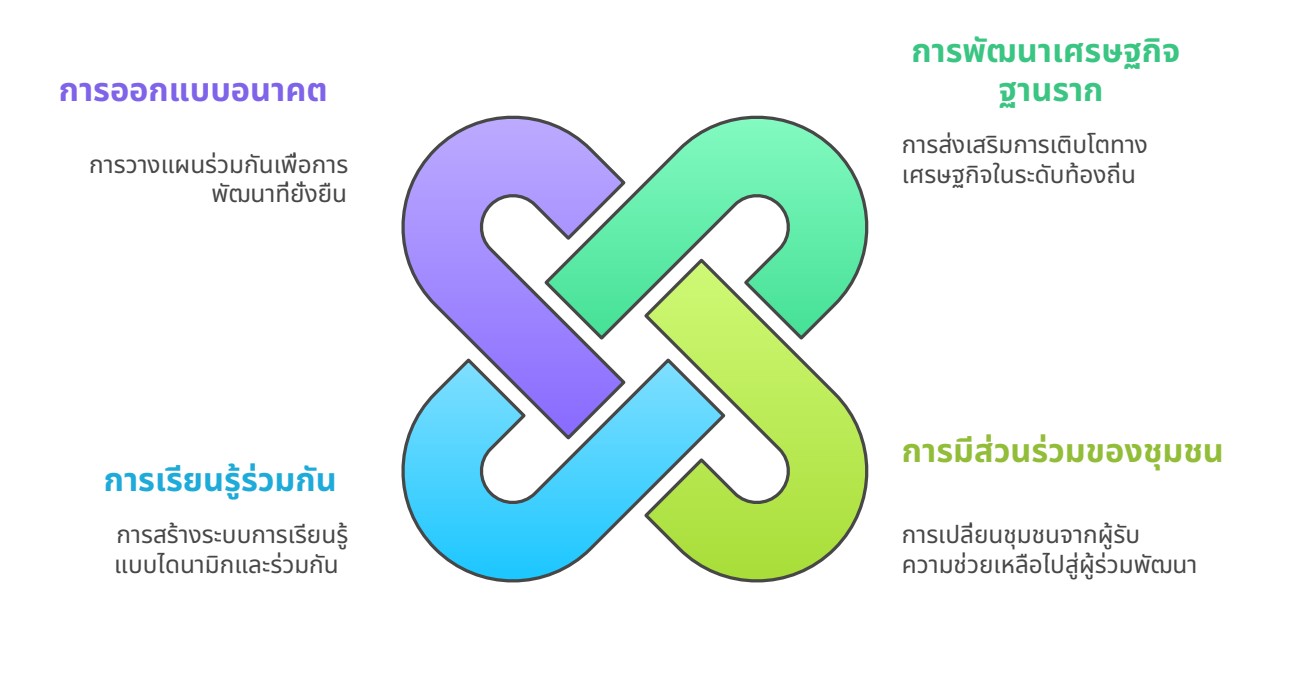
บทความนี้มุ่งศึกษาความเป็นหุ้นส่วนเชิงพื้นที่ในการพัฒนาเศรษฐกิจฐานรากระหว่างมหาวิทยาลัยกับท้องถิ่น ซึ่งการบริการวิชาการแก่สังคมเป็นอีกพันธกิจหนึ่งของมหาวิทยาลัยในการพัฒนาท้องถิ่นที่มุ่งเป้าไปสู่การมีพัฒนาแบบภาคีเครือข่ายระหว่างมหาวิทยาลัยกับท้องถิ่นนำไปสู่ความยั่งยืน ในรูปแบบ “ความเป็นหุ้นส่วนเชิงพื้นที่” โดยใช้องค์ความรู้ทางวิชาขับเคลื่อนการดำเนินการร่วมกัน เป็นภาพสะท้อนของการกลุ่มผู้ที่มีส่วนได้และส่วนเสียในการทำงานร่วมกันของทุกส่วนที่เป็นกลไกการขับเคลื่อนการจัดการทรัพยากรในพื้นที่ เป็นภาคีหุ้นส่วนในการทำงานร่วมกัน มีบทบาทหน้าที่ของแต่ละภาคีหุ้นส่วนเชื่อมประสานกันสู่เป้าหมายเดียวกัน และบูรณการการทำงานร่วมกันแบบหุ้นส่วนของทุกภาคส่วนเพื่อการพัฒนาเศรษฐกิจฐานรากของท้องถิ่นนำไปสู่ความยั่งยืน
เอกสารอ้างอิง
ไททัศน์ มาลา. (2561). การจัดการปกครองสาธารณะแนวใหม่ (New Public Governance: NPG): แนวคิดและการประยุกต์ใช้ในการจัดการปกครองท้องถิ่น. วารสารวไลยอลงกรณ์ปริทัศน์ (มนุษยศาสตร์และสังคมศาสตร์), 8(1), 179-194.
ประเวศ วะสี. (2558). วิธีการและกลไกยุทธศาสตร์ประชารัฐสร้างความเข้มแข็งเศรษฐกิจฐานรากบนหลักการเศรษฐกิจพอเพียง. หมอชาวบ้าน.
มูลนิธิชัยพัฒนา. (2563). องค์ประกอบของเศรษฐกิจพอเพียง. http://www.chaipat.or.th /site_content/34-13/3579-2010-10-08-05-24-39.html
วิจารณ์ พานิช. (2561). มหาวิทยาลัยหุ้นส่วนสังคมที่สหราชอาณาจักร. https://www.ubu.ac.th /web/files_up/40f2018082115482876.pdf
วิลาสินี ชูทอง, สมศักดิ์ ศรีสันติสุข และยุภาพร ยุภาศ. (2563). ปัจจัยความร่วมมือทางการบริหารที่มีผลต่อการพัฒนาข้าว: กรณีศึกษา องค์กรปกครองส่วนท้องถิ่นในกลุ่มจังหวัดภาคกลางตอนบน 2. วารสารรัฐประศาสนศาสตร์, 18(1), 59-76.
สมศักดิ์ ศรีสันติ. (2556). การเปลี่ยนแปลงสังคมและวัฒนธรรม. มหาวิทยาลัยขอนแก่น.
สาริศา เจนเขว้า และเสวียน เจนเขว้า. (2562). การจัดการศึกษาแบบภาคีหุ้นส่วน : แนวทางการปฏิรูปการศึกษา. วารสารการจัดการความรู้สู่การปฏิบัติที่เป็นเลิศ วิทยาลัยนครราชสีมา, 1, 56-65.
สุพัฒพงศ์ แย้มอิ่ม. (2564). ความเป็นหุ้นส่วนการบริหารการปกครองท้องถิ่นเพื่อการเสริมสร้างชุมชนแบบบูรณาการ. วารสารการเรียนรู้สมัยใหม่, 6(5), 351-365.
หควณ ชูเพ็ญ. (2551). กระบวนทัศน์ใหม่ของการบริหารจัดการท้องถิ่น. วารสารการบริหารท้องถิ่น, 1(4), 1-23.
อดิศร ภู่สาระ. (2564). ป่าชุมชน : การจัดการภาครัฐสู่ประชาชน. วารสารวิชาการมนุษยศาสตร์และสังคมศาสตร์ มหาวิทยาลัยราชภัฏพระนครศรีอยุธยา, 9(1), 1-21.
Barker, D. (2004). The scholarship of engagement: A taxonomy of five emerging practices. Journal of Higher Education Outreach and Engagement, 9(2), 123–137.
Brown-Luthango, M. (2013). Community-university engagement: The Philippi CityLab in Cape Town and the challenge of collaboration across boundaries. Higher Education, 6, 309–324.
Compare, C., Pieri, C. & Albanesi, C. (2022). Community–University Partnership in Service-Learning: Voicing the Community Side. Journal of Higher Education Outreach and Engagement, 26(2), 79-102.
Enos, S. & Morton, K. (2003). Developing a theory and practice of campus-community partnerships. In B. Jacoby (Ed.), Building service partnerships (pp. 20–41). Jossey-Bass.
Goddard, J., Hazelkorn, E., Upton, S. & Boland, T. (2018), Maximising Universities’ Civic Contribution: A Policy Paper. Wales Centre for Public Policy.
Groulx, M., Nowak, N., Levy, K. & Booth, A. (2021). Community Needs and Interests in University-Community Partnerships for Sustainable Development. International Journal of Sustainability in Higher Education, 22(2), 274-290.
Holliday, M.L., DeFalco, T. & Sherman J.D.B. (2015). Putting Impact First: Community University Partnerships to Advance Authentic Neighborhood Sustainability. Metropolitan Universities Journal, 26(3), 79-104.
Loh, P. (2016). Community–university collaborations for environmental justice: toward a transformative co-learning model. New Solutions: A Journal of Environmental and Occupational Health Policy, 26(3), 412-428.
Lydon, M. & Garcia, A. (2015). Tactical Urbanism: Short-Term Action for Long-Term Change. Island Press.
Mosier, S. & RuxtonView, M. (2018). Sustainability university–community partnerships: Lessons for practitioners and scholars from highly sustainable communities. Environment and Planning C Politics and Space, 36(4), 479-495.
Pagunuran, P. (2019). New Public Governance: A Regime-Centered Perspective. Journal of Politics and Governance, 6(2), 489–497.
Porter, L. (2015). Who is learning what from whom? The beautiful messiness of learning partnerships. Planning Theory and Practice, 6(3), 409-434.
Probst, C.S. (2022). Community Sustainability Partnerships: An Opportunity to Advance the Goals of Communities and Universities. Ph.D. Dissertation, Department of Higher Education Management, University of Pennsylvania.
Provan, K.G. & Kenis, P. (2008). Modes of Network Governance: Structure, Management, and Effectiveness. Journal of Public Administration Research and Theory, 18(2), 229–252.
Rickett, D. (2002). Making your partnership work. Winepress Publishing.
Strier, R. (2014). Fields of paradox: university–community partnerships. Higher Education, 68, 155–165.
Tennyson, R.D. (2005). The Impact of Cognitive Science Movement on Instructional Design fundamentals. In B.B. Seels (Ed.). Instructional Design Fundamentals: A reconsideration. Educational technology publications.
ดาวน์โหลด
เผยแพร่แล้ว
รูปแบบการอ้างอิง
ฉบับ
ประเภทบทความ
สัญญาอนุญาต
ลิขสิทธิ์ (c) 2025 วารสารรัฐประศาสนศาสตร์และสหวิทยาเพื่อสังคม

อนุญาตภายใต้เงื่อนไข Creative Commons Attribution-NonCommercial-NoDerivatives 4.0 International License.
1. เนื้อหาและข้อมูลในบทความที่ลงพิมพ์กับวารสารรัฐประศาสนศาสตร์และสหวิทยาเพื่อสังคม (Journal of Public Administration and Interdisciplinary Studies for Society) ถือเป็นข้อคิดเห็น และความรับผิดชอบของผู้เขียนบทความโดยตรงซึ่งกองบรรณาธิการวารสารไม่จำเป็นต้องเห็นด้วย หรือร่วมรับผิดชอบใด ๆ
2. บทความ ข้อมูล เนื้อหา รูปภาพ ฯลฯ ที่ได้รับการตีพิมพ์ในวารสารรัฐประศาสนศาสตร์และสหวิทยาเพื่อสังคม (Journal of Public Administration and Interdisciplinary Studies for Society) ถือเป็นลิขสิทธิ์ของวารสารรัฐประศาสนศาสตร์และสหวิทยาเพื่อสังคม (Journal of Public Administration and Interdisciplinary Studies for Society) หากบุคคลหรือหน่วยงานใดต้องการนำทั้งหมดหรือส่วนหนึ่ง ส่วนใดไปเผยแพร่ต่อหรือเพื่อการกระทำการใด ๆ จะต้องได้รับอนุญาตเป็นลายลักษณ์อักษรจากวารสารรัฐประศาสนศาสตร์และสหวิทยาเพื่อสังคม (Journal of Public Administration and Interdisciplinary Studies for Society) ก่อนเท่านั้น