
Archives
-
(May - August 206)
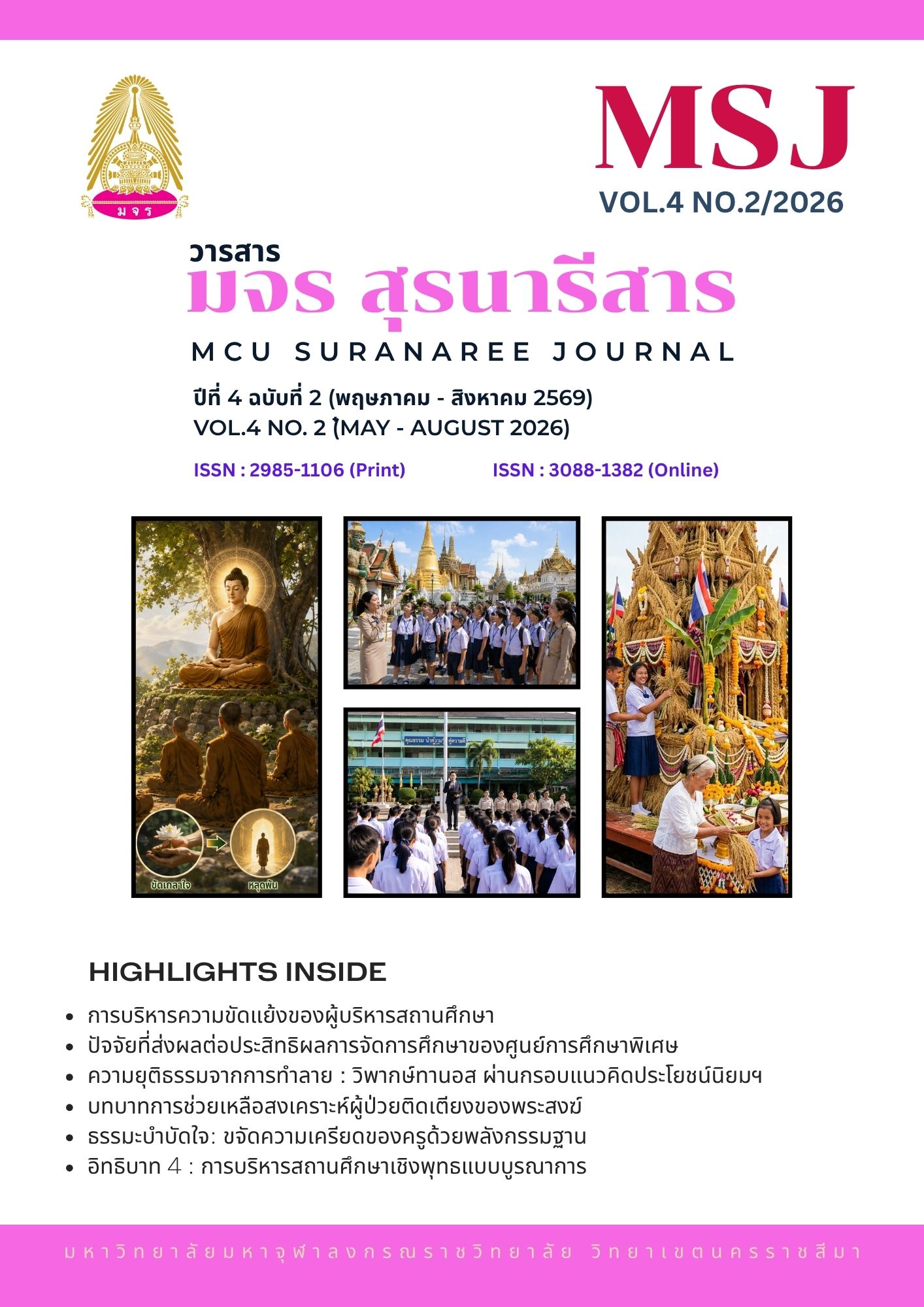
Vol. 4 No. 2 (2026)MCU Suranaree Journal, Vol. 4 No. 1 (January - April 2026). This vol.2 is filled with academic works by faculty members, researchers, and university students. These will be useful for the Buddhist community, civil service education, and contemporary social development. Topics include conflict management for educational administrators, guidelines for internal school supervision, forest conservation following the principles of the Chao Pho Khao Yai spirit, and the application of the Ten Royal Virtues, the Four Noble Truths, and the Four Paths to Success in integrated Buddhist school management.
-
(January-April 2026)
Vol. 4 No. 1 (2026)MCU Suranaree Journal, Vol. 4 No. 1 (January - April 2026). This is the first issue of the year, featuring academic articles on applying Buddhist principles to organizational management. The content focuses especially on educational institutions and the development of civil servants, such as teachers. It highlights the Five Precepts, the Four Bases of Sympathy (Sangahavatthu), and the Threefold Training (Sikkha)—which are universal ethics for all people in every era.
The editorial board is greatly pleased and would like to express its sincere gratitude to all authors who have submitted valuable, insightful articles and new bodies of knowledge for publication in MCU Suranaree Journal. We sincerely hope to continue receiving your kind academic cooperation in the future.
-

(September-December 2025)
Vol. 3 No. 3 (2025)the final issue of the year. It features academic articles on digital-age leadership, creating learning environments, ethical leadership, approaches to promoting internal supervision, and educational institution management based on the Four Wheels of Dhamma (Cakka-dhamma 4). All of these contributions are highly beneficial to the field of education and to educational administrators. In addition, the issue includes articles on applying the Four Divine Abodes (Brahmavihāra 4) to personnel development, using the Four Bases of Success (Iddhipāda 4) for anti-corruption efforts, and promoting politics through Buddhist approaches, all of which are of great value to society. A special feature is also included: Steppenwolf, the philosophy of living of a person with two minds.
-
:May-August 2025 (Buddhist Wisdom)
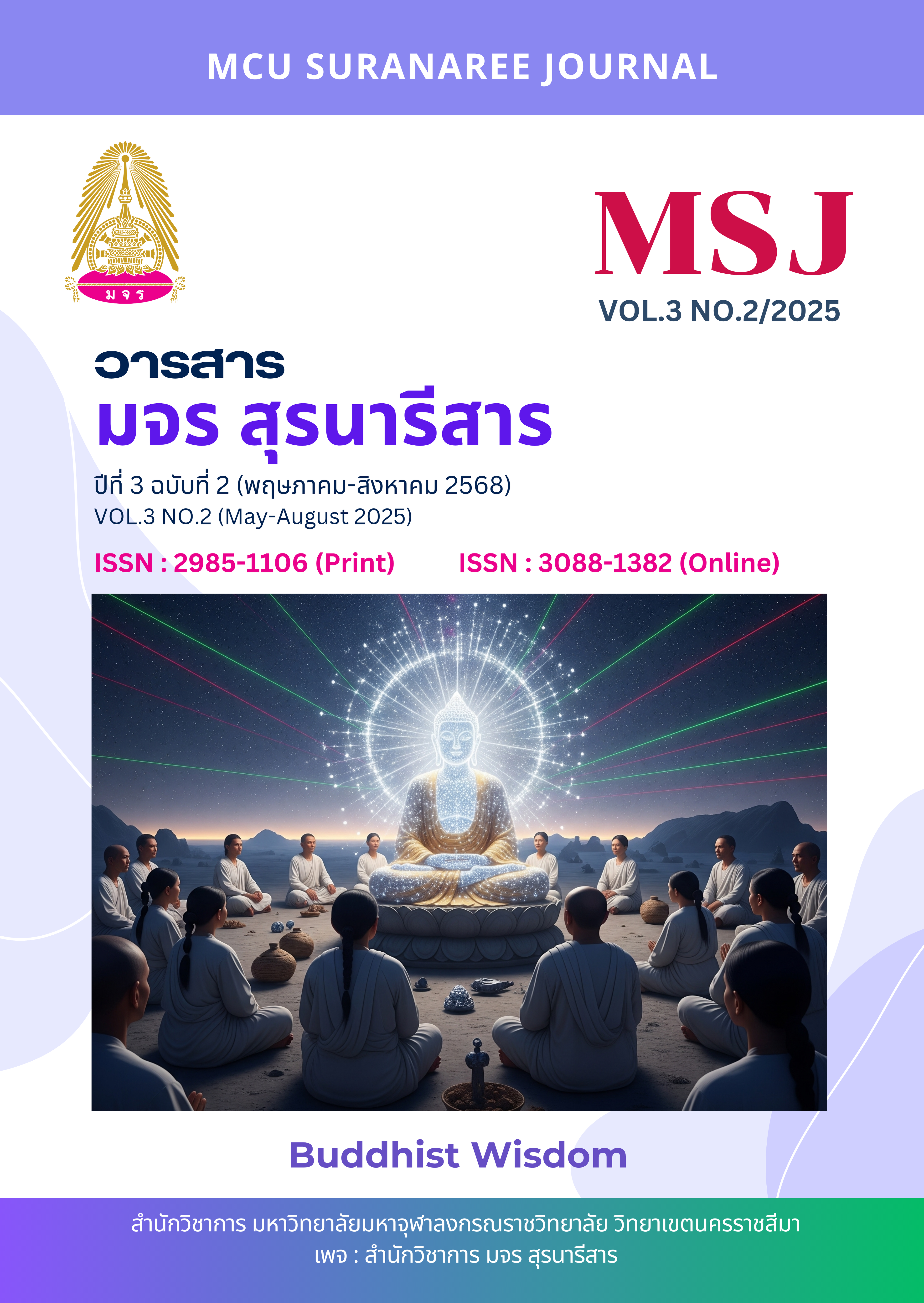
Vol. 3 No. 2 (2025)MCU Suranaree Journal, Volume 3, Issue 2 (May–August 2025) is a special issue devoted to celebrating Buddhist Wisdom, whose radiant brilliance is immeasurable, as reflected in the cover design of this volume. This theme is closely connected with the valuable research and academic contributions presented by scholars and graduate students, who have produced works in education on topics such as: desirable characteristics and creative leadership of school administrators; the development of wisdom based on the Fourfold Faith (Saddhā); the cultivation of public-mindedness among students; a study of teachers’ morale in their professional practice; quality assurance assessment in accordance with AUN-QA criteria; academic administration in the 21st century; the application of the Four Foundations of Mindfulness (Satipaṭṭhāna) in strengthening family relationships; and the application of the threefold principles of authority (Adhipateyya) in educational administration.
In addition, the issue includes a critical book review on “The Sangha Institution and Contemporary Society.” All articles have been rigorously analyzed and synthesized into new bodies of knowledge that are beneficial to administrators and society at large. These insights can be applied to organizational development across various sectors and also serve as a valuable guide for individual ways of life.
-
January-April (Buddhist Innovation)
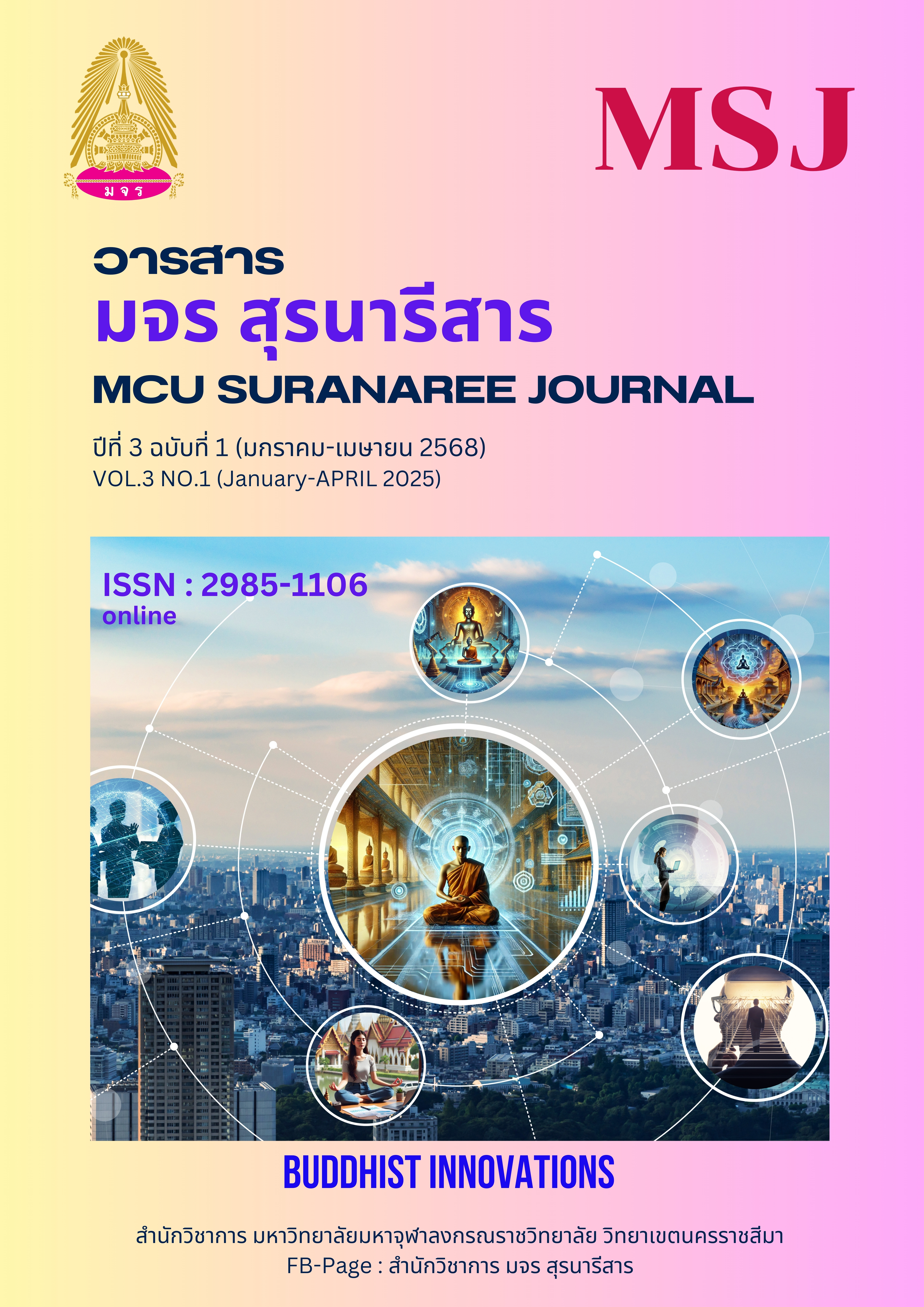
Vol. 3 No. 1 (2025)MCU Suranaree Journal, Vol. 3, No. 1 (January–April 2025) — the first issue of the year — presents a collection of valuable research and academic works contributed by knowledgeable lecturers and postgraduate scholars. This issue includes significant studies in the field of education, particularly addressing internal supervision challenges in schools, ethical leadership, and methods for enhancing the morale of school administrators. These contributions offer practical insights and are beneficial for administrators seeking to improve school management.
Additionally, this issue features academic articles focused on the development of mindfulness and wisdom through Asubha meditation, stress relief practices, longevity practices inspired by Buddhist teachings, and the application of the Seven Qualities of a Noble Person (Sappurisa Dhamma) in school administration. It also includes a thought-provoking book review on “The Law of Enlightenment”, offering moral reflections that serve as important guidance for living a meaningful and balanced life.
The editorial team expresses heartfelt gratitude to all authors for submitting such valuable and insightful articles filled with new knowledge and wisdom. We sincerely hope to continue receiving your kind academic cooperation in future issues.
-
September-December (Phimai Historical Park)
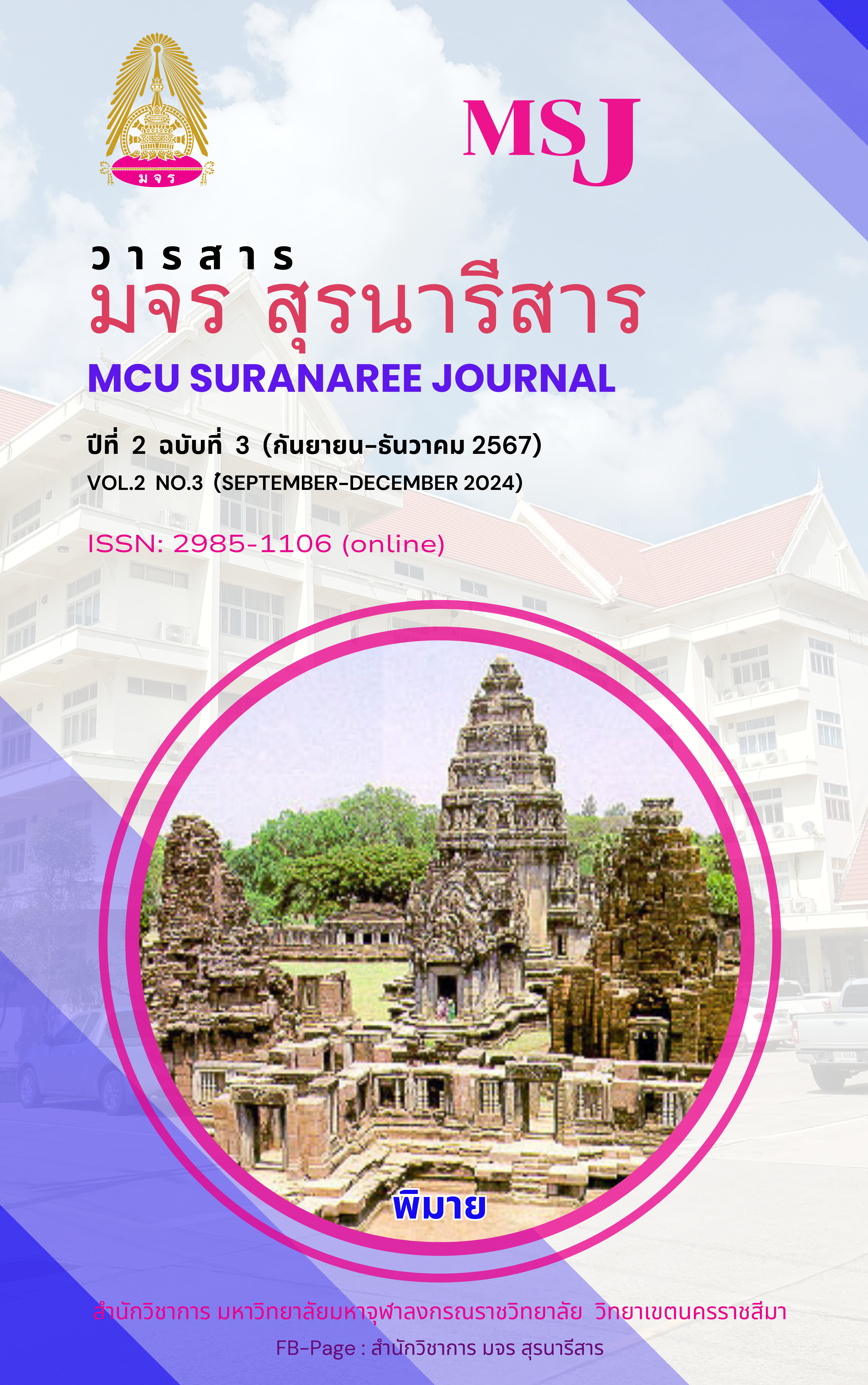
Vol. 2 No. 3 (2024)As this journal's cover features Phimai Sanctuary located in Phimai District, Nakhon Ratchasima Province, it is a large and beautiful ancient Khmer stone castle in Baphuon style. Built during King Suryavarman I's reign around the 16th Buddhist century, it was initially a Hindu temple and later converted to Mahayana Buddhism during King Jayavarman VII's time. The name 'Phimai' likely derives from 'Vimaya' or 'Vimayapura,' as inscribed in Khmer language on stone frames at the front gallery doorway of the sanctuary.
MCU Suranari Journal Vol. 2 No. 3 (September-December 2024) contains valuable academic articles and research, particularly focusing on creating engaging classroom environments, activities promoting teacher happiness, and educational technology implementation. This knowledge benefits both teachers and students' development. Additionally, it features articles on leadership, meditation for depression treatment, and dharma teachings from 4 Buddhist holy sites, providing knowledge beneficial to individual and social well-being, contributing to a happier life.
-
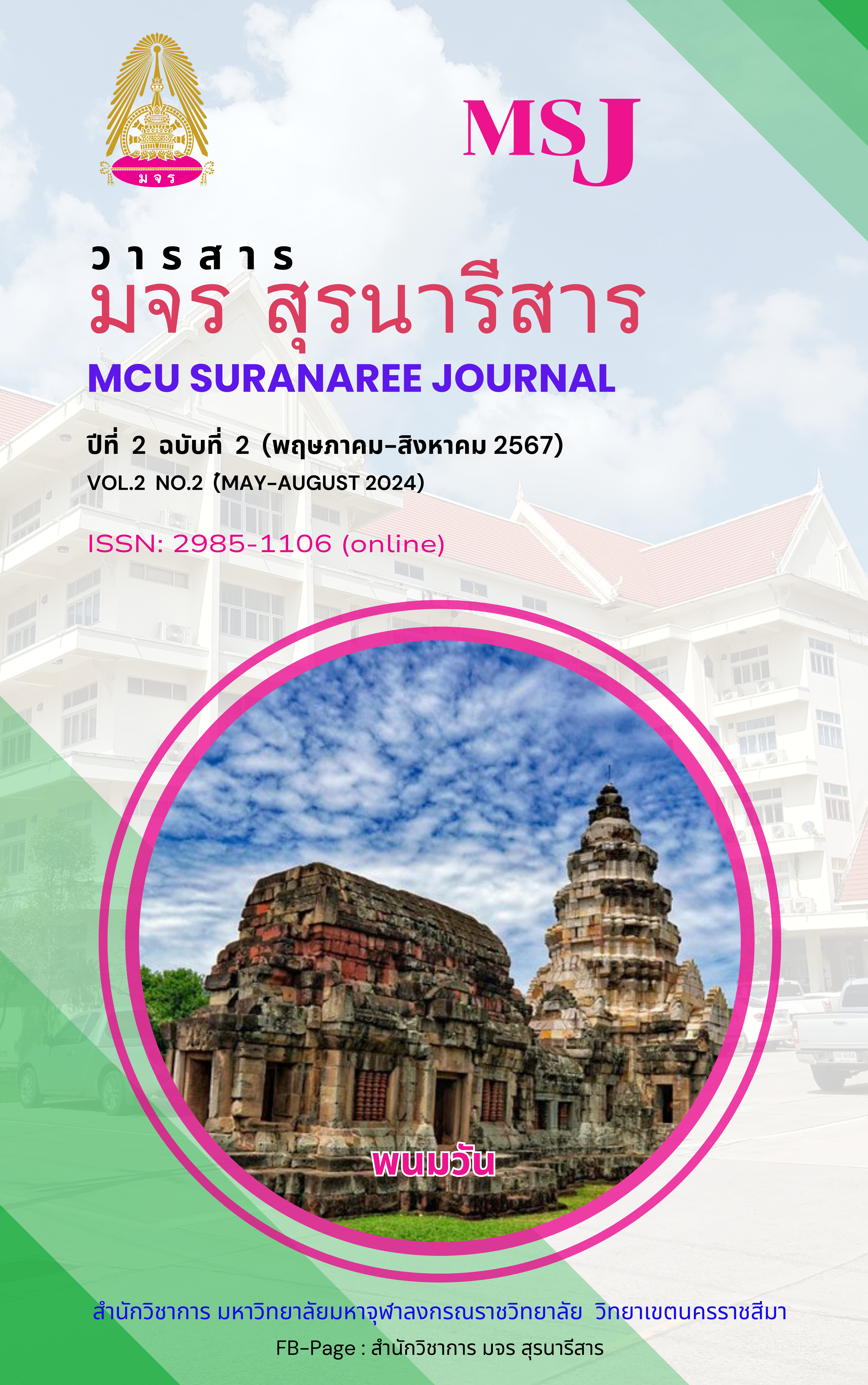
May-August (Phanom Wan Stone Castle)
Vol. 2 No. 2 (2024)Since the cover of this journal features the Phanom Wan Stone Castle, located at Wat Phanom Wan, Ban Makha, Ban Pho Subdistrict, Mueang District, Nakhon Ratchasima Province, it was initially constructed with bricks around the 15th Buddhist century. Later, during the 18th–19th Buddhist centuries, a stone structure was built over it. The castle resembles Phimai Historical Park but is smaller in size. In inscriptions, this castle is referred to as "Devasrama," initially serving as a Hindu religious site before being converted into a Buddhist site. It is the fifth-largest stone castle in Thailand.
The MCU Suranaree Journal, Volume 2, No. 2 (May–August 2024) contains academic contributions, including research on developing mathematics teaching models, integrating information technology into music instruction, creating reading materials based on community folklore, providing counseling using Buddhist psychology combined with Western psychology, and applying Sappurisa Dhamma principles in educational administration. These research and academic articles present valuable educational knowledge that readers can apply to various personal and collective activities.
-
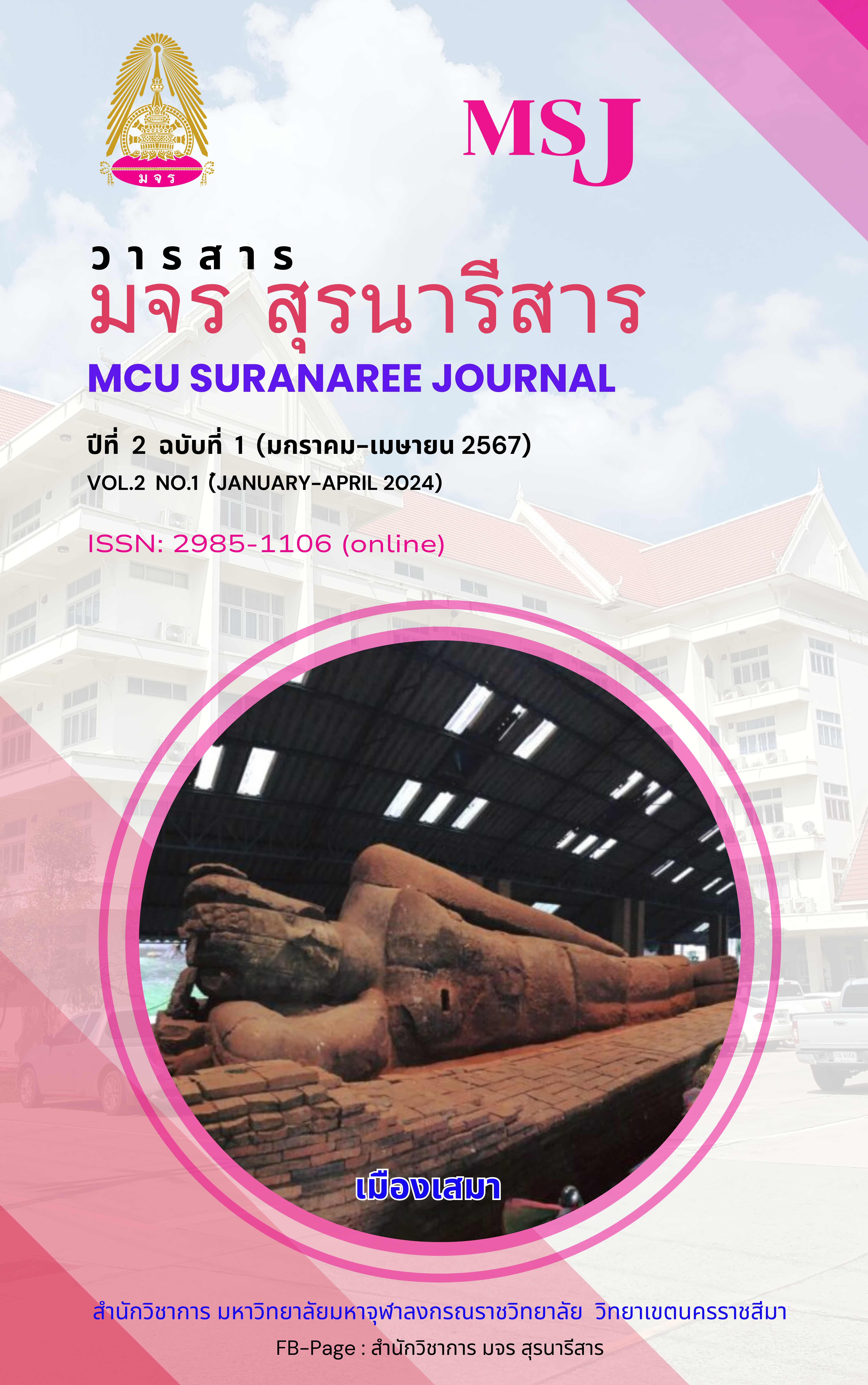
January-April (Sema City)
Vol. 2 No. 1 (2024)Since the cover of this journal features the Reclining Buddha at Wat Thammachak Semaram in Sung Noen District, Nakhon Ratchasima Province, this sandstone Buddha statue from the Dvaravati period, over 1,000 years old, is the largest of its kind in Thailand. The name Sema, associated with Sung Noen District, is derived from the term "Seema" in the name Nakhon Ratchasima. Sema City represents the original Korat, or the first Nakhon Ratchasima, before the province was relocated to its current site.
This issue contains valuable research and academic articles that are highly educational, offering guidance for both theoretical and practical applications. Highlights include research on creating reading materials based on local wisdom, learning English through movie titles, preserving the Thai language, and using social media for English communication by Buddhist monks. Additionally, it features book reviews compiling Buddhist scriptures with images of actual historical sites. The articles are rich in knowledge and provide a foundation for further development and application.
-
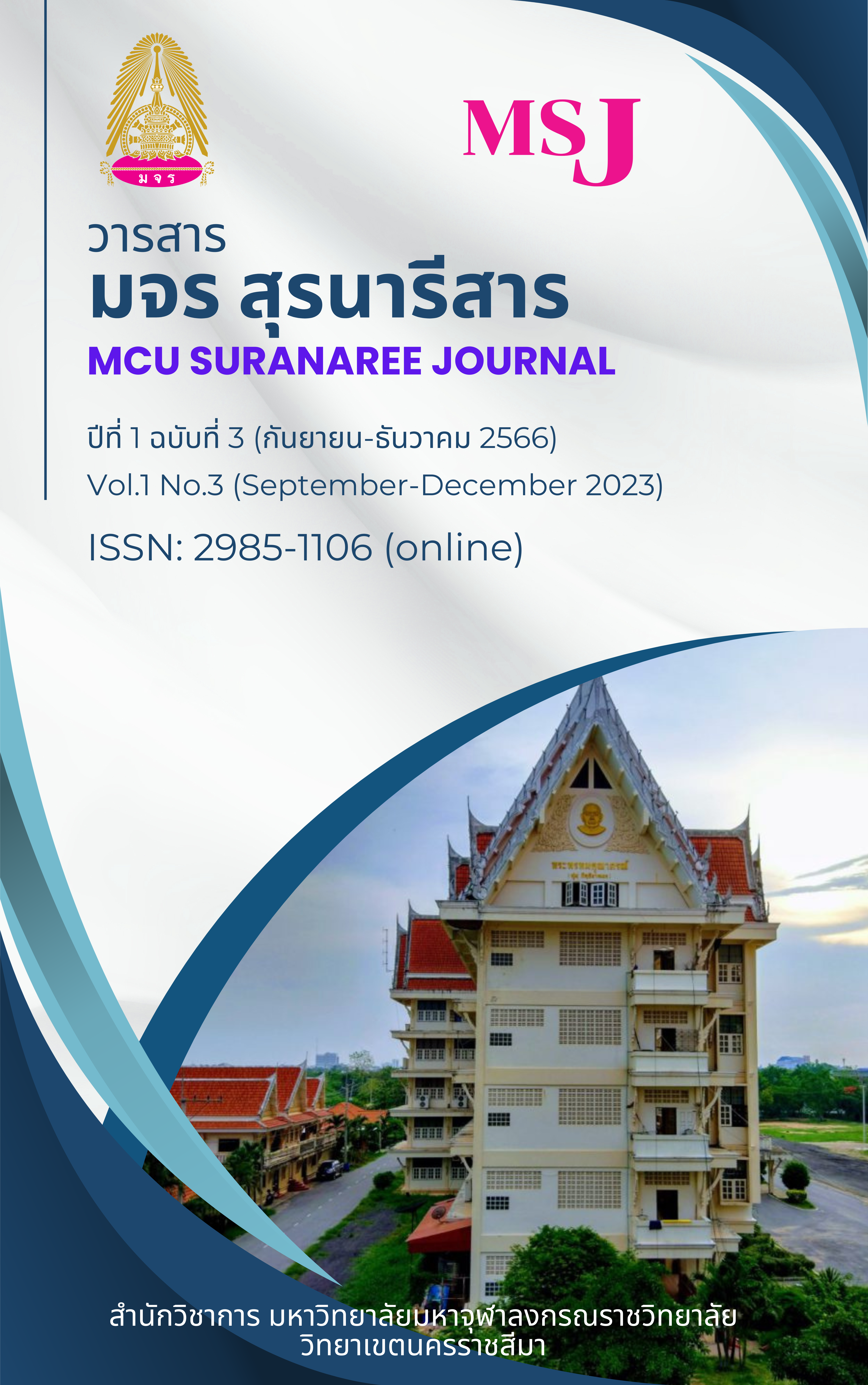
September-December (Buddhist ethics)
Vol. 1 No. 3 (2023)Highly valuable research on educational achievement and the application of Buddhist ethics in combating corruption among government leaders, as well as significant academic work on utilizing the principles of Sappurisa Dhamma as a guideline for police conduct. Additionally, there are book reviews discussing beliefs about heaven and hell as consequences of good and bad deeds. It can be considered as new knowledge that can be effectively used to develop oneself and society.
-
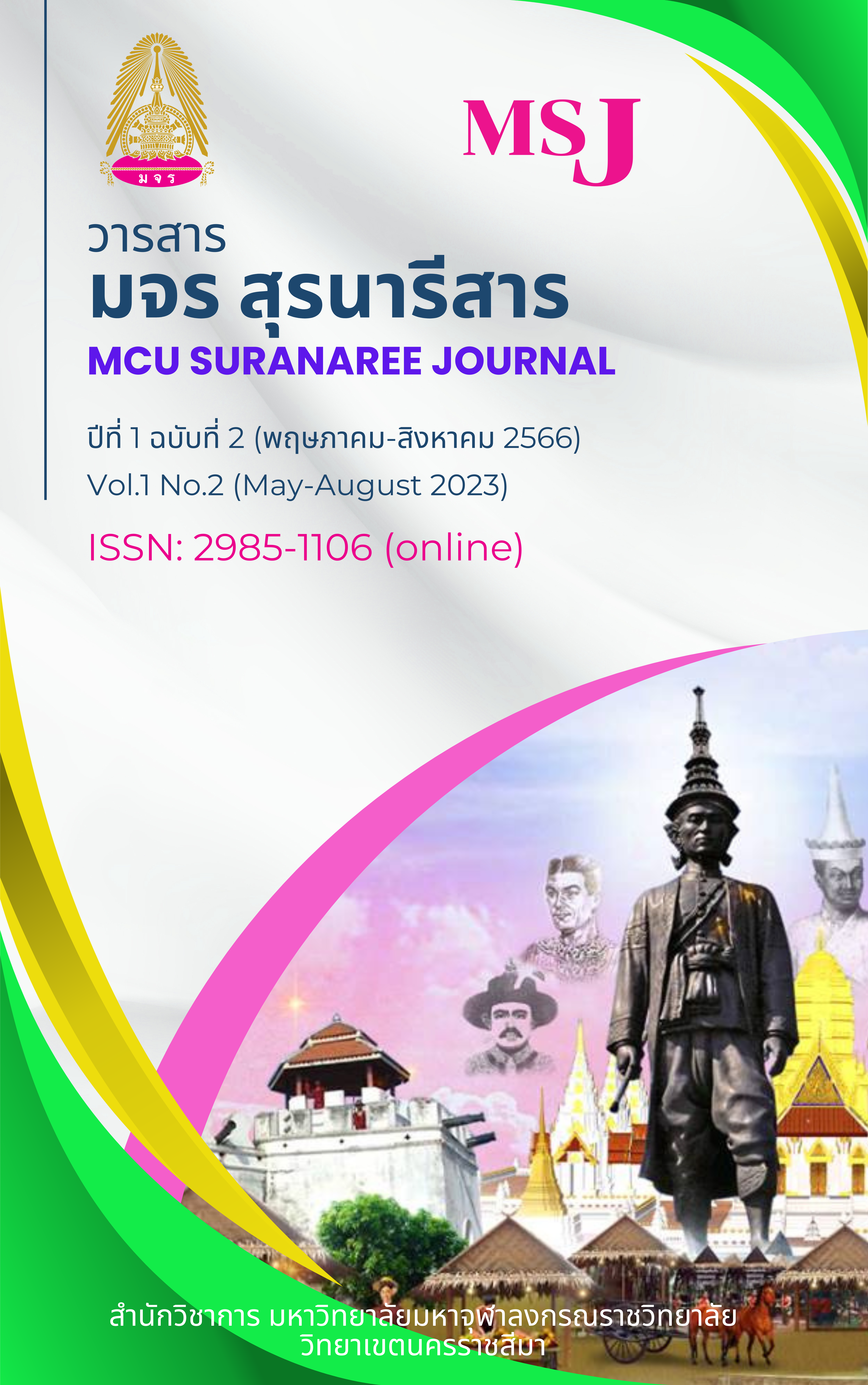
May-August (It's updating the content)
Vol. 1 No. 2 (2023)King Narai the Great played a significant role in the development of the country in various aspects, such as foreign relations, and the promotion of arts and culture. Nakhon Ratchasima was founded in the late Ayutthaya period, with continued expansion and development during the Thonburi and Rattanakosin periods. The King restored the Phra Narai Maharat Worawihan Temple, also known by locals as Wat Klang Nakhon, which is an important temple in the city of Nakhon Ratchasima. The royal statue of King Narai the Great is also located at this temple.
-
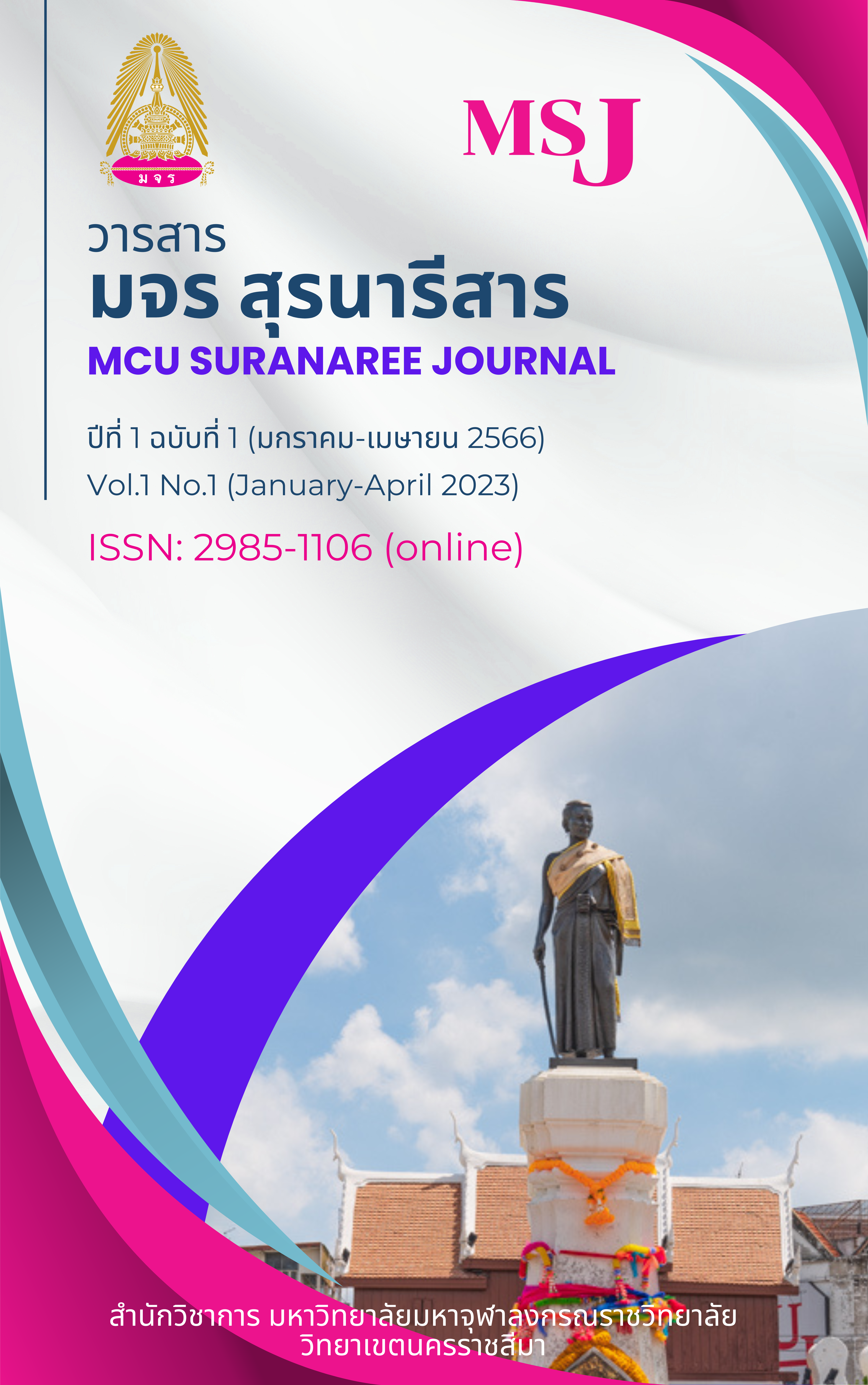
January-April (First Issue)
Vol. 1 No. 1 (2023)Thao Suranari, commonly known as Ya Mo, is a highly revered heroine in Thailand. She was the one who saved Nakhon Ratchasima from the army of Chao Anouvong of Vientiane in 1826. Her heroic deeds have been passed down through generations until today.
This inaugural issue of the MCU Suranaree Journal contains valuable research on Theravada Buddhist philosophy, Buddhist innovations for developing police officers, Thai culture, and the solution to poverty based on Buddhist principles. It is considered a new and valuable source of wisdom.