
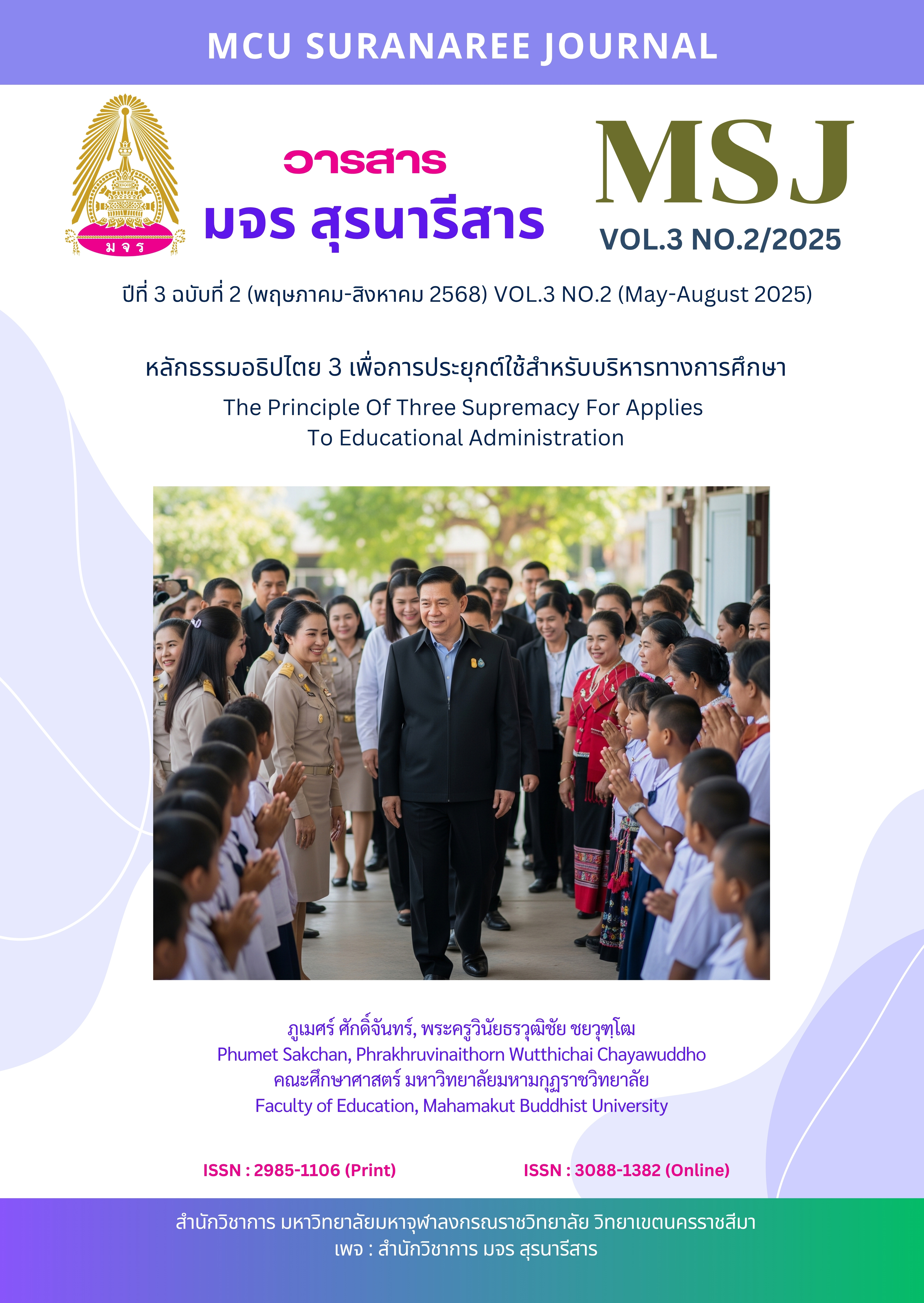
THE PRINCIPLE OF THREE SUPREMACY FOR APPLIES TO EDUCATIONAL ADMINISTRATION
Keywords:
Administration, Education, Buddhism, the three supremacyAbstract
This academic article aims to study the principles of the three supremacy for application in educational administration. The study found that the principles of supremacy according to Buddhist teachings, as taught by the Buddha, relate to leadership, governance or administration. These principles consist of three components: The first, autonomy supremacy: this refers to self-governance, focusing on oneself, considering one's status, dignity, or self-interest as important, and should be used only within the bounds of goodness. The second, worldly supremacy: this pertains to the dominance of worldly opinions, where the voices, trends, or popularity of the majority are considered significant. And the third, dharma supremacy: this represents the principle of having righteousness as the priority, making decisions based on correctness, with a system that is fair and has standards for all parties involved. Including the application of the three supremacy to integration for use in educational administration, where administrators can use the principles of supremacy to manage and strategically manage within the organization, which affects the human development process, creating knowledge and self-development to the fullest potential, resulting in peace and prosperity for people in the organization and society.
References
จันทิมา เกษแก้ว. (2540). การเมืองการปกครอง. กรุงเทพมหานคร: สถาบันราชภัฏสวนดุสิต.
ทวี ผลสมภพ. (2534). ปัญหาปรัชญาในการเมืองของโลกตะวันออก. กรุงเทพมหานคร: สำนักพิมพ์มหาวิทยาลัยรามคำแหง. หน้า 64-65.
พิสุทธิ์พงศ์ เอ็นดู และวิโรจน์ ทองปลิว. (2562). พุทธอธิปไตย 3 กับมุมมองความเห็นต่าง. วารสารบัณฑิตแสงโคมคา ปีที่ 4 ฉบับที่ 1 : มกราคม – มิถุนายน, มหาวิทยาลัยมหาจุฬาลงกรณราชวิทยาลัย.
พระไตรปิฎกฉบับหลวง. (2560). อธิปไตยสูตร. พระไตรปิฎกเล่มที่ 20 พระสุตตันตปิฎกเล่มที่ 12 อังคุตตรนิกาย เอก-ทุก-ติกนิบาตร. [ออนไลน์], แหล่งที่มา : https://84000.org/tipitaka/pitaka_item/v.php?B=20&A=3827&Z=3899&pagebreak=0 {17 มกราคม 2568}
พระปลัดธนา อคฺคธมฺโม (พิมพารัตน์) และกฤตสุชิน พลเสน. (2565). หลักอธิปไตยเพื่อพัฒนาผู้บริหาร. วารสารวิจัยธรรมศึกษา ปีที่ 5 ฉบับที่ 2 : กรกฎาคม–ธันวาคม, ศูนย์วิจัยธรรมศึกษา สำนักเรียนวัดอาวุธวิกสิตาราม.
พระมหาจรรยา จน̣ทสาโร (ลินลา). (2552). การศึกษาวิเคราะห์หลักอธิปไตยตามแนวพระพุทธศาสนาเถรวาท. สารวิทยานิพนธ์พุทธศาสตรบัณฑิต. บัณฑิตวิทยาลัย: มหาวิทยาลัยมหาจุฬาลงกรณราชวิทยาลัย.
พระอธิการสายแพร กตปุญโญ และเจือจันท์ วังทะพันธ์. (2564). การบริหารจัดการองค์การเชิงกลยุทธ์ตามหลักอธิปไตยในพุทธศาสนาเถรวาท. วารสารบัณฑิตศึกษามหาจุฬาขอนแก่น ปีที่ 8 ฉบับที่ 3: กรกฎาคม–กันยายน, มหาวิทยาลัยมหาจุฬาลงกรณราชวิทยาลัย.
ราชบัณฑิตยสถาน. (2556). พจนานุกรมฉบับราชบัณฑิตยสถาน พ.ศ. 2554. กรุงเทพฯ: ศิริวัฒนาอินเตอร์พริ้นท์ จำกัด (มหาชน).
สมเด็จพระพุทธโฆษาจารย์ (ป.อ. ปยุตฺโต). (2548). อธิปไตย 3. พจนานุกรมพุทธศาสตร์ ฉบับประมวลธรรม. (พิมพ์ครั้งที่ 12). [ออนไลน์], แหล่งที่มา : https://84000.org/tipitaka/dic/d_item.php?i=125 {17 มกราคม 2568}
Downloads
Published
How to Cite
Issue
Section
License
Copyright (c) 2025 MCU Suranaree Journal

This work is licensed under a Creative Commons Attribution-NonCommercial-NoDerivatives 4.0 International License.