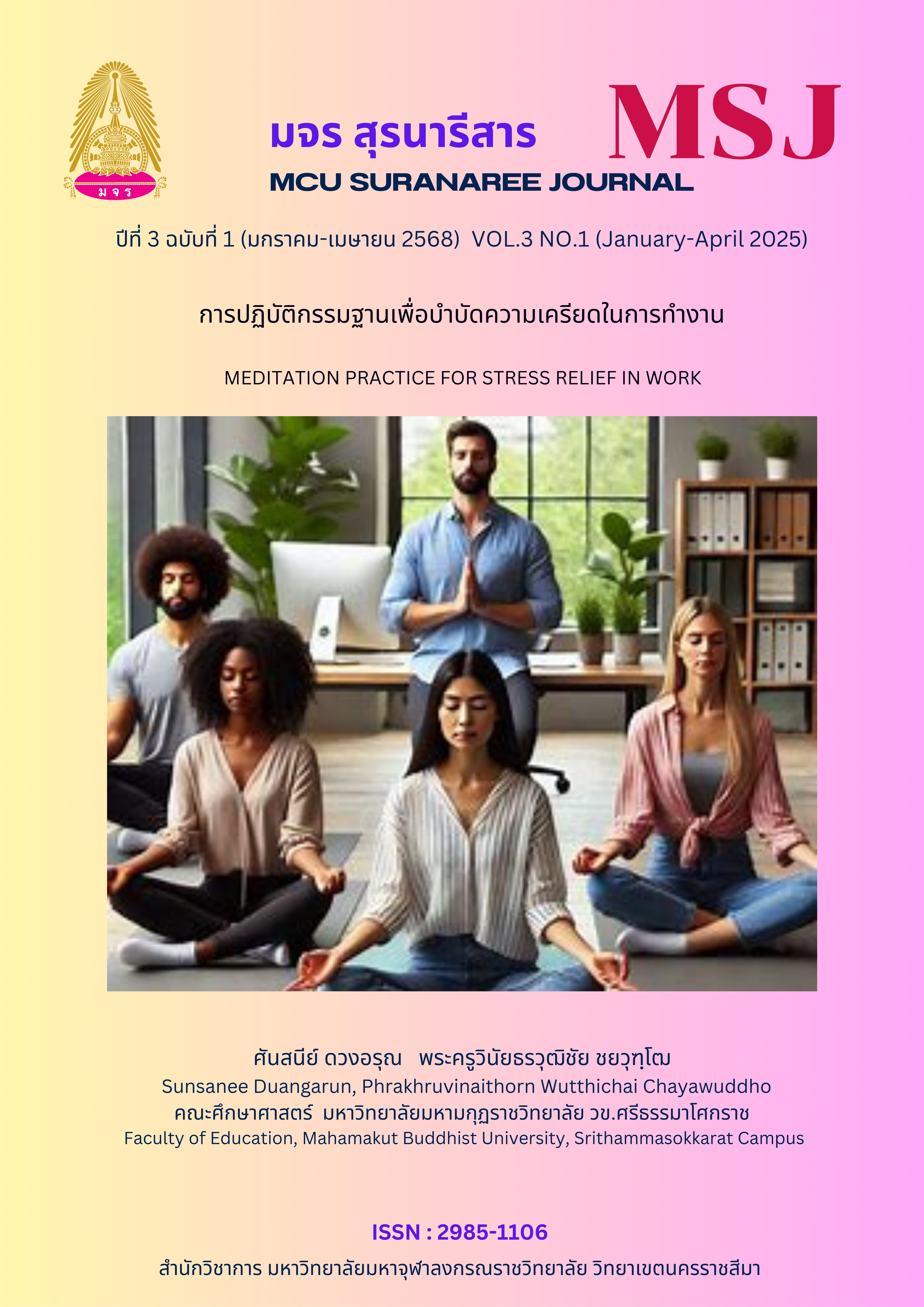
MEDITATION PRACTICE FOR STRESS RELIEF IN WORK
Keywords:
Meditation practice, Relief, StressAbstract
This academic article focuses on the practice of meditation (kammatthana) as a method for alleviating work-related stress, based on Buddhist scriptures and academic literature related to Dhamma practice and stress relief. It was found that kammatthana is a form of mental training or cultivation that calms the mind, leading to the development of wisdom capable of alleviating suffering. Regular mental training helps reduce turmoil and stress affecting both body and mind. Kammatthana is a practice aimed at achieving insight. It is something individuals should cultivate within themselves, as it serves as a method of mental management—keeping the mind anchored in the present, calm, free from distraction, and unagitated. When mental health improves, physical health tends to follow, without the need for costly treatments—only time, perseverance, and patience are needed to practice and learn to live in the present reality. Therefore, the practice of kammatthana directly contributes to the treatment of human stress. Maintaining good mental health and strong physical health helps balance the body, mind, and emotions, relieving tension, alleviating pain, treating depression, and improving sleep disorders.
Vipassana meditation, in particular, involves the development of insight, leading to a clear understanding of the Three Characteristics (Tilakkhana): arising, existing, and ceasing. This understanding fosters detachment and non-attachment to arising phenomena. It is a practice that promotes both mental and physical well-being, especially relevant in the context of today's stressful circumstances.
References
กนกรัตน์ สายเชื้อ. (2536). ความเครียดในการปฏิบัติงานการเงินและบัญชีของครูโรงเรียนประถมศึกษา สังกัดสำนักงานการประถมศึกษา จังหวัดมุกดาหาร. วิทยานิพนธ์การศึกษามหาบัณฑิต. บัณฑิตวิทยาลัย: มหาวิทยาลัยศรีนครินทรวิโรฒมหาสารคาม.
กรมสุขภาพจิต กระทรวงสาธารณสุข. (2540). คู่มือคลายเครียด, นนทบุรี: กรมสุขภาพจิต กระทรวงสาธารณสุข.
_________________________ (2542). คู่มือคลายเครียดด้วยตนเอง, กรุงเทพฯ: กรมสุขภาพจิต กระทรวงสาธารณสุข.
ชูทิตย์ ปานปรีชา. (2539). “ความเครียด” ในจิตวิทยาทั่วไป. นนทบุรี: มหาวิทยาลัยสุโขทัยธรรมาธิราช.
ดวงมณี จงรักษ์. (2549). ทฤษฎีการให้การปรึกษาและจิตบำบัดเบื้องต้น. กรุงเทพฯ: สำนักพิมพ์ ส.ส.ท.
ปัณณวัฒน์. (2548). ฝึกสมาธิอย่างง่ายๆ คลายทุกข์ มีสติ. กรุงเทพฯ: บริษัท ไพลินบุ๊คเน็ต จำกัด.
ผุสดี โตสวัสดิ์. (2562). การบำบัดรักษาโรคด้วยวิธีการปฏิบัติกรรมฐาน. วารสารปรัชญาปริทรรศน์, 24(2): 1-17.
พรมงคล ฉันท์รัตนโยธิน. (2561). สมาธิและพุทธจิตช่วยบำบัดความเครียด. วารสารพุทธจิตวิทยา, 3(2)
พระพรหมคุณาภรณ์ (ป.อ. ปยุตฺโต). (2552). พุทธธรรมฉบับปรับปรุงและขยายความ. กรุงเทพฯ: โรงพิมพ์มหาจุฬาลงกรณราชวิทยาลัย.
มหาจุฬาลงกรราชวิทยาลัย. (2538). พระไตรปิฎกภาษาไทย ฉบับมหาจุฬาลงกรราชวิทยาลัย. กรุงเทพฯ: โรงพิมพ์มหาจุฬาลงกรณราชวิทยาลัย.
Downloads
Published
How to Cite
Issue
Section
License
Copyright (c) 2025 MCU Suranaree Journal

This work is licensed under a Creative Commons Attribution-NonCommercial-NoDerivatives 4.0 International License.