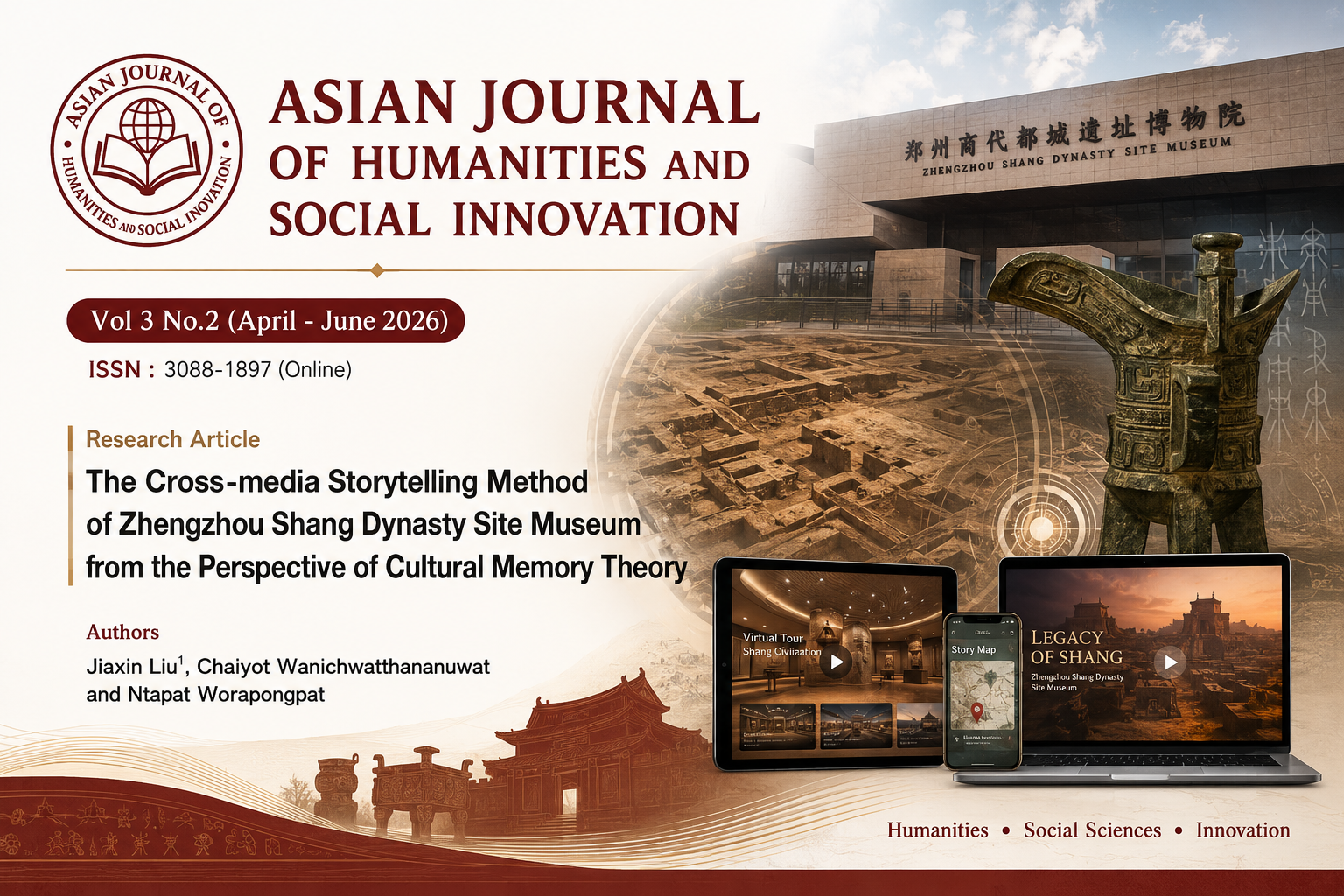
The Cross-media Storytelling Method of Zhengzhou Shang Dynasty Site Museum from the Perspective of Cultural Memory Theory
Keywords:
Cultural Memory Theory, Cross-media Storytelling, Zhengzhou Shang Dynasty Site Museum, Museum Communication, Digital HeritageAbstract
From the perspective of Jan Assmann’s Cultural Memory Theory, this study explores the cross-media storytelling practices of the Zhengzhou Shang Dynasty Site Museum and examines how transmedia narratives contribute to the preservation and reconstruction of cultural memory. Employing literature research, field investigation, and case analysis, the study focuses on the museum’s representative cross-media projects, including its digital exhibitions, immersive interactive installations, social media communication, and cultural and creative IP products, to analyze how different media platforms collaboratively construct coherent historical narratives. The findings reveal that the museum establishes a multidimensional storytelling framework through the integration of archaeological heritage, digital technologies, and participatory media, significantly enhancing audience engagement, cultural identity, and memory retention while expanding the accessibility of Shang civilization. Furthermore, the study identifies an innovative narrative model characterized by multi-platform content integration, audience participation, and dynamic memory reconstruction, providing a practical framework for cross-media communication in archaeological museums. Theoretically, this research bridges the gap between Jan Assmann’s cultural memory framework and the practical design of transmedia museum exhibitions, demonstrating how cultural memory theory can guide museum storytelling strategies in the digital era. The findings offer both theoretical insights and practical references for heritage communication and digital museum innovation.
References
Assmann, J. (1995). Collective memory and cultural identity. New German Critique, 65, 125–133.
Assmann, J. (2011). Cultural Memory and Early Civilization: Writing, Remembrance, and Political Imagination. Cambridge University Press.
Jenkins, H. (2006). Convergence Culture: Where Old and New Media Collide. New York University Press.
Jenkins, H. (2009). The Revenge of the Origami Unicorn: Seven Principles of Transmedia Storytelling. MIT Comparative Media Studies Blog.
Nora, P. (1989). Between memory and history: Les lieux de mémoire. Representations, 26, 7–24.
Fu, Y., & Shao, L. (2021). Cross-media narration empowers news product IP operation: Taking the "Time Museum" as an example. (Please add the journal name, volume, issue, and page numbers.)
Huang, S. (2022). Protection and utilization of Zhengzhou Shang Dynasty capital ruins from an ecological perspective. (Please complete the publication information.)
Wang, H. (2019). A brief discussion on the protection and management of Zhengzhou Shang Dynasty ruins. (Please complete the publication information.)
Yang, Y. (2023). External communication of Shang culture under the background of cross-cultural communication. (Please complete the publication information.)
Zhou, Y. (Ed.). (2023). Museum work—Trial opening of Zhengzhou Shang Dynasty Site Museum, Zhengzhou Cultural Relics and Archaeology Research Institute Archaeological Museum. In Henan Culture and Tourism Yearbook. (Please include publisher and page numbers.)
Zhu, L. (2023). Research on the path of archives constructing collective memory from the perspective of transmedia storytelling: Taking epidemic prevention archives as an example.
Downloads
Published
How to Cite
Issue
Section
License
Copyright (c) 2026 Asian Journal of Humanities and Social Innovation

This work is licensed under a Creative Commons Attribution-NonCommercial-NoDerivatives 4.0 International License.
This article is published under a Creative Commons Attribution-NonCommercial-NoDerivatives 4.0 International License (CC BY-NC-ND 4.0), which allows others to share the article with proper attribution to the authors and prohibits commercial use or modification. For any other reuse or republication, permission from the journal and the authors is required.